
I would like to paraphrase the championed philosopher Plato who stated that “music is a moral law”; music is a by-product of a culture and a precursor to social change. It symbolizes the very best we have to hope for; in bad times, it questions our leaders’ failings, spiritual and political. This is no different regardless of where you may be, Moscow or Mumbai, Stockholm or Seoul. If left to its own, a vibrant scene will emerge, and great artists and bands, the likes of The Monks, Shadows of the Knight, and The Velvet Underground, will arise and find a like-minded, marginalized, disgruntled audience. Out of Seoul, a quiet revolution kicked off in the wake of economic and political failings in the nineties, giving birth to artists like Whang, Bo Ryung of Smacksoft. “Music is like oxygen,” Bo expounds, “without it, I’m suspended in a vacuum.”
In a concerted effort to avoid the standard cliché toolkit for writers, I will do my best to avoid the simple characterizations about Seoul, such as it being a place of contradictions, a clash of the old and modern, and the wealthy and those wanting. Seoul cannot so simply be described, nor should it be. That being said, Seoul is a place that, in many respects, is not any different from any other mega-city. It has a vibrant culture and is a breeding place for a small, eclipsed counter-culture, or as much as it can be in the land of Confucian-conformity. In a country famous for its generic, auto-tuned dancing boys and girls, a country obsessed with punchy, over-saturated mediocre pop, which offers nothing to the progression of music as a discipline or an art form, an underground subculture exists. A small circle of bands and artists fighting the good fight, producing and playing in the impalpable rock scene in Seoul fight to create and preserve something new, raw, and defiant in places reminiscent of London’s UFO Club.
In 1997, South Korea, along with several other Asian nations, entered into a devastating economic crisis that raised fears that the so-called “Asian Flu” would sweep the world and crush the markets globally. With the IMF Crisis stirring up young Koreans’ fears and discontent, a cultural shift began to occur. In Seoul, an angry class of under- or unemployed high school and college grads began to express themselves in a way often unseen in the glossy veneer of Korea’s capital. In clubs with colourful names hidden in the darkest winding and unending allies of Hongdae, the screams began to rise up. Accompanied by driving percussion and fuzzy guitars, songs sharing their discontent with unresponsive public officials and abusive shortsighted capitalists, started to emerge from the collective body of a jilted youth.
Sitting down with Whang Bo-Ryung, the front-woman of the eponymous “whang bo ryung = SMACKSOFT”, she talks of the scene in Seoul when she returned to her birth-nation during the challenging times of the mid-to-late nineties. She recalls that the scene was not all that different from London in the late sixties, where out of the quiet desperation of a young, angry generation, some of the best music was born. Seoul mirrored this phenomenon. Bo reminisced about the scene when she made her emergence as a solo artist, “there were fewer bands around, and the atmosphere was entirely different back then.” She recalls a time where “bands were more professional, gigs were better, and bands were all friends,” standing up, putting their messages out there, and playing every weekend.
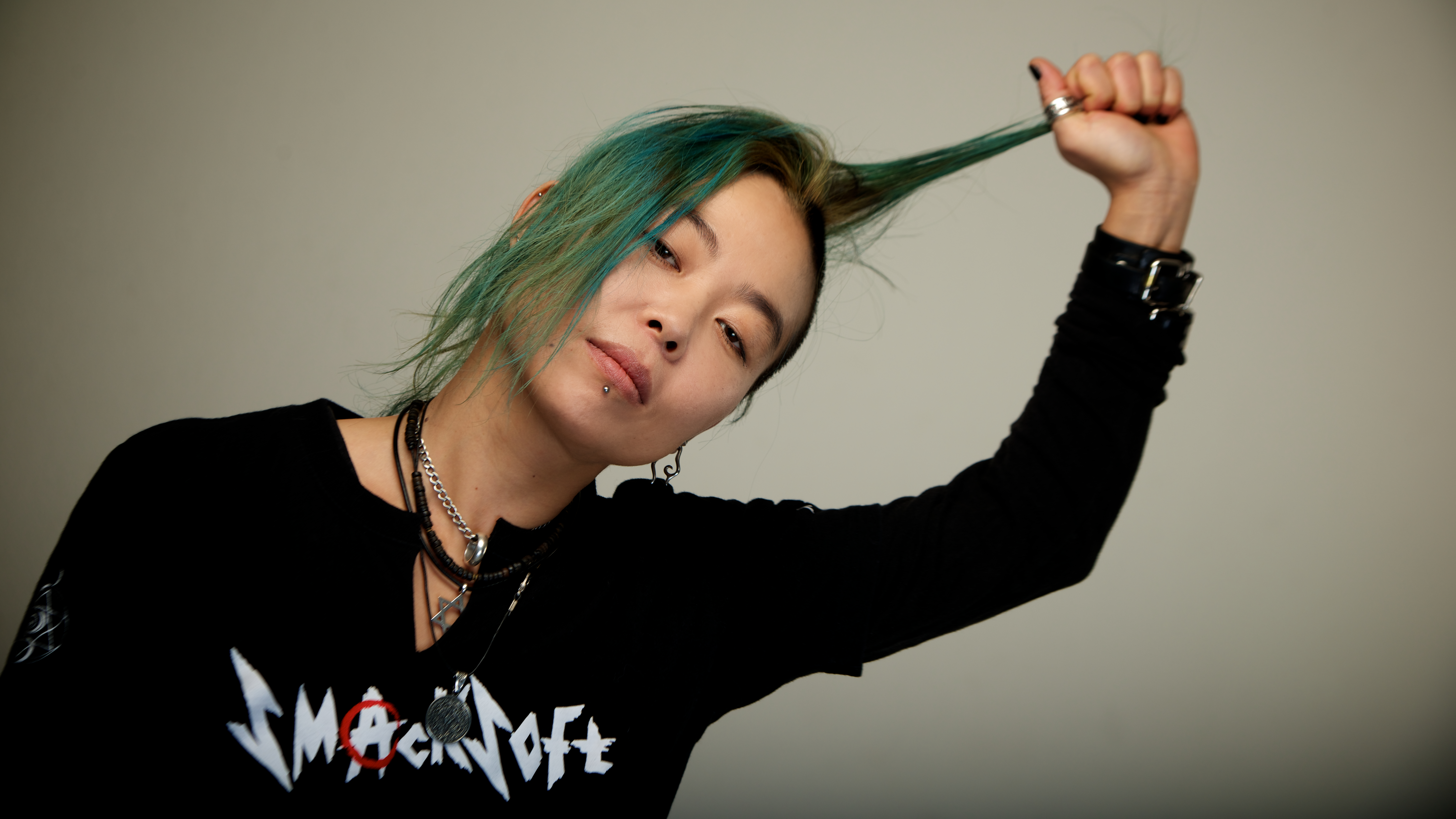
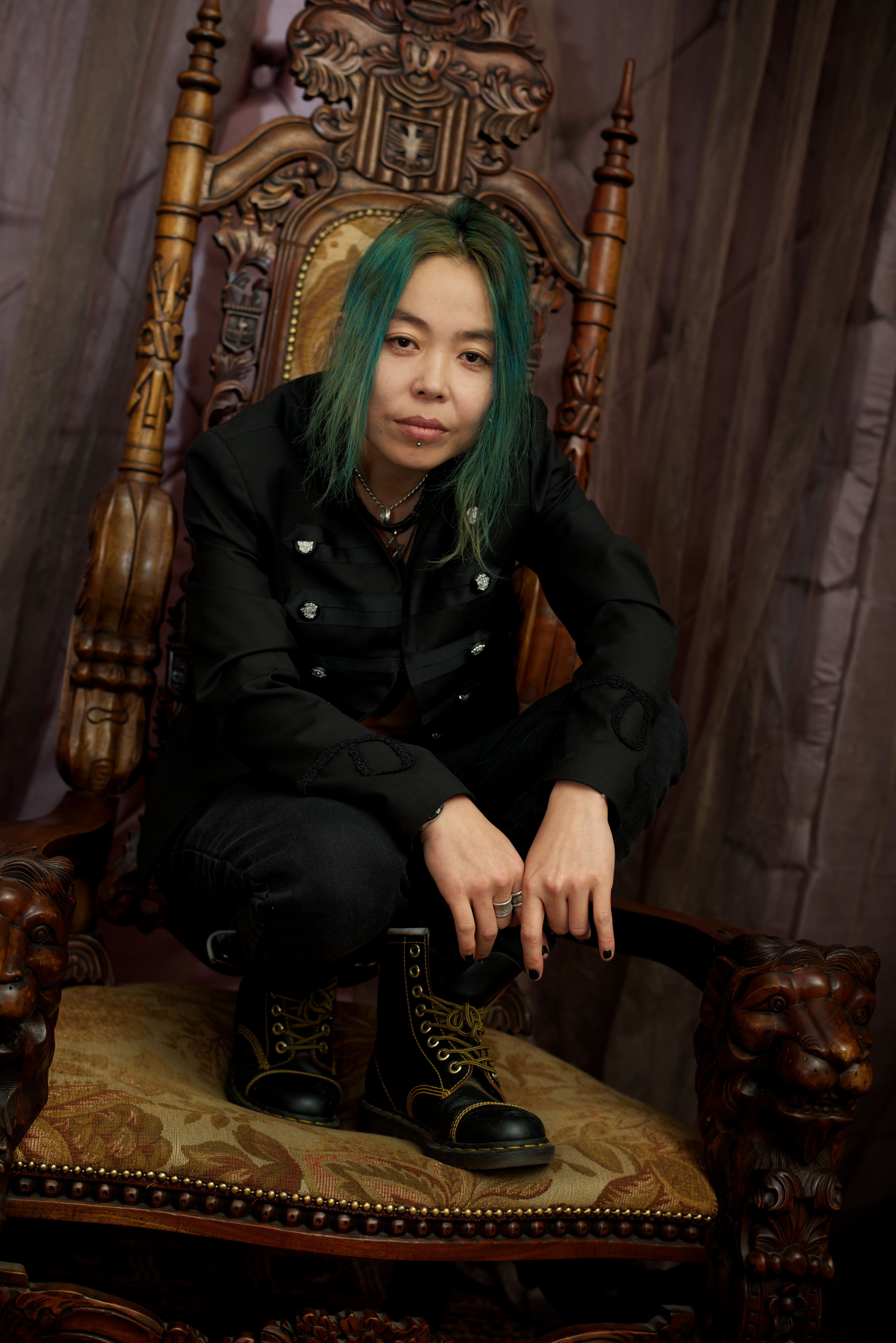
After spending her formative years growing up in New York City during the hardcore punk and street punk days, Bo set out on an extended tramp worldwide to find herself and her voice. “Japan, Vietnam, France, Thailand; I just needed to travel, to see the world, so I left home.” After learning to focus all of her artistic gifts into a medium that seemed natural to this accomplished iconoclast, in 1998, she returned to Korea and put out her first solo album, “Cat with Three Ears”. With a penetrating, husky voice and a unique, colourful musical accompaniment, Bo set out and achieved making a dent in the eclipsed Seoul underground. Bo recollects the early days, “from ’96 to ’98 when I was working on my first album, I was playing a lot of acoustic shows. Just me and my guitar. People saw me as something different. Colourful hair. Piercings. People were fascinated. I represented something new and different at the time, I guess.” Bo describes her look back then as New York punk and her sound from the album “Cat with Three Ears” as “punkno”, a curious fusion of punk and early-German industrial techno.
Korea, with everything that it is, all of its beauty, has a fatal flaw. This country innately places a higher value on the elderly and the wealthy; thus, an inherent youthful antagonism began to manifest among the seething underclass. London, Seattle, New York, or Seoul, the reason for the maturation of an underground alternative rock scene is always the same. It is an impulse, a compulsion to express the outrage of the collective young. This cultural shift inevitably led to the rise of the petulant protopunk bands and artists like Bo.
After Bo’s second album, “Sun Sign”, she fell off the grid. Wanting to develop her other artistic gifts, in 2003, she went back to New York to get her B.F.A. from the Pratt Institute. Bo cites motivation from a high school teacher who recognized her gifts early and prompted her to head to the noted art college. After an eight-year absence from the music scene in Seoul, this intelligent and introverted rocker returned, this time with the modest goal of re-tooling her sound and applying the theories of dimension, light, and colour into her music. What she learned at Pratt, and naturally as she saw and experienced more, she took to the studio and created the innovative “Smacksoft 2.5″ EP, which later went on to win “Korean Album of the Year”.
While her name started to become synonymous with the avant-garde sound in Seoul, the once-angry youth became a part of the system they once clashed with. The ‘Seoul sound’ that embodied the nineties’ disgruntled youth began to wither in the early part of the last decade. It was crushed under the weight of the addictive and artistically unsophisticated opiate for the Korean commonage. The nineties’ battle-cries were replaced with the monotonous seasonal sounds of sexually suggestive teens singing about love and smartphones.
On Portraits Beyond Faces
When I shoot, I primarily photograph in black and white. I have done so for more than fifteen years. There are exceptions, naturally, but when I think about how to draw something deeper out of these moments with my subjects, I return to black and white again and again. By discarding the unnecessary noise that…

WE ARE THE MUSIC MAKERS: The Dreamers of Dreams
Music is all about uncompromising “enterprise and artistry.” Music requires passion, risk, innovation, and emotion. Music has gone beyond the early days of just pitch, rhythm, and melody. It is an expressive art form that (should) engage the audience. Entertainment on the other hand, is anything that may amuse us for a moment’s time.
THE ART OF SEX: An Argument Against KPOP
I want to make it abundantly clear that I recognize that Korea didn’t invent this brand of auto-tuned, singing cyborgs. However, the willing lemmings that pay for this dreck have certainly perfected it. Korea has adopted it as their flagship, the “K-wave.” And what normally is a cyclical fad in other countries, has turned it…
Since the release of “Smacksoft 2.5″ in 2008, the band has gone on to release three more albums, “Shines in the Dark” in 2009, “Mana Wind” in 2010, and “Follow Your Heart” last year. In search of a willing, participatory audience who can appreciate hypnotic tracks like “It is You and Me” off their fifth album, Bo and the rest of Smacksoft went stateside for an engrossing and demanding tour of small and large towns alike. In the wake of this tour, discovering that they had fans in the strangest of places gave the band the energy to continue.
Since the band’s first incarnation, members have come and gone, and the sound has changed. Still, all of the current members (Seo, Jin Sil on drums, Ryu, Seong Hyun on guitar, Kang, Haneul on the keyboard, and Shin, Gee Yong on bass) appreciate their opportunity to keep the sound alive in Seoul and around the world. “I don’t know what the next Smacksoft album will sound like just yet, but it will reflect where we are as individuals and as a collective. That’s always what we’ve done in the studio, and I don’t see that process changing.”
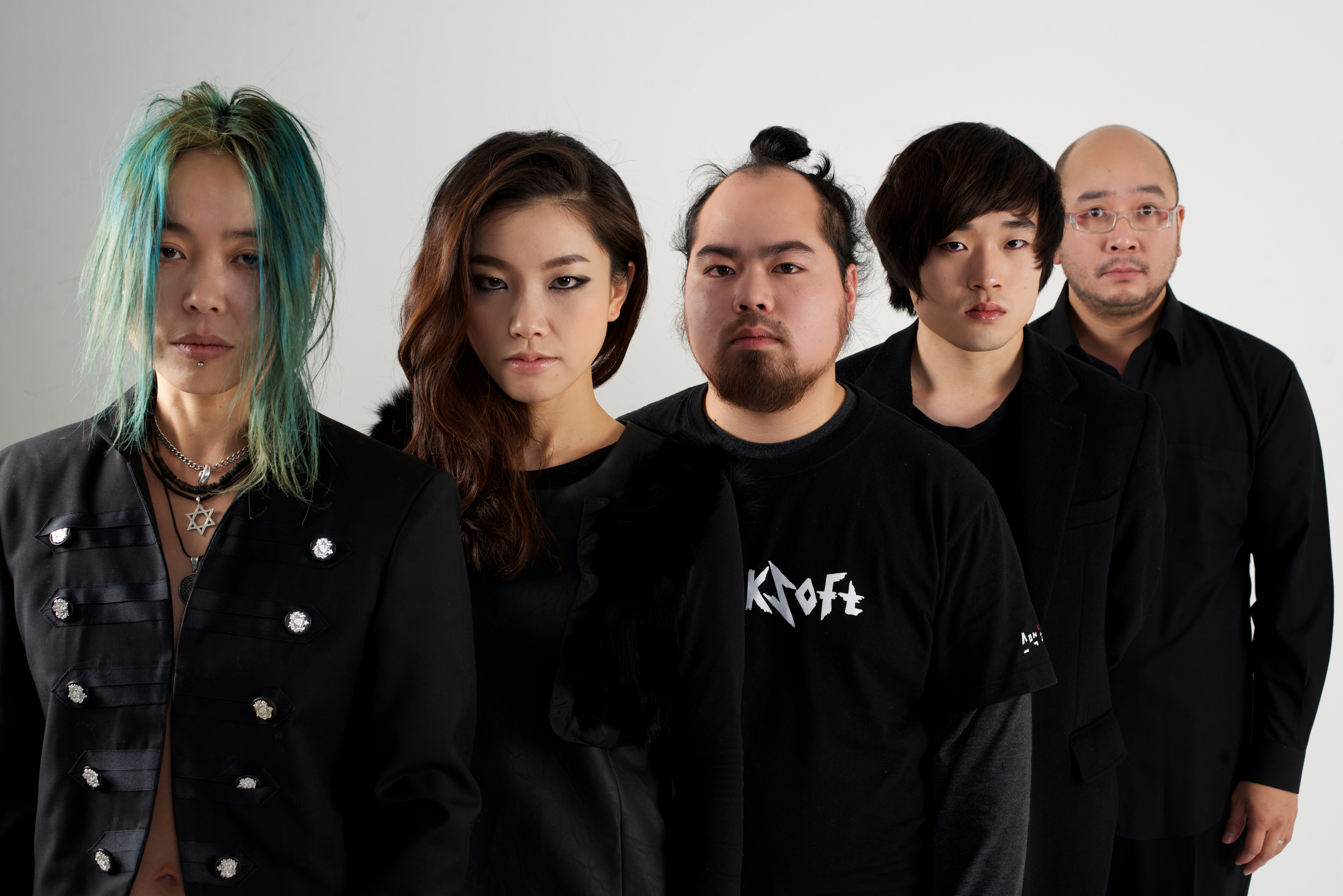
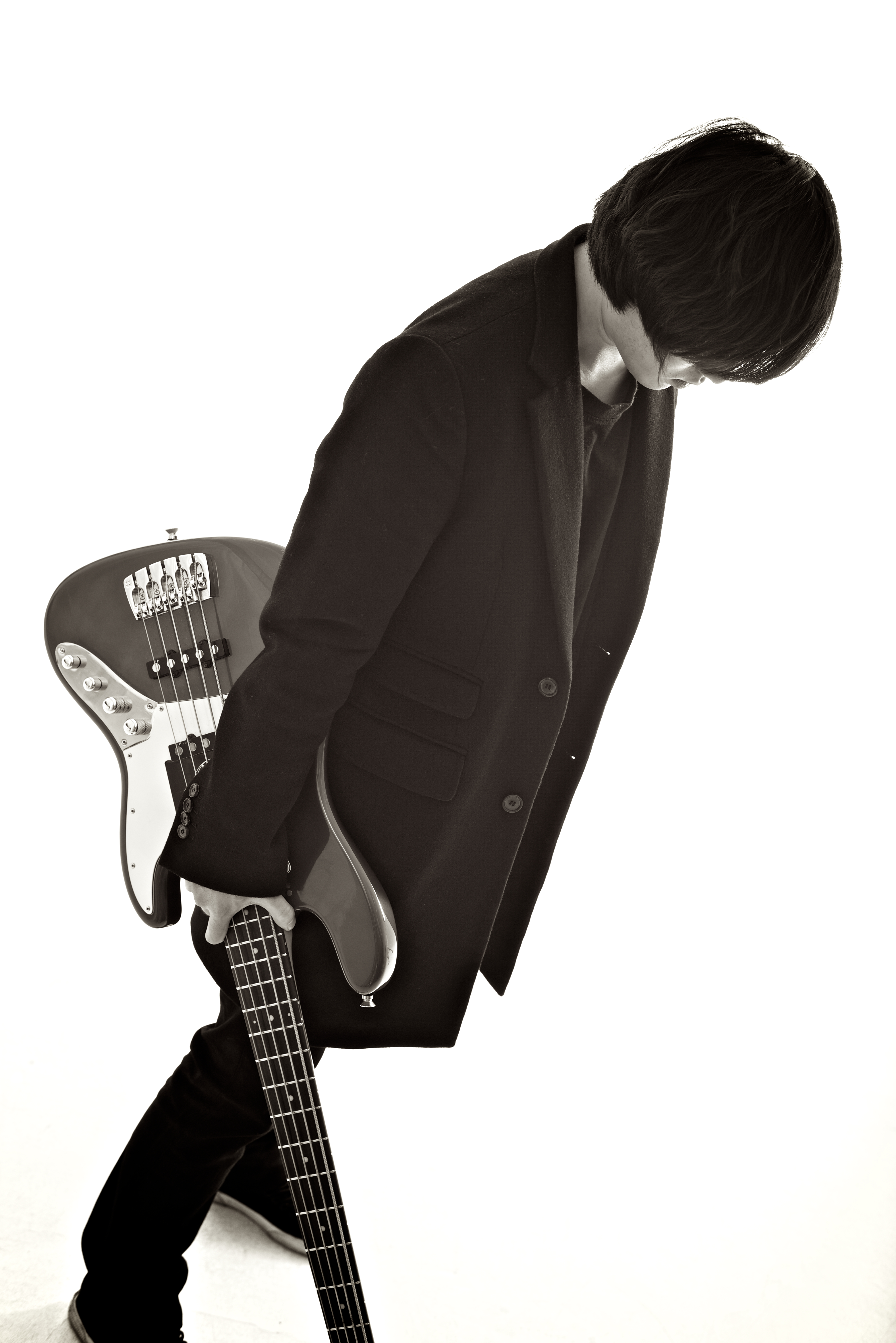
Drawing on the skills of the highly talented Whang Bo Ryung to add depth, dimensionality, and variety to each album, the rest of the band, is equally eclectic. With an accomplished drummer, a bluesy bass player, a colourful keyboardist, and a genuinely exceptional guitarist, Smacksoft’s albums are ranging, powerful, and surprising. When attending a live performance or giving any of their albums a spin, whether it is the industrial-punk rock of Smacksoft’s earlier albums to the trippy melodies off of “Follow Your Heart” expect a show that is unlike the mainstream musical fare from Korea.
Later this year, look for Bo’s solo album, an acoustic experiment in sound for this progressive Queen of Punk. Capitalizing on her training as a painter, she plans to include accompanying artwork for each individual track. During live shows, she intends on displaying the paintings as a sort of performance art piece. Look for the as of yet untitled album on the shelves by October.
Originally Published: Groove Korea, August 2013

 Sabrina Constance
Comments are closed.