
PROLOGUE:
Impatience has always been one of my most persistent flaws—not the charming kind, but the restless, granular kind that lives in every cell. It’s a sort of permanent edginess, like coarse sand caught under the skin, abrading my better judgment and grinding against what I like to think of as an otherwise analytical mind. Age has done little to soften it. If anything, it sharpens in moments that require grace.
This impatience is on full display in my second transition log, written ten years ago. Only four days into what I told myself would be a lifelong journey, I was already combing frantically for signs of progress, desperate to justify the enormity of the choice I had made. I wanted evidence—any scrap of it—that I hadn’t misjudged myself, that the gamble would pay off, that the guilt and doubt could finally quiet.
Reading it now, I can see the contradiction clearly: I parrot the medical wisdom that real changes take weeks or months, yet I bristle with annoyance that nothing has happened. Beneath the words, I hear my younger self straining for validation—hoping a friend might look closely enough to notice some subtle shift and reassure me that I was on the right path. I don’t remember anyone doing that, which in hindsight is its own kind of blessing. It meant my friends weren’t tossing meaningless platitudes at me. Still, there are moments in life when even hollow comfort can feel like a warm blanket against a bitter wind.
What follows is the original journal entry I wrote for myself—an attempt to act as a “somewhat reliable witness” to my transition, to mark time in a way my body and memory could not. When I wrote it, I had no idea who I would be in 2020, nor whether I would feel content with the progress of my transition. Because transitions aren’t things we finish. They’re things we continue living through, layer by layer, in ways our younger selves could never have predicted.
Sunday, August 01st, 2010 (Day 4. Week 1)
The weekend has slipped away the way weekends always do—softly, almost apologetically—leaving behind the warmth of the friends who have become my surrogate family here in South Korea. And yet, in the quiet that follows their laughter, I can’t escape the truth: nothing in my body has changed. Four days after my first injection, I tell myself to be patient, to embody this performance of calm rationalism about how long transformation takes. But under that thin composure, I am still looking for proof, for any whisper of affirmation that something inside me is finally shifting.
The “why now” of it all still echoes in me. I had reached a point where I could no longer endure living for the expectations of others—my friends, my colleagues, my family. I was tired of trying to meet the impossible standards they projected onto me, tired of losing, tired of time slipping through my fingers. I watched friends—many I’d only ever known online—reach milestones, begin their medical transitions, and flourish in ways that felt both fragile and luminous. Their happiness pierced something in me. I knew then that I needed to take ownership of my body and my life before even more time passed. I needed to choose myself, without apology, without permission.
Back in my ancient, charmless apartment in industrial Ansan, solitude becomes a magnifying glass. I hover in front of my stained mirror like a dusty prospector searching for gold, examining my face and body for anything precious or new. Under the unforgiving fluorescent light of my windowless bathroom, I comb my fingers over chapped skin, hoping for some softness, some early flicker of femininity. Nothing yet. Only the familiar face I’ve lived in for decades, and the ache of longing for it to evolve.
In the months leading up to this moment—after socially transitioning years ago but before choosing medical transition—I kept getting flashes of the girl I once was. A child of four or five, dreaming of a grown-up life in which she lived openly as herself. Then again at twelve or thirteen, imagining adulthood not as escape but as arrival. A literary kind of happily-ever-after. Instead, I found myself in adulthood feeling like I had failed that younger me. I had let fear, confusion, and the weight of other people’s comfort dictate the course of my life. I could no longer bear the thought of being responsible for smothering her hope. Time was passing, and it was time to claim my authentic self.
The rest of the weekend unfolded gently. On Friday, I let myself rest, slipping into a matinee at the World 8 Cinema in Siheung—my sanctuary in the dark. Afterward, I wandered downstairs to my “Korean mom’s” restaurant and ate a comforting, familiar lunch. Saturday took me to Gwacheon to meet Shin, Ji-Ae and Kim, Yoon-Hee (Erin). We spent quiet hours in the library while Ji-Ae studied, then drifted through COEX together until our energy dissolved and we parted ways.
If I worried that estrogen would throw my body out of rhythm—my heart, my sleep, my energy—it hasn’t. Everything feels steady. Ordinary. And yet nothing about this is ordinary to me.
Since announcing my transition on Facebook—my “situation,” as I half-joked—I’ve been flooded with support: emails, calls, comments, private messages. So many voices cheering me on. I hadn’t expected that. It humbled me. It moved me. It stitched warmth into places in me I thought might stay cold forever.
Still, in those early days—before HRT and long after—I lived with a fear of being seen. A fear of “getting it wrong,” not because I doubted myself, but because I lived in a deeply conservative country. I was lucky to find my friends here, but I worried about professional repercussions and the legal vulnerabilities of transitioning as a guest in another nation. There was never a fear of disappointing others; only of encountering the bigotry I had read about. Medically and legally transitioning overseas brought challenges I hadn’t anticipated—some of which would take years to resolve thanks to the bureaucratic tangle of Canadian and Ontario systems.
And yet, Korea became a cocoon. Distance from Canada offered clarity but also loneliness, the kind that forces a person inward. In that isolation, my resolve deepened. I summoned the courage to honour the covenant I’d made—quietly, privately—with the girl I had been. The distance shielded me just enough for transformation to take root.
My apartment, pallid and aging, with its warping floor and smoke-stained wallpaper, could feel suffocating under harsh light. But it had one grace: the view. Sitting atop the highest hill in my district, near the top of the building, I could see so much of Ansan spread out beneath me. And in the early days of HRT, when the cool, damp air from the West Sea met the warm currents rolling down from the Gyeonggi mountains, a gentle fog would settle over my neighbourhood for hours. Everything looked washed clean, as though the world had been reset. When the fog lifted, it felt like both the city and I had been granted a small, quiet chance to begin again.
Hope settled in me the way that fog did—soft, insistent, reshaping the edges of everything it touched. I am beginning to understand that transformation is not a single leap but a series of small permissions we give ourselves. A slow unfurling. A reclaiming.
My anxiety, my small frantic worries, may never disappear entirely, but I can feel them softening. I can feel space opening inside me for grace. And in that space, something like a future begins to take shape—not perfect, not promised, but finally, beautifully mine.
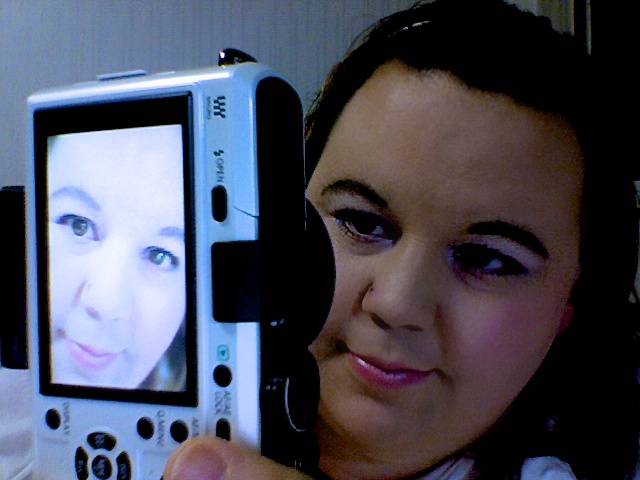
Photo Taken: 2010, Ansan, South Korea
This was originally written on August 1st, 2010, with a prologue added February 28th, 2020, and then edited again December 7th, 2025.
On Not Disappearing
I am not good at making lifelong friends. My record is uneven, marked by distance and missed chances. Going stealth would have only deepened that pattern. More importantly, it would have meant abandoning the mercy, empathy, and action shown by the people who stood beside me. I needed their proximity—not just their support, but their…

I DIDN’T PLAN TO BECOME A TEACHER: The Students Who Made Me Stay
I didn’t become a teacher because I planned to. I became one because I stayed. Because I said yes often enough. Because students like Alex and Clare taught me that education is not merely academic—it is relational, fragile, and profoundly human.
RAISED BY PLACES UNSEEN: The Quiet Way Borneo Found Me
I arrived in Kota Kinabalu under a veil of night. The airport was modest, its walls carrying a patina of age that felt unexpectedly comforting. It didn’t strive to impress; it felt lived-in, a doorway used by generations of travellers before me.
PART 3 – NO PERMISSION NEEDED: What Was Once Shame Has Become Pride
What began as innocent play, the joy of dressing up and pretending, soon curdled into confusion and punishment. My parents’ gentle corrections hardened into anger, their voices faltering with something more akin to unrelenting impatience. My pleas — small, wordless, desperate — were dismissed as misbehaviour. How could I have explained, at four or five…
PART 2 – SHAPE OF BECOMING: Grief, Legacy, and Inheriting Her Echo
Grief is a complex journey, shaping identity through loss and memory. Sabrina reflects on her relationship with her mother, navigating absence, longing, and legacy. While struggling to inherit her traits, they ultimately find strength and validation in her mother’s enduring voice, guiding them towards self-acceptance and growth.
 Sabrina Constance