
After passively witnessing, from the sidelines, a solid and sincere march toward progress in my community, first through the City of St. Catharines with their Anti-Racism and the Equity and Inclusion committees and later by the Regional Municipality of Niagara’s push for the creation of several progressive, equity-seeking advisory committees, I decided that this was an opportunity for me to become an active participant for the change I wanted to see.
After being appointed to the Women’s Advisory Committee as a proud, open, and outspoken voice for the transgender, genderqueer, and gender non-conforming community in Niagara, I worked with a team of exceptional, bright, and successful women from across the Region to “meaningfully advocate for gender-based issue resolutions and opportunities related to Regional policies, priorities, and decisions and equally important, to promote leadership development that empowers women in Niagara to fully participate in civic life.”
Later, the opportunity was presented to me to be a part of the newly-formed Diversity, Equity, and Inclusion Advisory Committee, where I was first elected to be the Vice-Chair and later appointed as the first openly trans person to Chair an advisory committee for the Region.
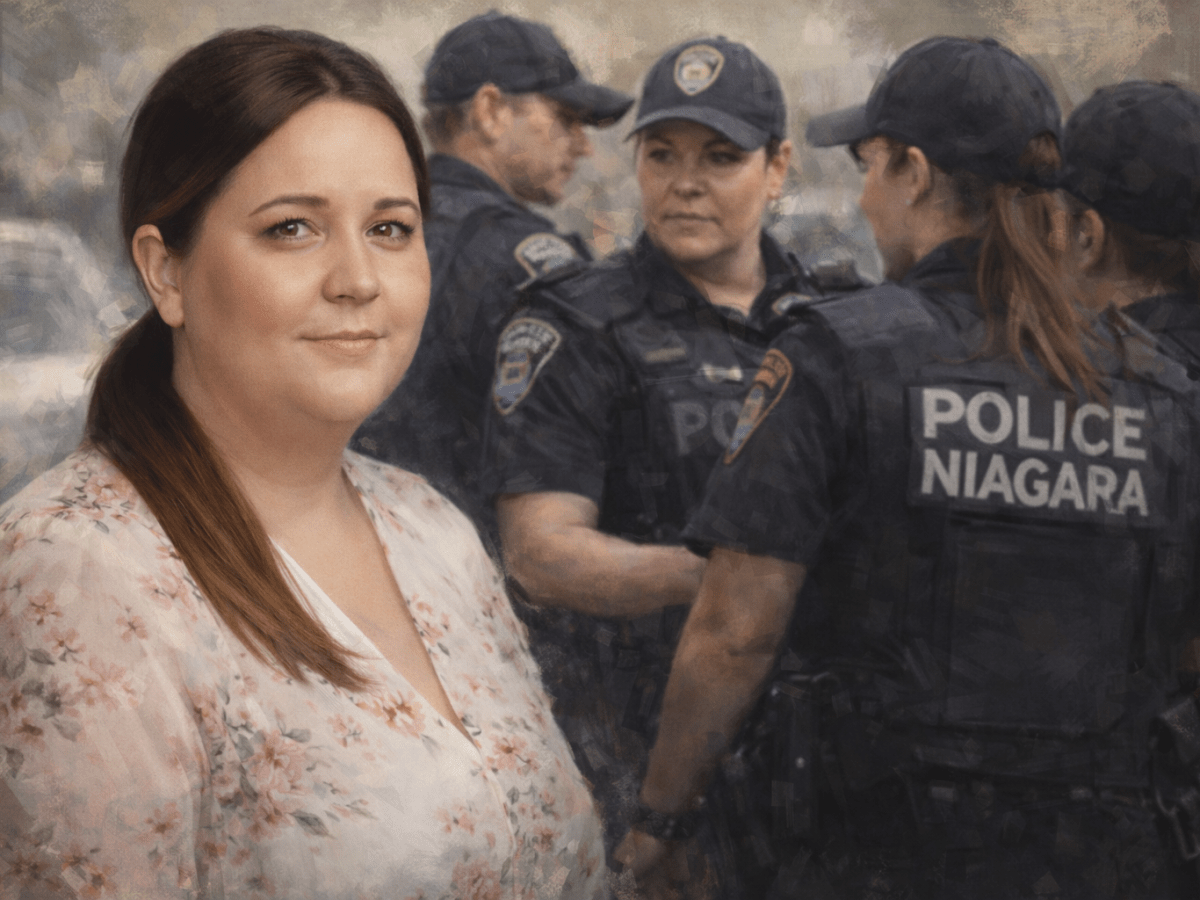
My desire to become more actively involved with the politics and policy of my Region and community came after an unfortunate encounter with a Niagara Regional Police sergeant that twice maliciously and deliberately misgendered me. Of course, this police officer was shielded from his unmistakable bigotry towards me, an abhorrent undertaking he likely still freely engages in to this day in his role as a senior peace officer in our community. I wanted to advocate for accountability and training procedures that would see other gender and sexual minorities treated more equitably in their encounters with peace officers going forward. The harm caused when someone with (a modest amount of) authority over another does so in a casual and spiteful manner can never be understated.
In the early days of my social transition, some of my lifelong friends were supportive. Many were not. As it turned out, some were fair-weather friends: friends, with conditions. Some of them kept intentionally referring to me as the gender I was assigned (incorrectly) at birth. It was a knife to the heart, especially when it came from someone that I care about, respected, or should have known better.
In-person, I believe that I am easily identified as female. Before my medical transition, I rarely was misgendered when presented as female. In the past, people used to refer to this as being “passable” (an outdated and offensive term). Not all transgender men and women are “passable,” even after the great lengths they go to socially, medically, and legally transition. This causes these individuals significant dysphoria, anxiety, and often depression. And while I feel I present as female by appearance, sadly, many others identify me as male when they hear my voice (only), which causes me to feel disrespected, invalidated, dismissed, alienated, and dysphoric every time it happens.
From the outset of my march towards the promotion of inclusion, harm reduction and the mitigation of discrimination by working with the Region and other organizations and important community stakeholders, I had hoped to make the Region, as an organization, more inclusive and to foster a culture of fairness, empathy, and understanding. Sadly, based on my extensive experiences with and across the Region over the last twelve months, I see that much work is still needed.
Respecting a trans person’s name and using the appropriate pronouns are the most negligible and most straightforward way that you can acknowledge someone’s identity. You can’t always know what someone’s pronouns are by looking at them. Asking and correctly using someone’s pronouns is one of the most basic ways to show respect for their gender identity.
Earlier this year, I had pledged to make room for the next generation of brilliant, impassioned, and diverse 2SLGBTQQIA+ voices by stating that I would not seek reappointment to these two committees. After witnessing the ominous growth of this manic, flagrant transphobia, including this type of behaviour in a committee I Chair, I have become deeply concerned over the still-present lack of diversity on our municipal and regional councils and advisory committees. My mission isn’t complete. The need still exists for some communities to fight for the little ground we’ve gained.
As I see it, we are failing the first goal of the Diversity, Equity, and Inclusion Advisory Committee. We are not thoroughly and meaningfully “addressing the bias and discrimination and its negative impacts on quality of life, safety, health, and inclusion for the diverse communities in Niagara” if we can’t achieve this on the Region’s own DEIAC. Likewise, I think we are failing the second stated goal of the DEIAC: [to] “provide a safe place for all people to voice their opinions in order to work together to promote and foster understanding and inclusion in Niagara.” How can the Diversity, Equity and Inclusion Advisory Committee be part of creating a plan to “improve diversity, equity and inclusion in Niagara” if some of the members can’t even show the most elemental respect for our gender diverse and genderqueer members?
It doesn’t matter whether someone is male, female, or non-binary. They should all be treated equally. We can’t even get to the place to openly, freely, and meaningfully discuss and debate policies which address the “negative impacts of bias and discrimination on quality of life, safety, health and inclusion” until we can learn to speak a shared language.
As such, my work with the Region is not complete. I think there is still significant work that needs to be done.
While I am still working out how best to serve my community, over the coming days, weeks, and months, in consultation with family, friends, and the community, I will seek advice and guidance on how to best continue to advocate for inclusivity and marginalized communities all across Niagara. I think it’s time that Niagara finds a meaningful place for those who experience inequality and marginalization in the development of programs, policies, and practices that affect all residents of our community.

On The Myth of Canadian Exceptionalism
This is not an argument that Canada is Mississippi in 1964—but no society arrives at that point by accident. The same dynamics are visible here at home. They surface in the normalization of hateful rhetoric online and in public spaces across Canada, including here in Niagara. Those advancing this rhetoric often insist they are merely…

On My Fight with the NRPS
Until now, I have carried this case largely on my own. I authored the original complaint. I survived the first major procedural hurdle. I researched and drafted a comprehensive response to the NRPS “defence”—a document prepared by a team of taxpayer-funded lawyers with decades of combined experience. I met the system where it stood, with…
On Not Disappearing
I am not good at making lifelong friends. My record is uneven, marked by distance and missed chances. Going stealth would have only deepened that pattern. More importantly, it would have meant abandoning the mercy, empathy, and action shown by the people who stood beside me. I needed their proximity—not just their support, but their…
 Sabrina Constance