
I never anticipated that creating a documentary about homelessness and hostile architecture in Niagara would subject me to one of the most painful and humiliating experiences of my life. Yet, here I am. Today, I stand up not just for myself but for every trans person who has been dehumanized by the very institutions that are supposed to protect us. It is time to demand accountability and compassion for all.
My name is Sabrina Hill, and I am a passionate filmmaker, writer, and justice advocate. In December 2023, I found myself in an unexpected and troubling situation. While filming in a public space, I was approached and detained by several constables with the Niagara Regional Police. It was a surreal experience, especially since I was doing nothing wrong. I was simply there with my camera, dedicated to capturing a story that truly matters (the unhoused struggling in our community). It was disheartening to be questioned without cause, which reminded me of the importance of standing up for our rights to document the world around us.
But instead of being treated with respect, I was surrounded by four police officers. And then came the demand: they insisted I give them my deadname—the name I legally changed years ago, the name that no longer belongs to me.
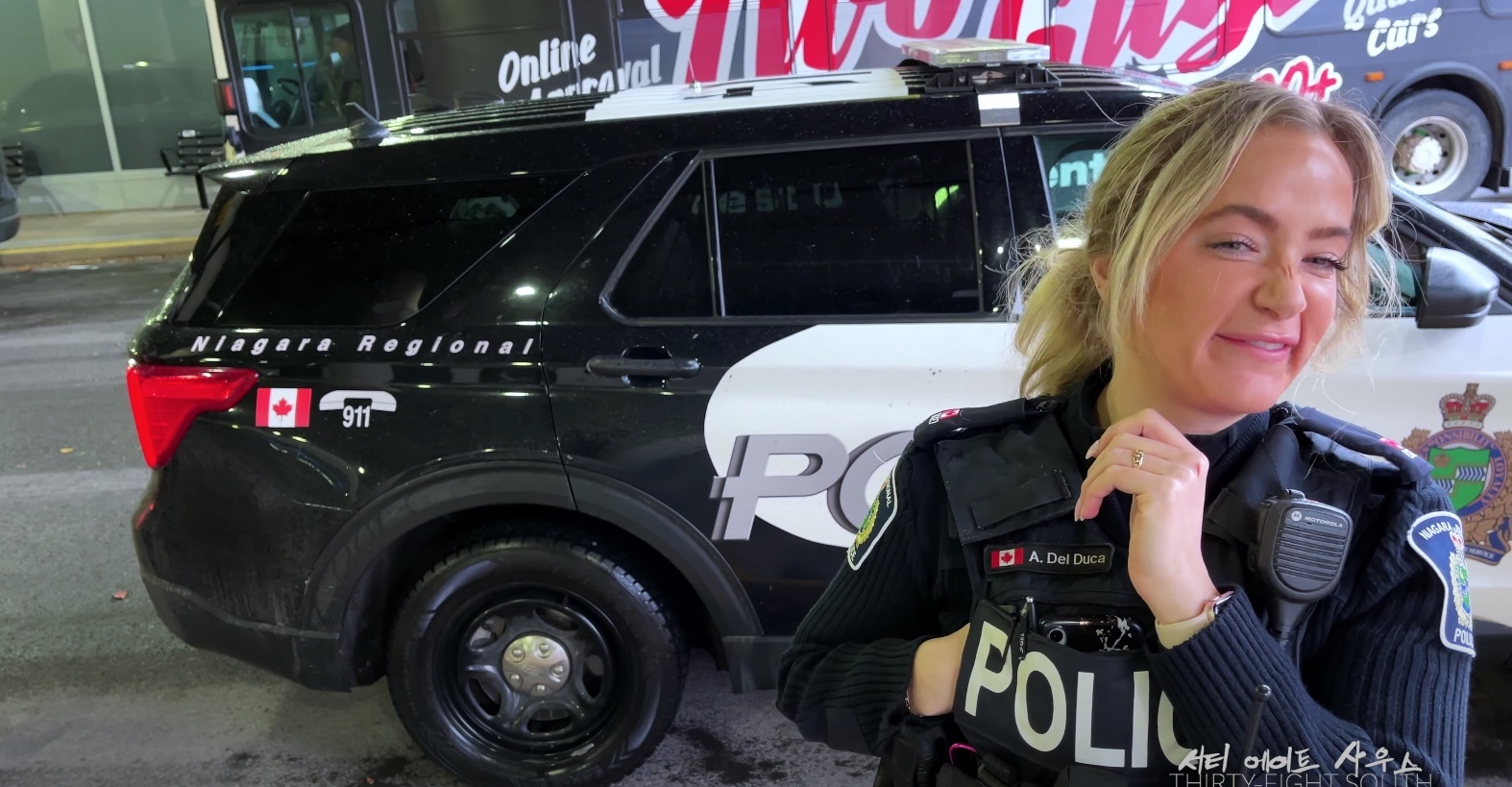
The Police Had No Legal Authority to Do What They Did
I was standing on public property. There are no bylaws in St. Catharines or the Niagara Region that prohibit filming or require a permit for non-commercial, journalistic, or artistic filming on public land. And yet, I was detained. I was told to leave. I was issued a trespass notice. Then I was charged with “Fail to Leave”—a charge that the Crown later withdrew because it had no legal foundation. The police had no lawful reason to demand my name, let alone my deadname. But they did it anyway.
In Ontario, police are only allowed to compel identification under particular circumstances—if you’re driving (or engaged in other licensable activities), if you’re lawfully arrested, if you’re being cited for a provincial offence, or if you’re trespassing on private property. None of those conditions applied to me. What they did was unlawful, unconstitutional, and deeply discriminatory.
Demanding My Deadname Was an Act of Violence
When Constable Ashley Del Duca demanded my deadname, it wasn’t about “safety” or “protocol.” It was about power. It was a denial of my identity. It was an act of humiliation meant to break me down in a public space, in front of her colleagues and others.
The law is clear. Under Ontario’s Human Rights Code and multiple tribunal rulings—including XY v. Ontario and EN v. Gallagher’s Bar and Lounge—misgendering and deadnaming someone without legal necessity is discrimination. And it’s discrimination that cuts to the core of our humanity. It invalidates who we are and reinforces the message that we don’t belong.
When police officers use their authority to force transgender people into situations where we must “prove” our identity—when we are not being charged with anything, when we’re just living our lives—that is violence. Psychological violence. Legal overreach. Abuse of power.
This Wasn’t the First Time I Was Targeted
Sadly, this wasn’t my first encounter with transphobia from the Niagara Regional Police. I’ve had multiple run-ins with officers from 1-District (St. Catharines), including one in 2019 where a sergeant misgendered me—twice—even while holding my government-issued ID that clearly says I’m female.
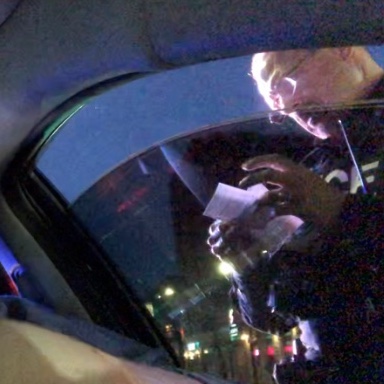
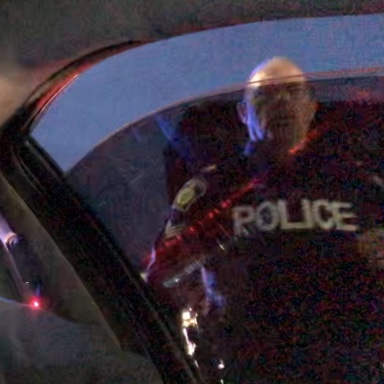
I also recently learned that a general occurrence report created in 2024 incorrectly identified me as “male,” despite every piece of legal identification I have—my driver’s license, passport, birth certificate, health card, and firearms license—identifying me as female.

It’s not just one bad apple. It’s a pattern. A systemic failure. A culture that either doesn’t understand or doesn’t care about trans people’s rights and dignity. And while the Niagara Regional Police claim to have training and equity policies, what’s written on paper means nothing if it’s not respected in practice.
Why I’m Going Public—and Why I Need Your Help
I’ve filed a formal human rights complaint against Constable Del Duca and the Niagara Regional Police Services Board. I’ve taken this step because I believe what happened to me is not only wrong but dangerous, especially for other trans women, trans youth, and members of the queer community in Niagara and beyond.
I’m sharing my story because I want change, not just for me, but for everyone who has felt unsafe or unseen by law enforcement. I’m doing this alone, without the resources that police officers automatically receive. While a publicly funded legal team is defending the officer who harmed me, I’ve had to represent myself. There is no legal aid, no institutional support, and no public funding available for victims of police misconduct, especially when gender identity and gender expression are at the heart of the harm.
I’m Asking for Public and Media Support
I can’t do this alone. I need your voice, your platforms, and your solidarity.
- If you’re a member of the media, I kindly request that you cover this story. Shine a light on what’s happening in Niagara. Ask tough questions. Demand transparency.
- If you’re a civil rights or legal advocacy group, I welcome your support—be it legal assistance, amicus briefs, or public statements.
- If you’re a member of the public, share this story. Talk about it. Ask your local officials what they’re doing to protect trans people from state violence.
- If you’re a policymaker, know this: silence and policy inaction are complicity. We need enforceable protections, not just EDI statements.
I have already suffered emotional, legal, and professional harm from this experience, but I know I’m not the only one. If this is how the police treat a trans woman filming a documentary on public property, imagine how they treat someone with fewer resources, less visibility, or no legal knowledge.
This isn’t just a human rights case. It’s a test of whether Ontario’s institutions truly believe that trans rights are human rights.
Join #TeamSabrinaSTC and stand with those who believe in truth, justice, and accountability. By subscribing to my website, you’ll get firsthand updates as I take on Ashley Del Duca and the Niagara Regional Police Service in a fight that impacts us all. This isn’t just my story—it’s a stand for every resident who deserves better. Stay informed. Stay inspired. Be part of the change.
Make a one-time donation
Make a monthly donation
Make a yearly donation
Choose an amount
Or enter a custom amount
Your contribution is appreciated.
Your contribution is appreciated.
Your contribution is appreciated.
DonateDonate monthlyDonate yearly
On My Fight with the NRPS
Until now, I have carried this case largely on my own. I authored the original complaint. I survived the first major procedural hurdle. I researched and drafted a comprehensive response to the NRPS “defence”—a document prepared by a team of taxpayer-funded lawyers with decades of combined experience. I met the system where it stood, with…

On Not Disappearing
I am not good at making lifelong friends. My record is uneven, marked by distance and missed chances. Going stealth would have only deepened that pattern. More importantly, it would have meant abandoning the mercy, empathy, and action shown by the people who stood beside me. I needed their proximity—not just their support, but their…
JUSTICE ENDS WHERE POLICING BEGINS: The Shameful History of Policing The Gay and Trans Community in Canada
Policing reform is routinely framed as a matter of training, oversight, or inclusive language. None of this resolves the central contradiction exposed by decades of violence against trans people: policing is a system built on discretion, not equality. It decides who belongs, who is suspect, and whose suffering is credible.
PART 3 – NO PERMISSION NEEDED: What Was Once Shame Has Become Pride
What began as innocent play, the joy of dressing up and pretending, soon curdled into confusion and punishment. My parents’ gentle corrections hardened into anger, their voices faltering with something more akin to unrelenting impatience. My pleas — small, wordless, desperate — were dismissed as misbehaviour. How could I have explained, at four or five…
 Sabrina Constance