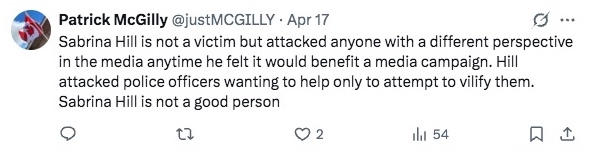
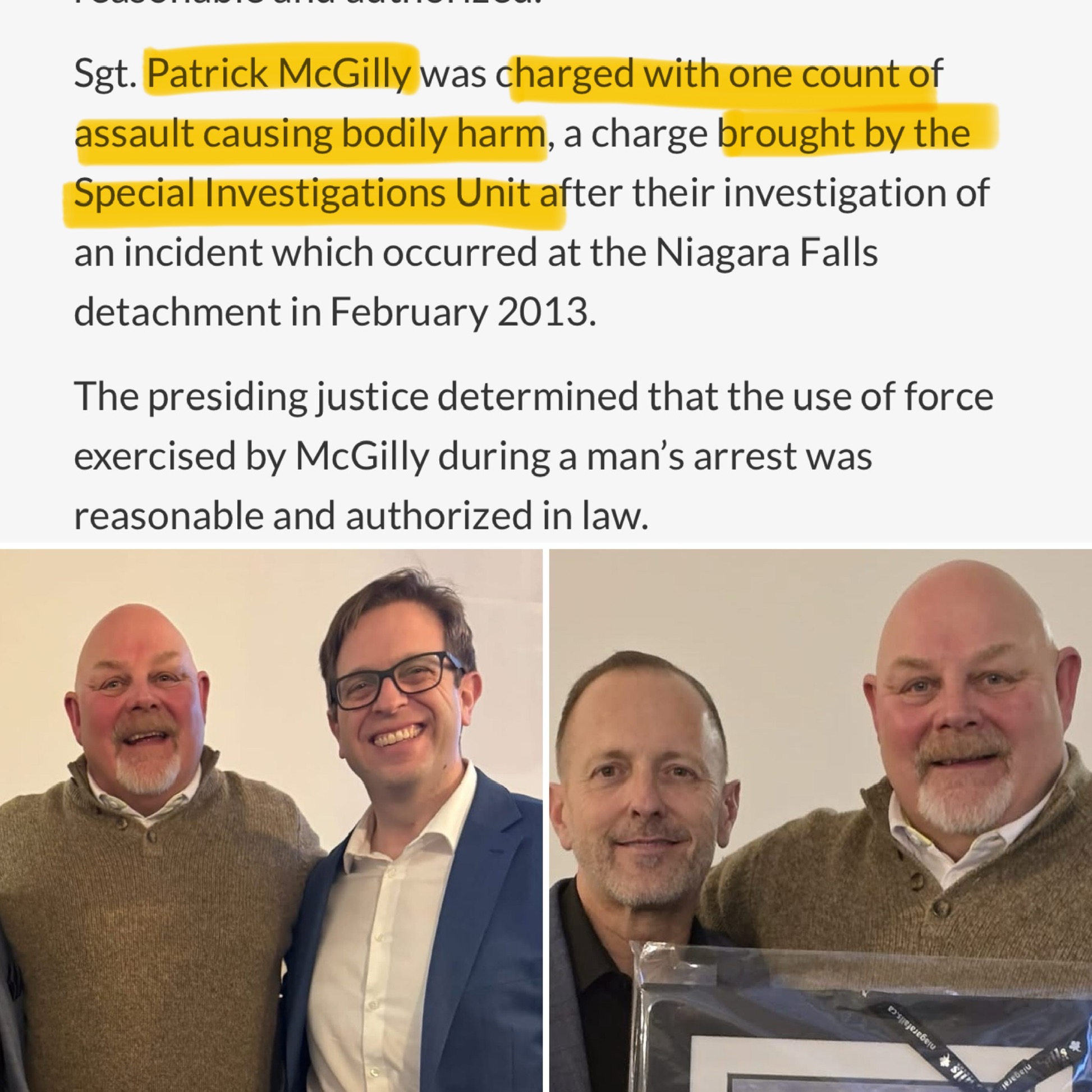
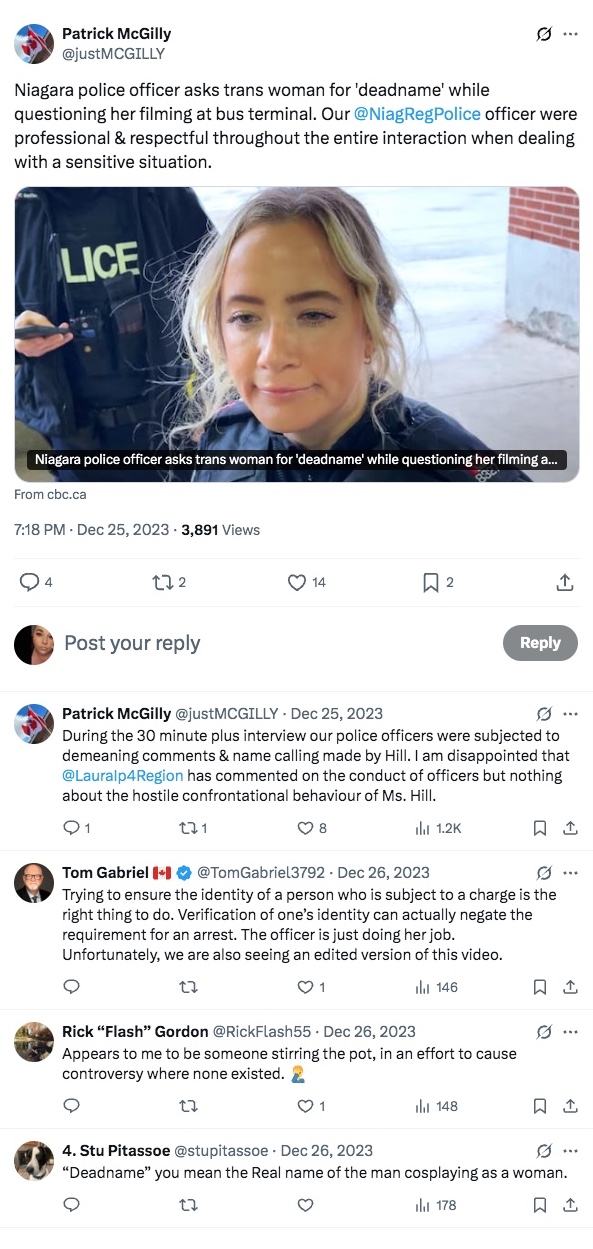
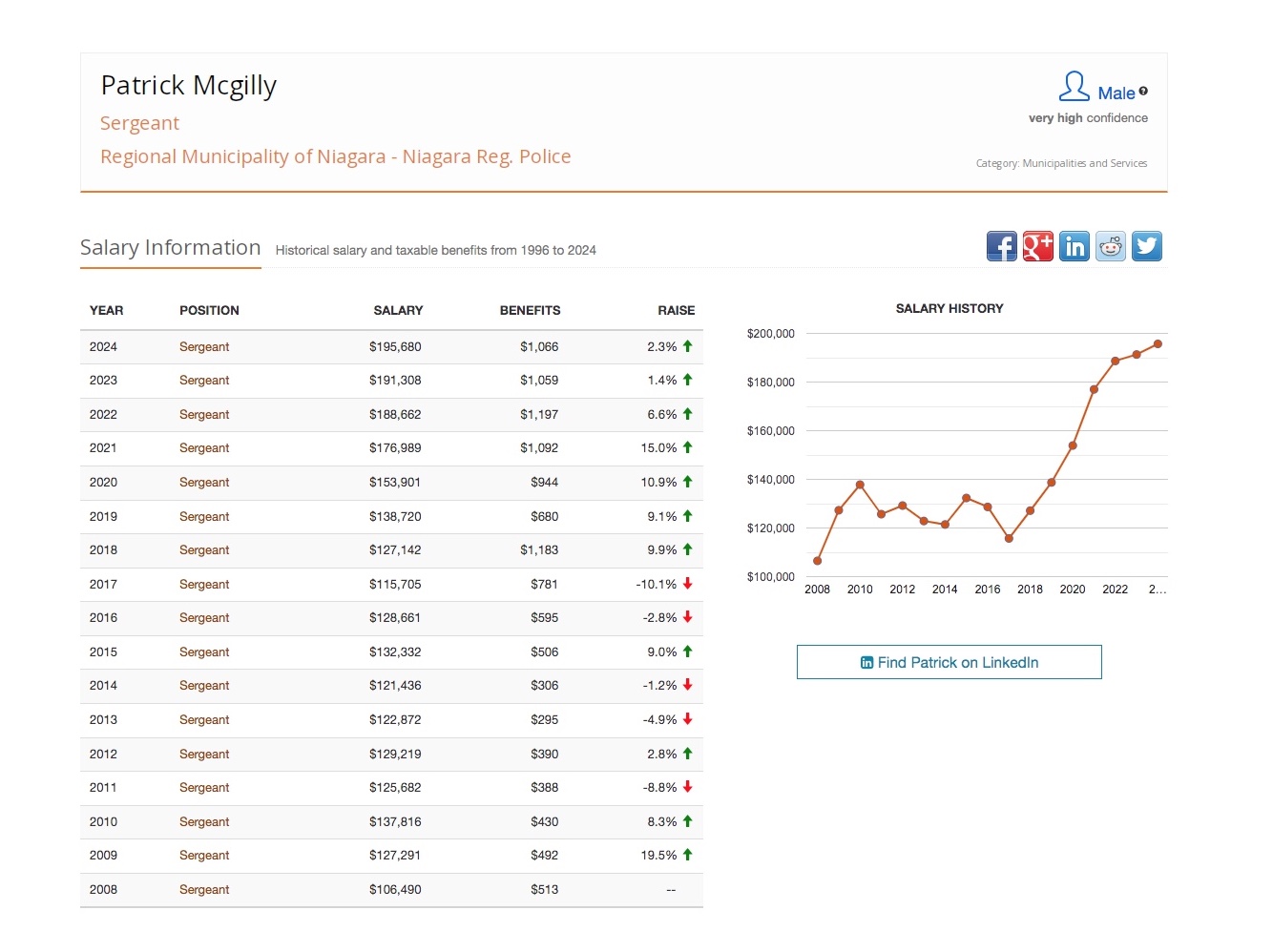
Recently, I learned that the former president of the Niagara Regional Police Association, SGT. Patrick “The Thumb” McGilly, intentionally misgendered me and then took to social media to attack me publicly. While it may appear to be the prejudice of one individual, it reflects a deeper problem: a policing culture in Niagara where transphobia and homophobia are not only tolerated but modelled by leadership.
This is not about a single incident. It is about a system that has grown comfortable, allowing prejudice to flourish in plain sight. When senior officers and union leaders openly demean transgender people, it sends a clear message to the rank and file: this behaviour is acceptable. And when misconduct goes unchecked, victims of hate and harassment quickly learn that they cannot trust the police to protect them.
A Pattern, Not an Exception
My own experience of being misgendered by a Niagara officer was not confined to the moment. The misgendering appeared in an official “general occurrence report” and was then brushed aside after I filed a complaint with the Law Enforcement Complaints Agency. This is how systemic bias works: the harm is documented, yet the accountability process exists more to shield officers than to correct their conduct.
Niagara leadership has shown a broader pattern of denial when it comes to systemic bias. The Niagara Region Anti-Racism Association publicly denounced recent appointments of police leaders who rejected the very idea that systemic racism exists in the service. This matters because when leadership refuses to recognize structural bias, it provides cover for every other form of prejudice—including hostility toward queer and trans people.
Across Ontario, the picture is no better. A transgender woman in Toronto filed a complaint after officers refused to respect her gender identity. In North Bay, a police officer who simply requested gender-neutral bathrooms says he faced reprisals. The Human Rights Tribunal of Ontario has confirmed that such cases raise valid concerns about discrimination based on gender identity and expression.
A Climate of Mistrust
The issue is not limited to individual complaints. Hate crime data across Ontario show that 2SLGBTQQIA+ people remain one of the most frequently targeted groups. Yet police themselves admit these numbers represent only a fraction of the problem, because many victims do not report incidents at all. Why? Because too many fear that their identities will be dismissed, mocked, or treated as a nuisance by officers.
This mistrust is reinforced by the conduct of officers in other jurisdictions. In Toronto, a detective was disciplined for racist and homophobic tirades, including refusing to help a victim of domestic violence because of their sexual orientation. Another officer was docked pay for mocking mandatory training on gender and sexuality. These are not isolated slips—they are windows into an internal culture where derogatory language and hostility are treated as workplace banter until exposed to public scrutiny.
Why is External Accountability Necessary
Taken together, these examples paint a picture that is impossible to ignore. Leadership denial, routine misgendering, discriminatory remarks, and chronic underreporting all reveal an institution that has not taken its duty to marginalized communities seriously.
It is precisely because this culture is so entrenched that I chose to file a complaint with the Human Rights Tribunal of Ontario. My case is not just about one officer’s conduct. It is about holding an institution accountable for perpetuating harm against queer and trans people in Niagara. Internal reforms have consistently failed because the leadership either looks away or participates in the problem itself.
The police service cannot credibly claim to champion diversity while allowing transphobia to flourish in its ranks. Nor can it continue to promote the language of “community trust” while leaving queer and trans residents vulnerable to harassment by those sworn to protect them.
A Community Responsibility
Real safety in Niagara will only come when every resident—trans, queer, gay, racialized, Indigenous—can trust that they will be treated with dignity by those in uniform. This is not only a demand on the police service, but on the broader community. Silence in the face of bigotry is complicity.
We all have a role to play in insisting that our public institutions reflect the values of equality and respect. That begins with naming the problem for what it is: systemic, not incidental. Only then can we push for the accountability and change that Niagara desperately needs.
Stay Connected — It’s Free
Subscribe with your email below to unlock member-only content. No cost, just insight and stories delivered straight to you.
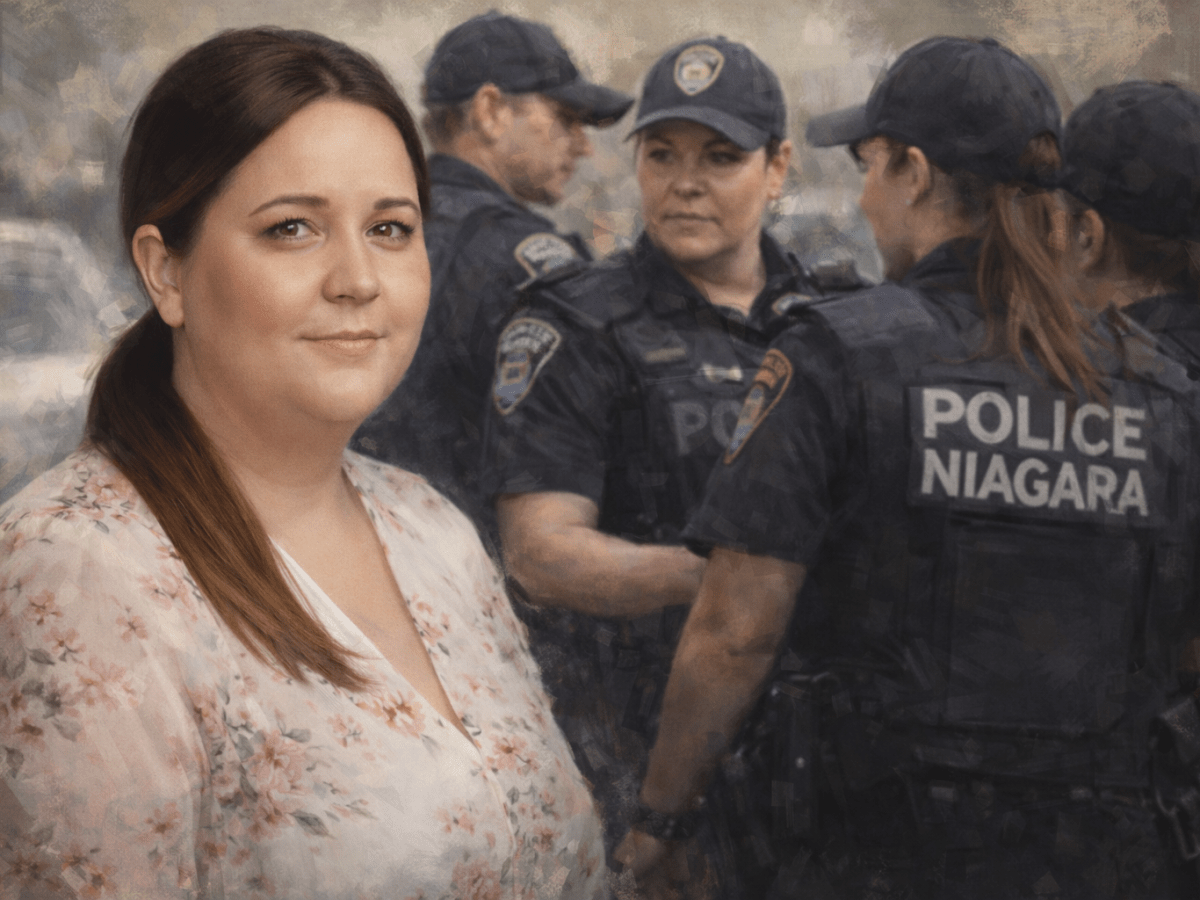
On My Fight with the NRPS
Until now, I have carried this case largely on my own. I authored the original complaint. I survived the first major procedural hurdle. I researched and drafted a comprehensive response to the NRPS “defence”—a document prepared by a team of taxpayer-funded lawyers with decades of combined experience. I met the system where it stood, with…

JUSTICE ENDS WHERE POLICING BEGINS: The Shameful History of Policing The Gay and Trans Community in Canada
Policing reform is routinely framed as a matter of training, oversight, or inclusive language. None of this resolves the central contradiction exposed by decades of violence against trans people: policing is a system built on discretion, not equality. It decides who belongs, who is suspect, and whose suffering is credible.

Why the Debate Over Transgender Kids in Sports Misses the Point
This content critiques the persistent targeting of transgender individuals, especially trans women, by conservatives under false pretenses of fairness and biology. It highlights the contradictions in their arguments, emphasizing that their true motives revolve around exclusion and bigotry, ultimately questioning the kind of inclusive society we aspire to build.

DENIED AND SILENCED: Niagara Police Board Blocks Delegate Request from Trans Advocate Seeking Justice
Sabrina Hill’s delegate request to the Niagara Regional Police Services Board was denied, highlighting systemic transphobia within the police service. She argues this act suppresses dissent, undermines democratic principles, and fails marginalized communities. Hill emphasizes the need for genuine accountability and action from public institutions to address injustices faced by the 2SLGBTQQIA+ community.

FINDING BRAVERY THROUGH TRAUMA: A Trans Journey
It’s strange how the slightest paths converging, literally for seconds, can leave a lasting mark on who we are, what we do, how we might see ourselves, or how we envision others seeing us.
 Sabrina Constance