
Sandor Ligetfalvy presents himself as something of a Renaissance Man, a self-taught jack-of-all-trades whose pursuits range from puzzle design and self-published children’s colouring books to dishwashing, journalism, and bitter, bigoted agitprop political commentary. Yet beneath the surface, the portrait that emerges is not of a prodigy but of a man whose public life is defined by harassment, conspiracy, and extremism. He has cultivated a reputation in Niagara as both a relentless agitator and a cautionary example of how far-right ideology takes root at the local level.
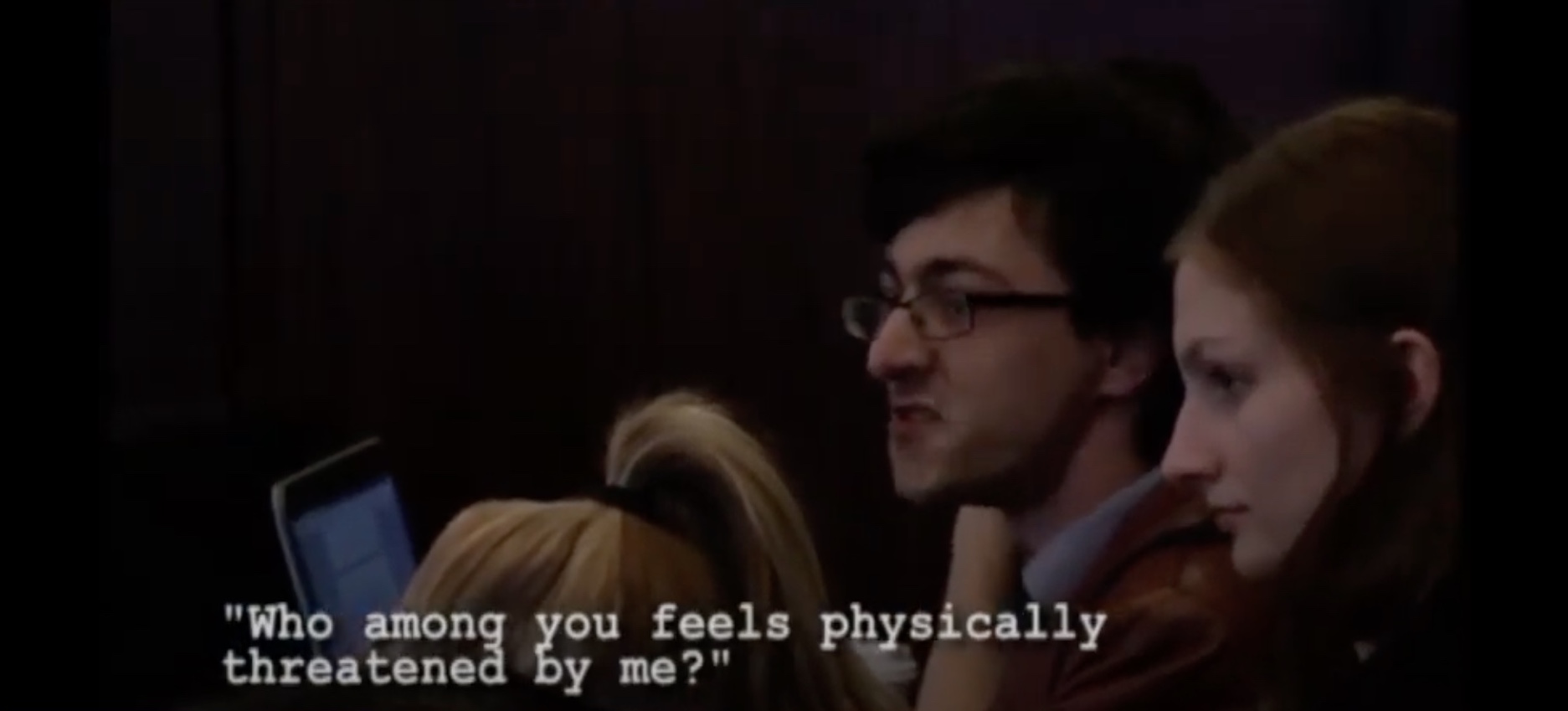
The WHOIS series was created to shine a light on figures like Ligetfalvy—those who, often from the shadows of municipal politics, work tirelessly to sway public opinion, not with facts or ideas, but with intimidation, distortion, and malice. These individuals matter not because they hold office or wield traditional power, but because their relentless noise and harassment have real effects: they silence voices, they distort public discourse, and they poison the civic atmosphere in which politics is supposed to function.
Ligetfalvy is approximately forty years old and resides in Niagara Falls. His political identity, visible through years of public statements and social media posts, blends fundamentalist conservatism with libertarian undertones, all shot through with a distinctly Eastern European Christofascist edge. His views align closely with the rhetoric of the Proud Boys and similar extremist movements: overt misogyny, hostility toward equity and inclusion, disdain for democratic institutions, and an obsession with restoring a Christian nationalist order.

The COVID-19 pandemic accelerated his radicalization. Like many caught in the gravitational pull of conspiracy, Ligetfalvy dedicated countless hours to promoting anti-vaccine propaganda, the so-called “Great Reset,” and violent fantasies about public health officials. His rants online were mirrored by bizarre offline behaviour, including an incident in which he filmed himself roaming the aisles of a pharmacy while accusing staff of participating in a shadowy global plot. It was a scene lifted directly from the fevered imagination of QAnon and other conspiracy movements: ordinary workers recast as villains in an apocalyptic drama.
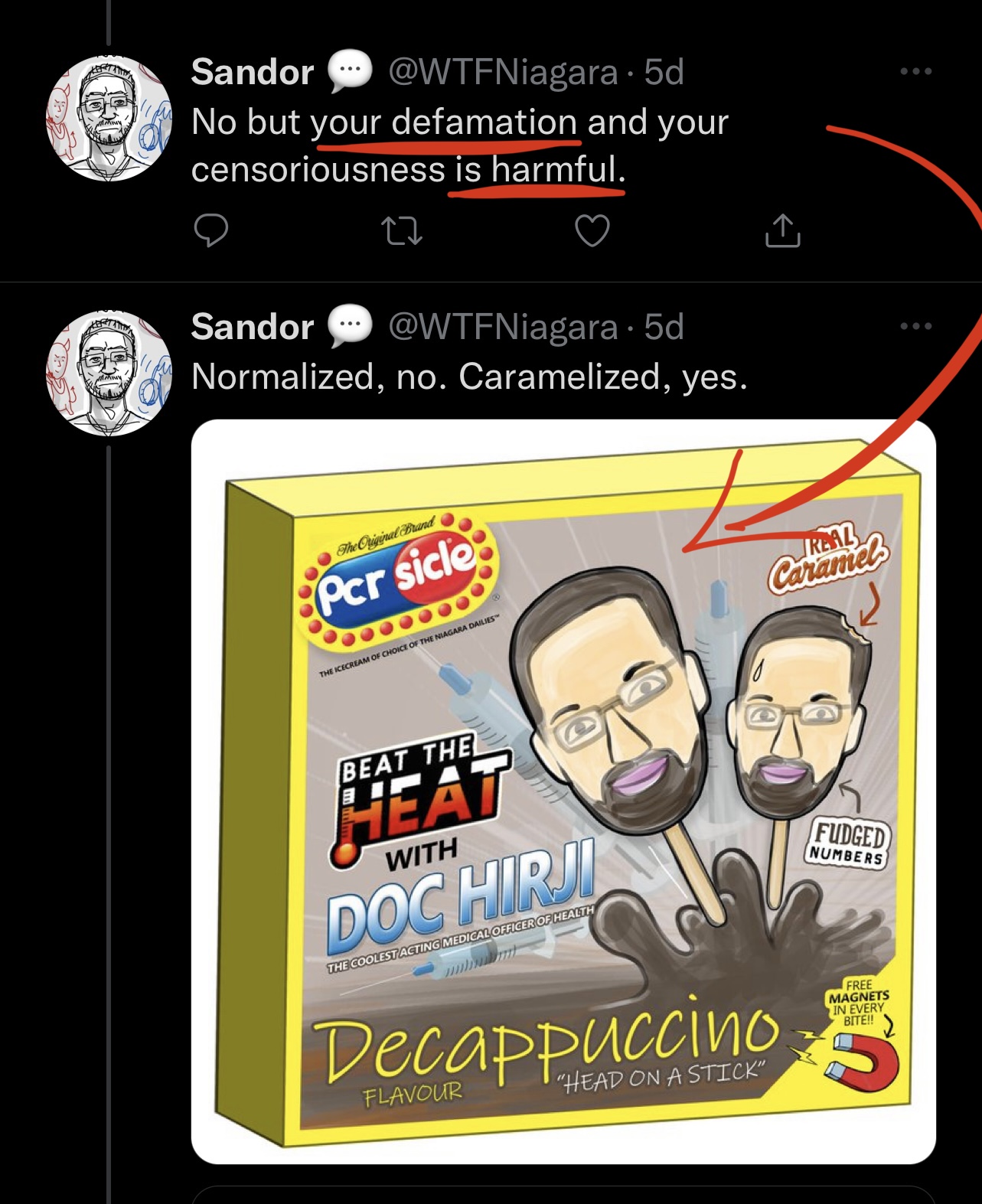
Central to Ligetfalvy’s public persona is a deep-seated hostility toward women in politics. He has waged long-term harassment campaigns against female councillors, including Laura Ip and Haley Bateman, despite not residing in the city they represent. His attacks are rarely about policy. Instead, they fixate on gender, policing women for failing to conform to “traditional roles” and weaponizing private images of them and their families. This kind of targeted harassment is not incidental—it is a form of gender-based violence that extremist men routinely deploy to drive women out of public life.
Most recently, Ligetfalvy has found yet another way to exploit public trust. He managed to secure a grant from the City of Niagara Falls, ostensibly to create a whimsical, if not poorly illustrated map promoting local businesses and revitalizing a struggling downtown district. Taxpayer money was allocated with the hope of supporting the local economy during difficult times. Instead, the community has seen no such map, no boost for small businesses, and no return on the city’s investment. What they have witnessed, however, is Ligetfalvy devoting his time and energy to harassing women in public office. Fuelled by homophobia, misogyny, and rage, he has redirected civic resources into personal vendettas. The results are alarming: not only is the city left empty-handed, but an elected official, a mother, and her children are placed at heightened risk because this hate has been allowed to go unchecked. What makes this even more troubling is the absence of anyone in Ligetfalvy’s personal life able—or willing—to intervene in his spiralling behaviour. The promised project has apparently dissolved into thin air, replaced by another cycle of harassment that threatens the safety of both individuals and the broader democratic process.
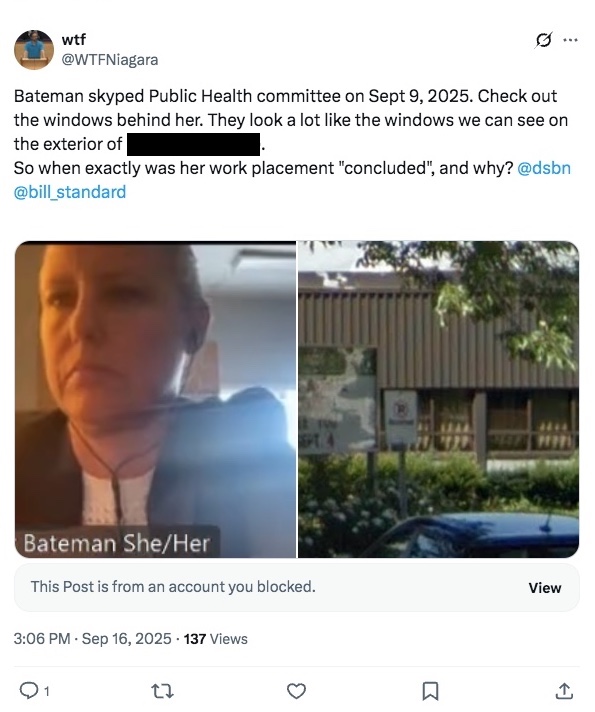
Online, Ligetfalvy’s presence is near-constant. With limited employment and an abundance of time, he is “terminally online,” producing dozens of posts a day, many of them defamatory, misleading, or abusive. Offline, his behaviour mirrors the same impulses: he attends council meetings not to contribute meaningfully but to stalk, heckle, and covertly photograph women councillors and staff. These images, once posted to his social media, are paired with inflammatory captions designed to incite harassment and fear. It is intimidation masquerading as political speech.
But what sets Ligetfalvy apart is his penchant for gaslighting the few people who do follow him online. Despite maintaining numerous social media accounts—some under his own name, others under pseudonyms—his reach is limited. His “audience” is small and mainly composed of individuals, like him, lacking in critical thinking skills and thus vulnerable to misinformation. Ligetfalvy thrives in this echo chamber, treating it as both a shield and a weapon. He routinely makes false statements to drum up outrage, hoping it will translate into sympathy, validation, and, ideally, donations that subsidize his nomadic, mostly unemployed and unremarkable life. Because he lacks charisma, stable employment, or meaningful career ambition, he pours his energy into absurd crusades: standing before city and regional councils to demand outlandish, impractical policies that betray not just a lack of seriousness but a need for attention at any cost. For his small but pliable audience, this performance creates the illusion of activism; in reality, it is little more than a theatre of grievance.
Ligetfalvy’s rhetorical style compounds the danger. Like Jordan Peterson and other right-wing figures, he leans heavily on pseudo-intellectual jargon, misused terminology, and fast, overwhelming delivery. The purpose is not to persuade but to confuse, to drown out debate with sheer volume. Unlike Peterson, however, Ligetfalvy rarely sounds convincing; his speeches are a muddle of contradictions that reveal less intellectual heft than desperation for attention.
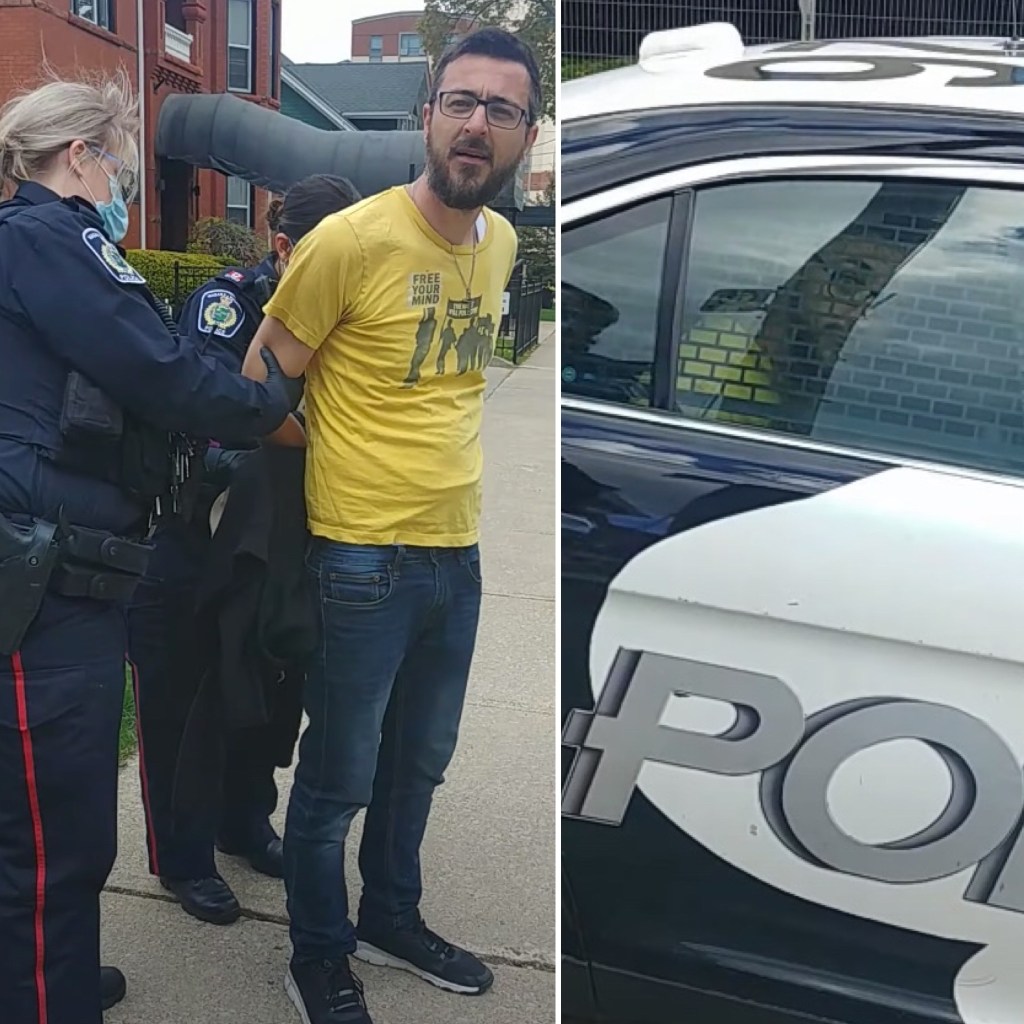
One of several arrests of Sandor Ligetfalvy
The consequences of his behaviour extend into the legal realm. Ligetfalvy has faced multiple charges, from provincial offences to criminal Informations tied to his pandemic-era activities. While some cases have been dismissed and others resolved with guilty pleas to lesser counts, his record illustrates a consistent pattern of confrontation with the law. A Freedom of Information request is currently pending with the Ontario courts to clarify the extent of these proceedings. Though he is entitled to the presumption of innocence, the pattern itself is telling.
What remains unclear is how Ligetfalvy supports himself. He has been associated with a dissolved corporation, Axiometric Games Inc., though its website appears to be little more than a placeholder with suspiciously fake testimonials. Questions linger: Is he trading under this name despite its non-compliance? Is he funded domestically or from abroad? Is his far-right advocacy part of a grift to extract money from gullible followers? These unanswered questions point to the deeper issue: the murky intersection of ideology, personal instability, and financial incentive.

This “game or puzzle design shop” sounds like a great place to eat.
Ultimately, Sandor Ligetfalvy is not just an eccentric local figure. He is emblematic of a broader phenomenon in which conspiracy, misogyny, and far-right extremism infiltrate local politics, eroding democratic discourse from the ground up. His relentless harassment of women, his embrace of authoritarian and exclusionary ideologies, and his repeated brushes with the law all paint the picture of a man whose influence is destructive far beyond his modest online following.
The story of Ligetfalvy is not about one individual but about the ecosystem that allows such figures to thrive. His presence in Niagara should serve as a warning: that the politics of intimidation, disinformation, and extremism can flourish anywhere, even at the municipal level. Documenting and exposing these patterns is not a matter of gossip—it is a matter of defending democracy itself.
If you are concerned about how your tax dollars are being spent—or about the city funding individuals who use public resources to harass elected officials instead of delivering promised projects—make your voice heard. Contact the Mayor’s Office of the City of Niagara Falls and share your concerns. Public money should strengthen our community, not subsidize harassment and hate.

On Not Disappearing
I am not good at making lifelong friends. My record is uneven, marked by distance and missed chances. Going stealth would have only deepened that pattern. More importantly, it would have meant abandoning the mercy, empathy, and action shown by the people who stood beside me. I needed their proximity—not just their support, but their…


I DIDN’T PLAN TO BECOME A TEACHER: The Students Who Made Me Stay
I didn’t become a teacher because I planned to. I became one because I stayed. Because I said yes often enough. Because students like Alex and Clare taught me that education is not merely academic—it is relational, fragile, and profoundly human.

RAISED BY PLACES UNSEEN: The Quiet Way Borneo Found Me
I arrived in Kota Kinabalu under a veil of night. The airport was modest, its walls carrying a patina of age that felt unexpectedly comforting. It didn’t strive to impress; it felt lived-in, a doorway used by generations of travellers before me.

PART 3 – NO PERMISSION NEEDED: What Was Once Shame Has Become Pride
What began as innocent play, the joy of dressing up and pretending, soon curdled into confusion and punishment. My parents’ gentle corrections hardened into anger, their voices faltering with something more akin to unrelenting impatience. My pleas — small, wordless, desperate — were dismissed as misbehaviour. How could I have explained, at four or five…

PART 2 – SHAPE OF BECOMING: Grief, Legacy, and Inheriting Her Echo
Grief is a complex journey, shaping identity through loss and memory. Sabrina reflects on her relationship with her mother, navigating absence, longing, and legacy. While struggling to inherit her traits, they ultimately find strength and validation in her mother’s enduring voice, guiding them towards self-acceptance and growth.
 Sabrina Constance