
Public morality is easy to perform — especially online. It’s built in carefully worded posts, shared scripture, and confident declarations about right and wrong. But the real test of those beliefs isn’t what’s said in public. It’s what happens in private, when there’s no audience to impress and no image to protect. And when the gap between those two worlds becomes impossible to ignore, it raises a different kind of question — not about belief, but about truth.
There’s something deeply dangerous about people who build a public persona on “morality” while quietly betraying it behind closed doors. Because when morality becomes a performance — something used to judge, shame, and control others — it stops being about values at all. It becomes about power. That gap between public conviction and private reality isn’t just theoretical. It’s playing out here, locally — and in real time.
In St. Catharines, New Blue Party of Ontario candidate Jimmy Jackson has built a growing online presence rooted in moral authority, positioning himself as a ‘defender of faith, traditional values, and public integrity.’ But as his platform expands, so too do the questions surrounding it.
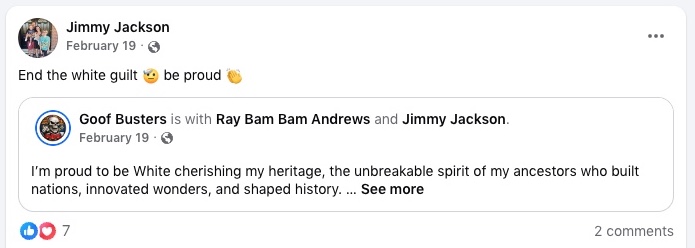
In the years following the pandemic, Jackson’s online activity has increasingly centered on a mix of anti-vaccine rhetoric, religious messaging, and commentary on gender and sexuality. He frequently presents himself as both a social and crisis service worker and a voice of moral clarity, using his platform to frame public health measures, queer and trans identities, and shifting social norms as sources of concern or decline. Many of these claims are shared without credible evidence, often relying on anecdotal or unverified information while being delivered with a tone of certainty and authority.
At the same time, his content reflects themes from what’s often called the “man manifesto,” a term used online to describe content circulating in manosphere-style spaces. These include anonymous Facebook pages, memes, and posts focused on masculinity, rigid gender roles, and adversarial views of relationships. While the “man manifesto” isn’t a single document, it often mixes self-improvement advice with critiques of modern feminism and portrays relationships as transactional or competitive. Some posts emphasize male independence, discipline, and resilience; others frame women or societal changes as obstacles to men’s success.
The danger lies less in any one meme or post and more in how the ideas combine: echo chambers amplify resentment, rigid gender expectations limit empathy, and repeated exposure can normalize adversarial thinking. For a public figure like Jackson, sharing these posts gives authority to content that can stigmatize or harm others, making the abstract dangers of the manosphere immediate and local.
Jackson’s personal messaging does not exist in a vacuum — it aligns closely with his political affiliation. He is a member of the New Blue Party of Ontario, a right-wing, populist party that emerged as a breakaway from the Progressive Conservative Party. The party brands itself as a defender of “conservative principles,” but its platform has leaned heavily into anti-pandemic mandates, often promoting misleading or false information about COVID-19, medical protocols, and public health measures.
Another central pillar of the New Blue Party’s campaign strategy has been claims of widespread voter fraud — a problem that, in reality, does not exist in Ontario or Canada. These ideologies and tactics mirror the playbook of U.S. President Donald Trump, from anti-establishment messaging to the use of disinformation to energize a base. Jackson and his closest supporters have long been outspoken admirers of Trump’s approach. However, in response to Trump’s declining popularity in Canada, Jackson and other strident “Maple MAGA” supporters have increasingly downplayed or disguised their support, even as the rhetoric and strategies continue to shape their public messaging.
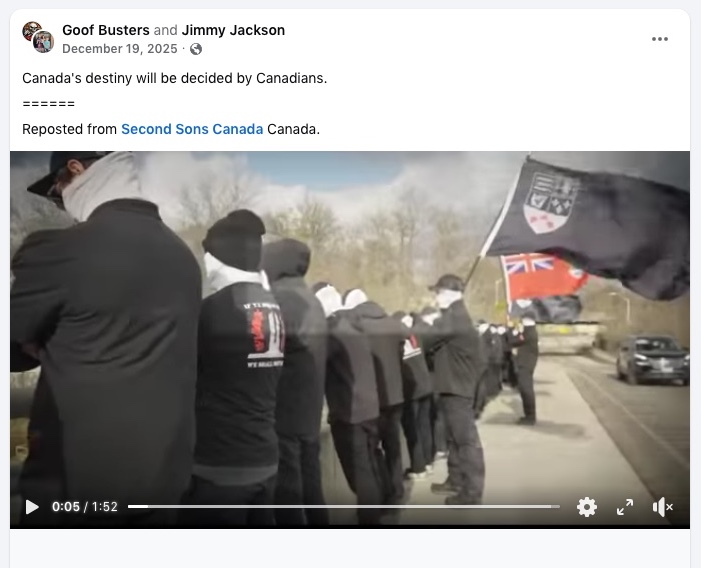
In this context, Jackson’s online persona — a mix of moral authority, manosphere ideology, and conspiratorial messaging — dovetails with a political movement that thrives on polarizing narratives, disinformation, and distrust of established systems. The alignment between his personal beliefs, the “man manifesto” content he shares, and the New Blue Party’s platform underscores the broader stakes of his public influence.
While these posts and memes may seem abstract, they take on a different weight when paired with allegations about Jackson’s private behaviour. At the time of publication, these claims remain unverified, and we cannot independently confirm their authenticity. (In 2026, screenshots and social media content can be altered or fabricated, so skepticism is warranted.)
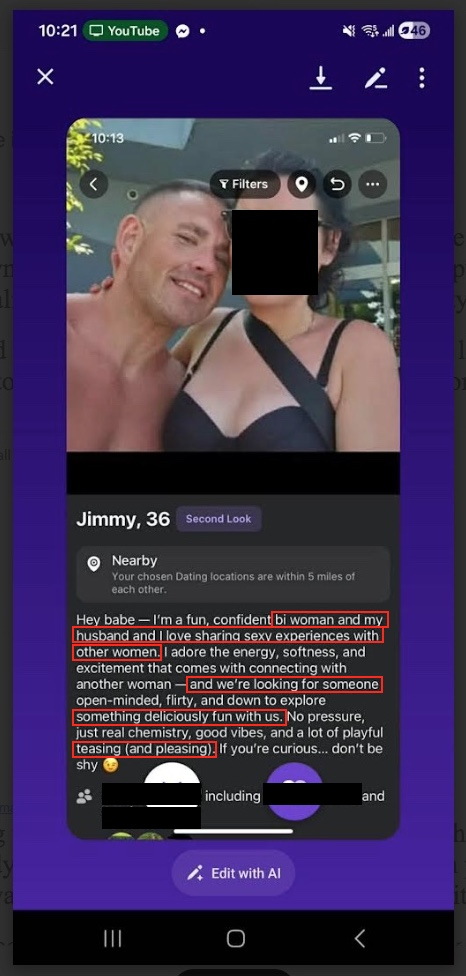
Yet the allegations — if substantiated — suggest a stark contradiction: the same individual who shares and amplifies “man manifesto” content, warning about gender and morality online, may be privately engaging in the very behaviours he publicly condemns. That tension between public persona and private conduct is not a matter of private morality alone; for someone seeking influence and a platform in the public sphere, it becomes a matter of consequence.
The contradiction is stark: Jackson presents himself as a moral authority, amplifying “man manifesto” memes and warning online about the dangers of queer and trans identities, rigid gender roles, and “immoral” behaviour — yet, if the allegations are accurate, his private actions mirror the very behaviours he publicly condemns.
This isn’t a new phenomenon. Public figures across politics, religion, and media have repeatedly been exposed for preaching morality while privately violating those standards. From high-profile politicians caught in extramarital affairs while campaigning on family values, to religious leaders condemning same-sex relationships while secretly engaging in them, these cases follow a familiar pattern: the louder the public moralism, the more damaging the eventual revelation.
FOR MORE INFORMATION ON THE DESIRE-TO-CRUELTY PIPELINE, SEE HERE.
The harm is real. When someone weaponizes identity, morality, or ideology for influence, it’s not a matter of private life alone. Amplifying fear and stigma online — particularly when it targets marginalized communities — creates a climate of discrimination, misinformation, and shame. That impact doesn’t disappear behind closed doors; it spreads outward, shaping public perception and emboldening others to adopt adversarial or harmful attitudes.
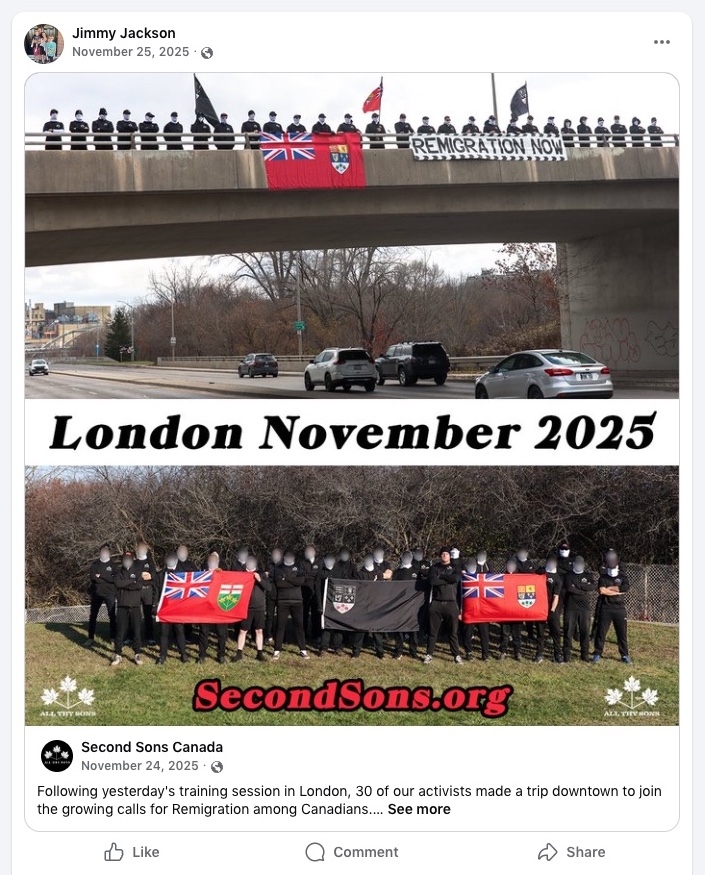
In Jackson’s case, the potential hypocrisy becomes consequential precisely because he has built influence on these ideas. Sharing and promoting “man manifesto” content, posting anti-vaccine rhetoric, and presenting himself as a moral arbiter while privately contradicting those positions is not simply a personal failing. It demonstrates the real-world risks of blending public authority, rigid ideology, and private duplicity.
Ultimately, this is about trust. Individuals are entitled to private relationships and choices that are honest and fulfilling. What becomes problematic is when those private realities are judged harshly for others while simultaneously being ignored or engaged in by the very person doing the judging. That gap between preached morality and personal behaviour erodes credibility, spreads harm, and reminds us that in the public sphere, actions — not just words — carry weight.
At the end of the day, this isn’t about private choices — it’s about public trust. When someone builds influence on moral authority, spreading fear, stigma, and misinformation, their private contradictions are no longer just personal; they become a mirror of the damage their rhetoric inflicts. Jimmy Jackson’s case, like so many before him, is a reminder that morality cannot be performed for applause, and that credibility is earned through consistency, not posturing. The truth is what matters — both for those who hold power and for the communities left in the wake of their words. And when that truth finally comes into focus, it is not only revealing; it is necessary.
I hope Jimmy and Arabella truly do find that “deliciously fun” time they are looking for; but also, do better.
DISCLOSURE:
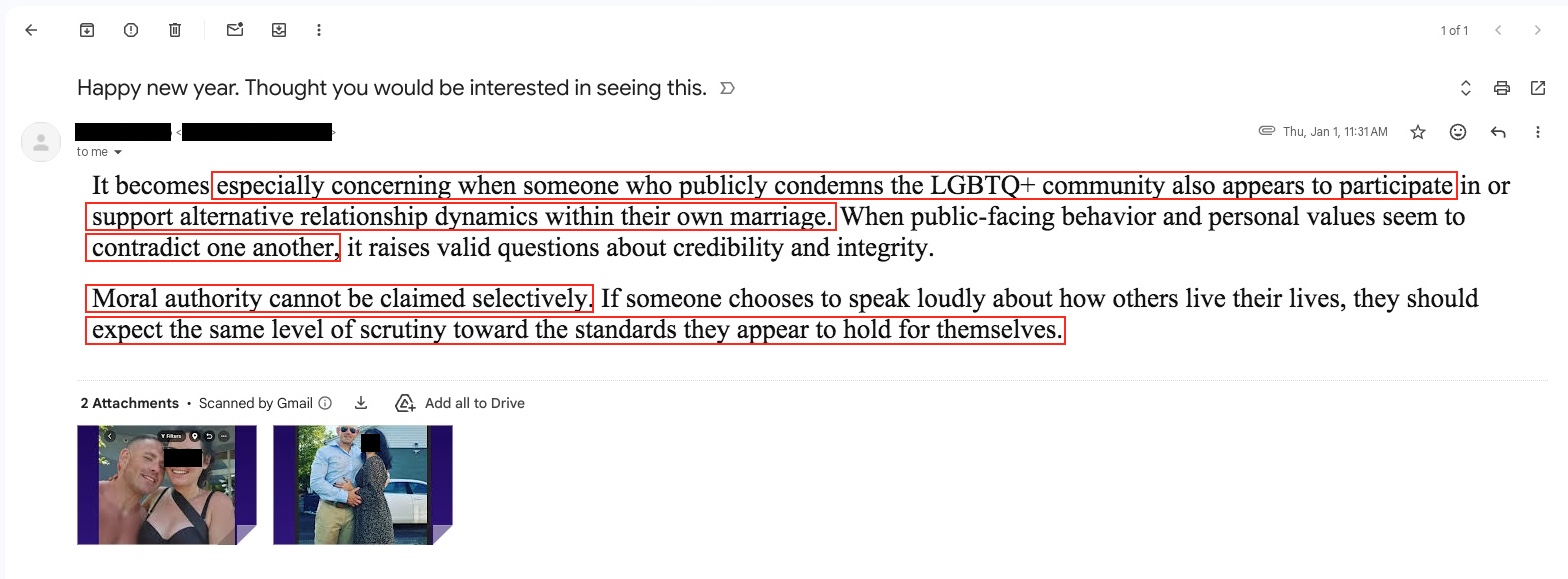
This email was sent to me unsolicited. I did not request, author, or generate its contents in any way. The message appears to originate from an Android-based device. I do not own an Android phone and have not since 2012. I contacted the individual believed to be the source to confirm whether they saw this Facebook ad first-hand. They reported back saying they were sent this screenshot and that this has been shared publicly and Jimmy Jackson has not yet denied the authenticity of the Dating Ad. Based on its appearance, this seems to be a screenshot of an advertisement on Facebook Dating.
I am also unable to verify whether the ‘Edit with AI’ feature shown at the bottom is standard within native Android photo applications.
Additional attachments were included with the email that appear generally consistent with one another and do not exhibit obvious indicators commonly associated with AI-generated or manipulated images; however, this observation is not definitive and should not be interpreted as verification of authenticity.
The allegations referenced in this communication have not been substantiated. We are unable to verify the authenticity or accuracy of the claims at this time. In the absence of corroborating evidence, these claims should be regarded as unproven and potentially speculative, including where screenshots are cited, as digital media can be altered and accounts misrepresented. An assessment is currently underway, and updates will be provided as further information becomes available.

THE ALPHA MALE WHO WASN’T: A Lesson in Rage and Self-Hate
Enter Robert “Beef Supreme” Primerano, the Niagara region’s own contribution to this dismal pageant. To watch him puff himself up as an “alpha male” is to witness insecurity wrapped in faux leather. Raised in a household steeped in conformity and self-loathing, he learned early that to belong meant to hate.


BATTLE NOT WITH MONSTERS: The Lame Life of Rob Primerano, Niagara’s Preeminent Nazi
Primerano is not new to me. He’s a janky-jawed, perpetually unemployed barnacle with a Wi-Fi connection, Niagara’s dollar-store Mussolini. For years, he’s waged a sloppy jihad against women, queer folks, unhoused people, and anyone whose very existence threatens his fragile incel equilibrium.

PUBLIC FUNDS, PRIVATE VENDETTAS: Unmasking Sandor Ligetfalvy
Sandor Ligetfalvy, a self-taught agitator in Niagara Falls, exemplifies extreme far-right ideology through harassment and conspiracy promotion. His actions, including anti-vaccine propaganda and misogynistic campaigns against women in politics, highlight a broader threat to democratic discourse and public safety.
 Sabrina Constance