PREAMBLE
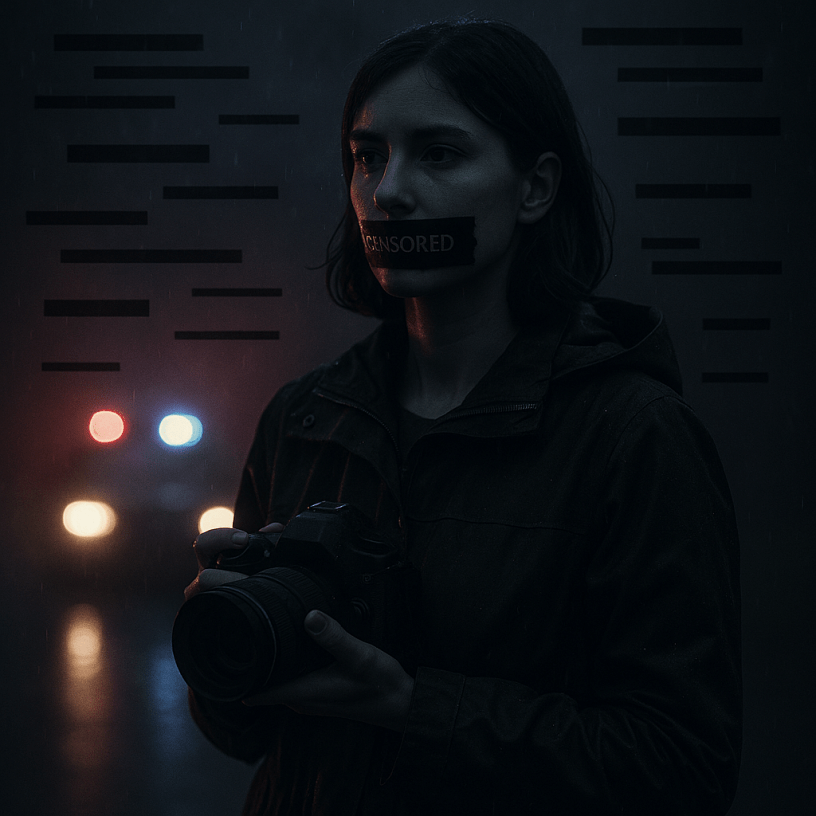
It’s unusual to adopt the storytelling format that I’m going to employ here. Still, I think it’ll be the most economical way of contextualizing the last eight months into something that can be easily digestible for readers who value expediency.
THE SET-UP
Since November 2024, several constables and a few sergeants from the Ontario Provincial Police have dedicated hundreds of hours and significant resources to investigating and harassing me. Their unwelcome, troubling, and possibly criminal obsession with me began during my coverage of the land back lane action in Caledonia. While engaging with and interviewing Indigenous land defenders in the Haldimand County area, I frequently heard First Nations individuals discussing the historical and ongoing mistreatment they have experienced from the Ontario Provincial Police.
Stationed just a few short kilometres away from the site of the land defenders was a makeshift forward operating base set up by an invading colonial occupier, the much-maligned OPP. Set up in a hockey rink and library, hundreds of police constables were rotated in and out of this revolving door of high-octane grab-ass and overtime. This occupation lasted for over a year.
In the 14 months or so that the hundreds of officers were needlessly stationed in this hockey rink, gently caressing each other in between episodic roid-rage fits of police abuse of our First Nations community, the Ministry of the Solicitor General managed to piss away over sixteen million dollars of overtime (some independent accounting suggests more). During my dozens of videos highlighting actual and possible cases of waste, fraud, and abuse by the police service, the OPP got wind of my coverage and began to systematically harass me every time I returned to Haldimand.
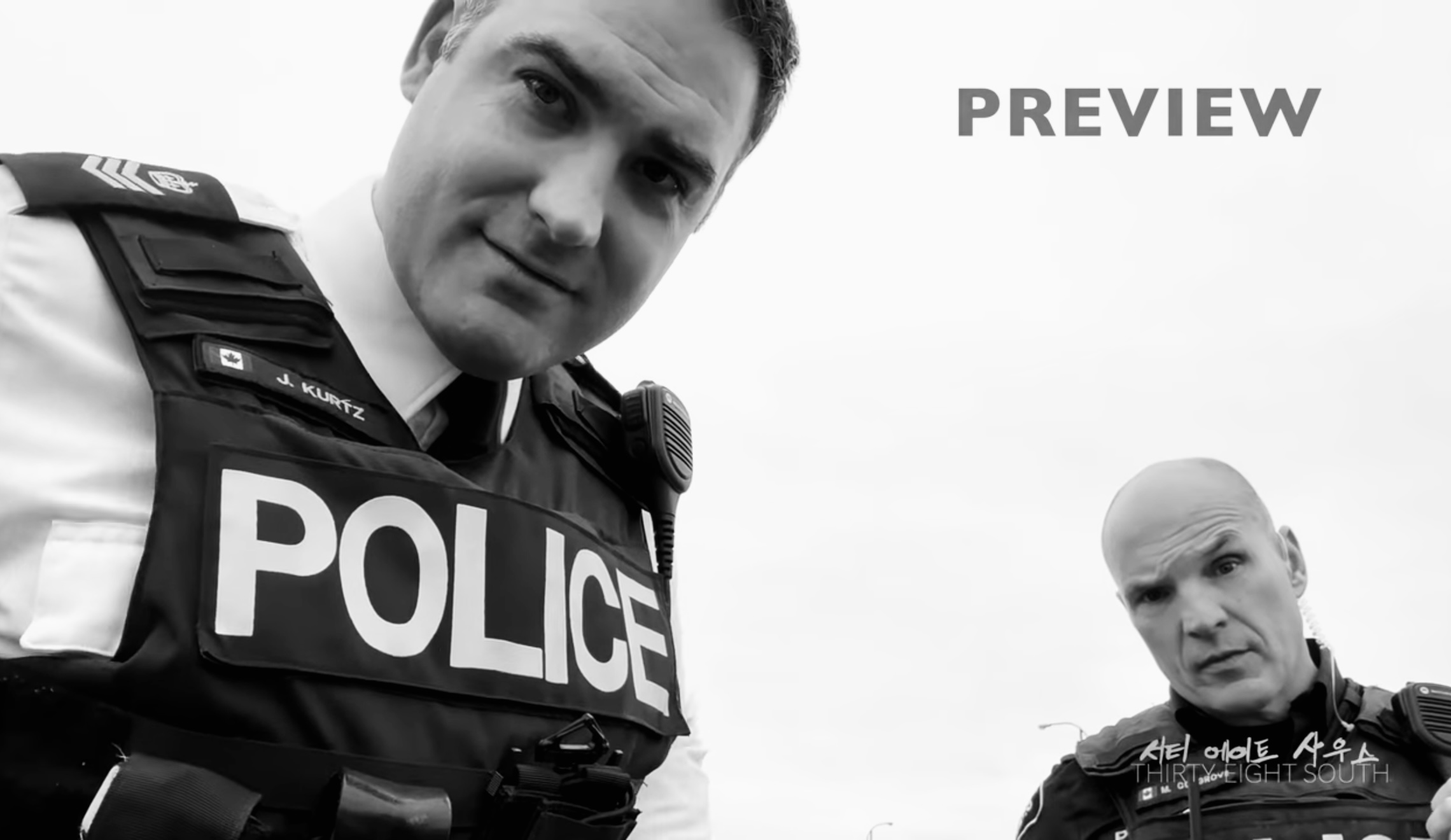
Upset by my coverage of the exceptional waste of money, the bragging by OPP constables that they “loved the natives because this stupid shit bought [them] A new truck … In cash!” and by my exposing the service of dangerous drone operations that violated Canadian aviation regulations, the OPP began to harass me. They would routinely pull me over. Their favourite method of harassment would detain me and try to stop me from getting to the Six Nations or the land defenders at 1492LBL. Which stopped once word got out that I mounted cameras with GPS tracking in my vehicle. It all crescendoed with a short, angry little sergeant body-checking me up against my car to ID me and trespass me.
Eventually, the issues with these stooges simmered down as my coverage shifted, and after the land defenders took the win in the court. That was until November 2024.
Over the last eight months or so, a small gaggle of OPP service members with little to do have been attempting to contact my workplace, anyone I have a license with or through, other police and regulatory agencies that could launch investigations, and my friends and family. Much of this has been documented (including the fake names they use when they send in “anonymous” complaints).
All of this has been reported to the Minister of the Solicitor General, the Ontario Ombudsman, the Ontario Civilian Police Commission, and my local MPP.
CHARACTER ASSASSINATION
I am currently an officer of the court, proudly maintaining my license with the Law Society of Ontario (though non-practicing because of the nature of my employment). My valid license compels me to uphold the highest standards of integrity and character.
I have never been arrested, charged, or convicted of any criminal offence—in Canada or anywhere else I have lived or travelled. Despite this impeccable record, the Ontario Provincial Police have invested extensive hours and resources in maliciously scouring through my life in pursuit of any wrongdoing.
For people who think that ‘the reason the police are on [you] like a sugar-crazed cop on a freshly-glazed donut,‘ is because you are a criminal or have a criminal history, I repeat, I have no criminal record, and I have passed some of the most arduous criminal background checks due to past, or current, positions I have held and for some of the licenses I currently possess.
When attempts to tarnish my character through accusations of serious criminal behaviour proved fruitless, a handful of these malicious trolls, reminiscent of ghouls lurking in the shadows, seemed to pivot their strategy. They resorted to launching anonymous complaints and orchestrating clandestine smear campaigns, all in a desperate bid to undermine my reputation and paint me in a negative light.
Borrowing and modifying an observation from Dr. Benjamin Spock, “most [cis-gendered individuals] Have no idea what it feels like to be subjected to police who are routinely suspicious, rude, belligerent, and brutal.” As an essayist and filmmaker, I’ve spent years exposing police misconduct—shining a light on the abuse endured by our first nations brothers and sisters and the ongoing mistreatment of gay, queer, and trans individuals at the hands of law enforcement. This work has not gone unnoticed. It has made me a target. I have experienced firsthand the suspicion, disrespect, belligerence, and brutality of officers who see accountability as a threat.
The treatment I’ve endured at the hands of the Ontario Provincial Police—and other forces—has been not only unjust but deeply dehumanizing; it’s a reflection of a broader, systemic rot within policing. Like so many in marginalized communities, I carry the scars of being on the receiving end of a boot, a shove, or a slur from a uniformed officer backed by a brotherhood that shields its own. This is not public safety. This is sanctioned intimidation. And it’s why trust in the police has eroded beyond repair for so many of us.
PRIOR RESTRAINT (CONTENT-BASED CENSORSHIP)
In Canada, prior restraint is recognized as one of the most serious infringements on freedom of expression—a fundamental right enshrined in section 2(b) of the Canadian Charter of Rights and Freedoms. It refers to ‘any effort by a government or public authority to censor or restrict speech before it happens,’ often through veiled legal threats, bureaucratic pressure, or regulatory overreach.
Much of this coordinated harassment by OPP personnel has been to discredit me personally and professionally. It is also a means to distract me from creating new content. Of course, their efforts are ultimately in vain, as often their cowardly complaints submitted with fake aliases are facially deficient and typically go unanswered; it’s still a form of prior restraint. For these constables with IQs that hover at or below room temperature, they are sufficiently aware enough to at least recognize that the process is sometimes the punishment.
MORAL AND LEGAL OBLIGATIONS AS A JOURNALIST AND FILMMAKER
In a recent meeting, I delivered the following “if the Ontario Provincial Police insist on maintaining embarrassingly low standards for recruitment—tolerating a culture that prizes silence over accountability and allows some of the most vile, unprofessional individuals to remain in uniform—then the blame for their misconduct lies squarely with the ops, not with my camera or my YouTube channel. I will not be scapegoated for exposing what the institution refuses to confront. If transparency makes certain ops employees uncomfortable, perhaps it’s not the lens they should fear, but their own reflection. My work does not create their behaviour—it simply captures the truth they’d rather keep hidden.”
The Ontario Provincial Police continue to be a blemish on an otherwise stellar public service in our province. Unfortunately, police unions have spent decades and millions of dollars lobbying politicians and creating this hilarious narrative that “policing is dangerous” or a “difficult job,” neither of which is remotely based in fact or reason.
FINAL THOUGHTS
A journalist’s duty to expose government wrongdoing is not only a professional obligation but also a moral responsibility. In democratic societies, the press acts as a watchdog, safeguarding the public from abuses of power and holding officials accountable for their actions. When governments operate in secrecy, avoid scrutiny, or betray the public’s trust, journalists become the defenders of truth. They courageously document and share evidence that might otherwise be hidden. Ethical journalism requires accuracy, fairness, and integrity, but most importantly, it demands a commitment to justice. Reporting on malfeasance is not merely about conveying information; it empowers citizens to demand better governance and accountability. Inaction in the face of corruption is equivalent to complicity.
In the coming days, I intend to share documents, including the names and other vital data of these cowards. Their silly little, ineffective attempt to target me only validates my work, reveals their fear, and continues to inspire me to keep going. It’s not over.
From literary critic, professor, historian, and filmmaker Henry Louis Gates, “censorship is to art as lynching is to justice.”
JUSTICE ENDS WHERE POLICING BEGINS: The Shameful History of Policing The Gay and Trans Community in Canada
Policing reform is routinely framed as a matter of training, oversight, or inclusive language. None of this resolves the central contradiction exposed by decades of violence against trans people: policing is a system built on discretion, not equality. It decides who belongs, who is suspect, and whose suffering is credible.


ALONE AGAINST THE SYSTEM: Fighting Police Misconduct in Ontario Means Surviving It
In Ontario, holding police accountable isn’t a matter of justice — it’s an act of endurance.
ROT AT THE CORE: How Transphobia Persists in Niagara’s Policing Culture
The former president of the Niagara Regional Police Association exemplifies systemic transphobia and homophobia in policing, perpetuating a culture of distrust. This issue highlights accountability failures, emphasizing the need for broader community responsibility in ensuring respect and equality for marginalized groups.
 Sabrina Constance