
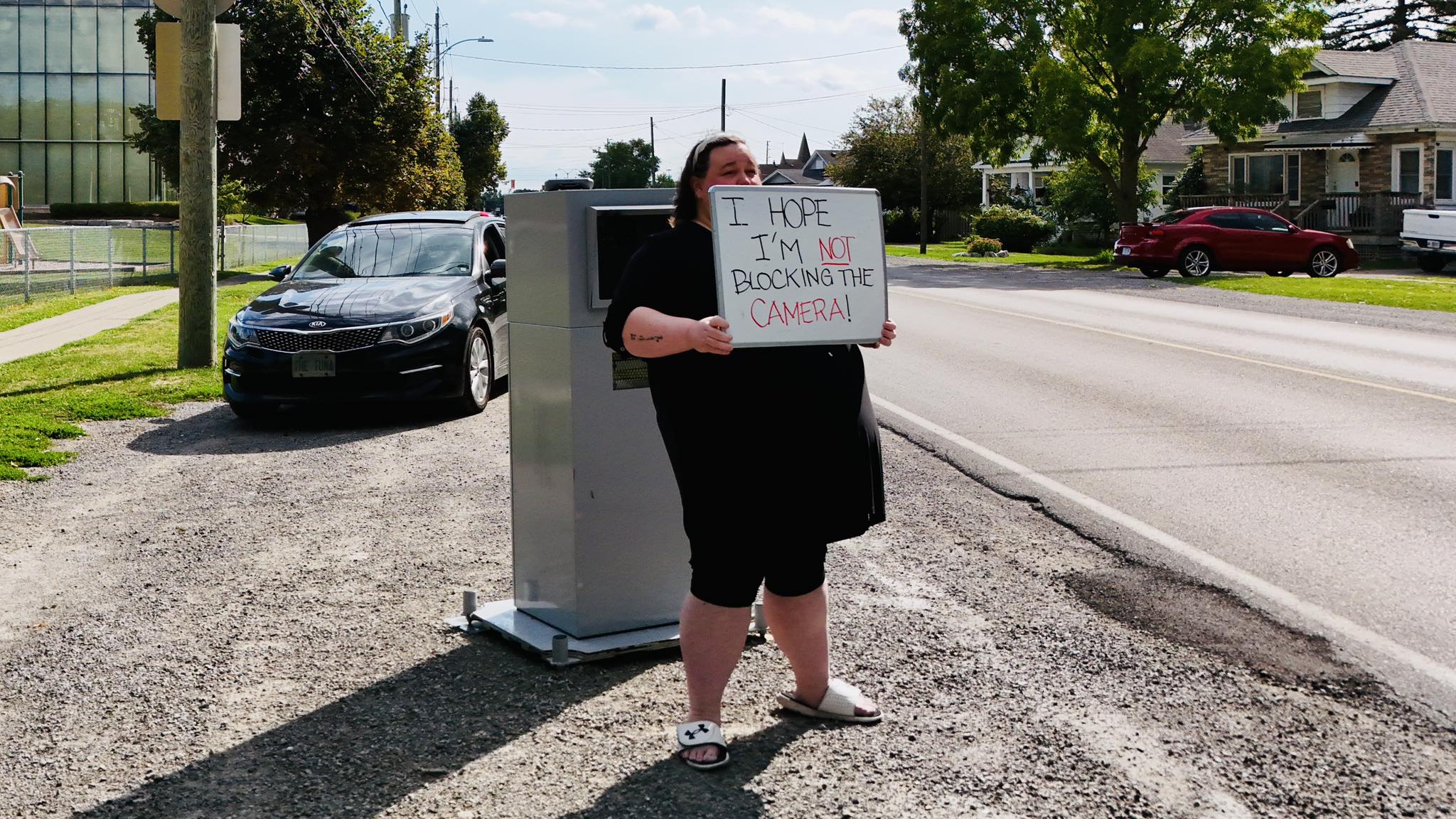
The Regional Municipality of Niagara is moving ahead with automated speed enforcement cameras on regional roads, including those that cut through St. Catharines. Part of the Region’s Vision Zero initiative, the rollout is framed as a public safety measure aimed at reducing injuries and fatalities, especially near schools and parks. But before we accept these devices as the solution, we must ask: Are speed cameras truly the right fit for our community?
Niagara officials point to early results: average speeds drop by 7 to 9 kilometres per hour at enforcement sites, and violations decrease significantly with repeated deployment. Since January 2024, nearly 48,500 tickets have been issued, each averaging $116. The Region insists the program is cost-neutral, with excess revenue reinvested in road safety.¹
On paper, that sounds promising. In practice, speed cameras are a blunt instrument. Unlike an officer on patrol, a machine cannot weigh context. It cannot determine whether a driver briefly accelerated to avoid a tailgater or if traffic conditions necessitated maintaining pace. Tickets arrive in the mail days or weeks later — long after the moment has passed — leaving drivers feeling punished, not educated.
LEARN MORE ABOUT THE REGION’S ZERO VISION PROGRAM
AND REDFLEX TRAFFIC SYSTEMS HERE.
The Unfair Burden on Working Families
Beyond practicality, these cameras raise serious equity concerns. A $100 or $150 fine may be a minor inconvenience for some, but for families already stretched thin, it can mean cutting back on groceries, transportation, or other essentials.² Median household incomes in St. Catharines remain below the provincial average, making fines from minor infractions a genuine financial hardship.
Critics across Canada have repeatedly noted that these programs often function more as revenue-generating tools than safety interventions. Municipalities sometimes use ticket revenue to fund local infrastructure projects or general development initiatives, effectively shifting costs onto those who can least afford them. Meanwhile, wealthier residents — who disproportionately benefit from city and regional services — typically pay less relative to their income.³ The result is a system in which working families subsidize broader development, raising serious questions about fairness.
Automated speed enforcement also risks eroding trust. When residents feel targeted and punished, compliance becomes about avoiding fines, not safe driving. The social and financial cost falls disproportionately on those already under pressure, while benefits like slower speeds and municipal revenue are broadly diffused.
The Importance of Immediate Consequences
Canadian law has long recognized that for punishment to be meaningful, it should be immediately adjacent to the wrongdoing, creating a clear link in the mind between the offence and its consequence. Speeding tickets issued on the spot by an officer work precisely because the driver understands the mistake and its immediate consequence.
Speed cameras undermine this principle. Receiving a blurry photo in the mail weeks later — sometimes for a vehicle that may not even have been yours, for going just a few kilometres over the limit — severs the connection between misconduct and consequence. Drivers are unlikely to internalize the lesson. In other words, the very tool the Region is using to “improve safety” may do little more than generate revenue, bypassing a foundational principle of Canadian justice.
Resentment toward these devices is visible. In less than a year, at least nine cameras across Niagara have been vandalized — spray-painted, toppled, or cut down.⁴ While vandalism is never justified, the acts reflect a community that feels targeted rather than supported.
Long-term effectiveness remains unclear. Research shows mixed results: some studies find modest reductions in crashes, while others show drivers slow only briefly at camera sites, then speed up once past them.⁵ What cameras consistently deliver are tickets, not lasting behavioural change.
The Road Not Taken: Real Traffic Calming
Niagara’s approach ignores proven alternatives. Traffic calming involves physical and design changes that naturally slow vehicles and improve safety. Raised crosswalks, curb bump-outs, speed humps, narrowed lanes, pedestrian islands, and roundabouts reshape streets to encourage attentiveness and protect pedestrians and cyclists.
Cities across Canada have embraced these measures. Toronto’s “Complete Streets” program redesigns roads with narrower lanes, protected bike lanes, and safer intersections. Edmonton’s Safe Mobility Strategy uses raised crosswalks and traffic diverters to reduce collisions. Ottawa’s community-driven programs empower residents to implement speed tables and flex-posts on streets they deem dangerous.⁶
By contrast, Niagara has chosen a quick, cheap solution: automated ticket machines. They may generate revenue and look proactive on paper, but they do little to improve real driver attentiveness or long-term safety. The choice is clear: the Region prioritized ease and profit over effective safety measures — and St. Catharines residents are paying the price.
If the Region is serious about safer streets, there are better options. Road redesigns, pedestrian islands, and raised crosswalks consistently slow traffic without requiring constant monitoring. A visible police presence adds discretion and education. Public awareness campaigns foster lasting culture change — something a mailed fine never will.
And yet, despite dozens — if not hundreds — of these cameras, the Region’s own website cites no independent studies supporting their effectiveness.⁷ Residents are asked to trust the narrative of safety without evidence. Transparency is a cornerstone of good governance. Until the Region publishes research demonstrating real safety benefits, skepticism is not only reasonable — it is necessary.
St. Catharines deserves safer streets. But that does not mean defaulting to surveillance machines that punish residents without context, compassion, or conversation. If safety is truly the goal, let’s pursue solutions that calm traffic, not fund it through fines. St. Catharines deserves better than cheap ticket machines — it deserves real safety.
Sources
- Niagara Region — Automated Speed Enforcement: program overview and ticket data (2025).
- Statistics Canada — 2021 Census, St. Catharines median household income below Ontario average.
- Niagara Now, “Ticketed drivers unhappy with Region’s speed camera crackdown” (2024).
- Global News, “Three speed enforcement cameras cut down, vandalized in Niagara Region” (2024); Pelham Today, “Speed cameras vandalized across Niagara” (2024).
- Literature review: Traffic Enforcement Cameras — Wikipedia summary of multiple international studies (accessed 2025).
- City of Toronto — Complete Streets program (2023); City of Edmonton — Safe Mobility Strategy (2021–2025); City of Ottawa — Community traffic calming programs (2022).
- Niagara Region Vision Zero ASE webpage: no independent studies cited (accessed Sept. 2025).
Stay Connected — It’s Free
Subscribe with your email below to unlock member-only content. No cost, just insight and stories delivered straight to you.

JUSTICE ENDS WHERE POLICING BEGINS: The Shameful History of Policing The Gay and Trans Community in Canada
Policing reform is routinely framed as a matter of training, oversight, or inclusive language. None of this resolves the central contradiction exposed by decades of violence against trans people: policing is a system built on discretion, not equality. It decides who belongs, who is suspect, and whose suffering is credible.


ALONE AGAINST THE SYSTEM: Fighting Police Misconduct in Ontario Means Surviving It
In Ontario, holding police accountable isn’t a matter of justice — it’s an act of endurance.

ROT AT THE CORE: How Transphobia Persists in Niagara’s Policing Culture
The former president of the Niagara Regional Police Association exemplifies systemic transphobia and homophobia in policing, perpetuating a culture of distrust. This issue highlights accountability failures, emphasizing the need for broader community responsibility in ensuring respect and equality for marginalized groups.

THEY DEMANDED MY DEADNAME: Why I’m Taking the Niagara Regional Police Service to the Human Rights Tribunal
While filming a documentary in public, I was detained and pressured by Niagara Police to disclose my deadname—a name that no longer belongs to me. It was degrading, unlawful, and discriminatory. I’m fighting back through the Human Rights Tribunal to demand justice and dignity for all trans people.

WHEN THE COPS FEAR YOUR CAMERA: What It’s Like to Be a Trans Journalist in Ontario
Since November 2024, several constables and a few sergeants from the Ontario Provincial Police have dedicated hundreds of hours and significant resources to investigating and harassing me.
 Sabrina Constance