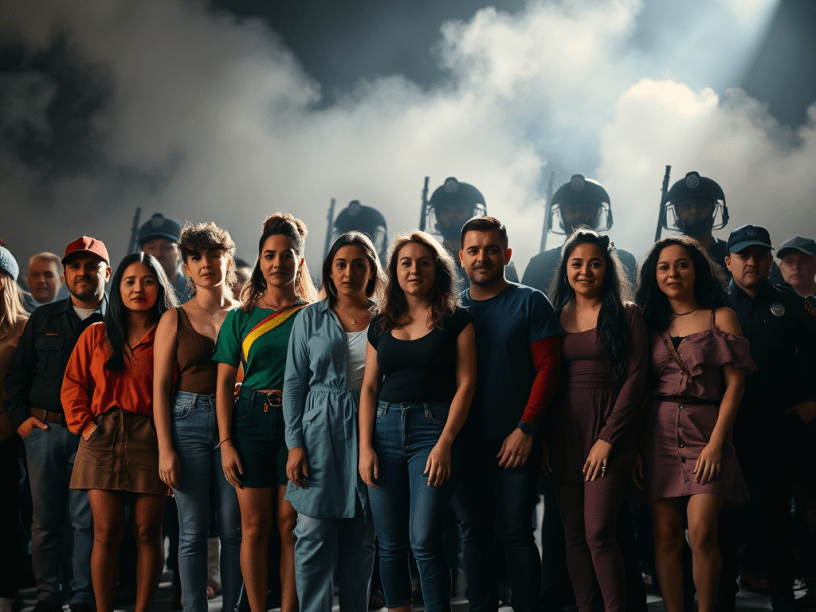
Police violence against trans and gender-nonconforming people is not a historical anomaly, nor a failure of inclusion. It is the predictable consequence of an institution whose core function has always been to police gender, visibility, and conformity. As long as policing depends on deciding who belongs in public space—and who does not—trans people will remain targets, regardless of apologies, equity units, or rainbow-washed public relations.
This reality is not confined to history books or distant jurisdictions. Across Canada, and here in Niagara, queer and trans people who experience violence routinely encounter disbelief, minimization, or procedural obstruction when they turn to police. Reports are redirected, discouraged, or quietly buried. In these encounters, the question is rarely *what happened*, but whether the victim is credible—legible enough, compliant enough, “normal” enough to be believed.
That pattern is not incidental. It reflects the origin and design of policing itself.
Policing as Moral Enforcement
Modern policing in Canada did not emerge to ‘protect marginalized communities.‘ It developed to protect the interests of the state and capital, to enforce social hierarchy, and to regulate morality—particularly around sexuality, gender, and public order. “Vice,” “decency,” and “public nuisance” laws were not neutral mechanisms of safety. They were crafted for selective enforcement, granting police broad discretion to decide which bodies were acceptable in public and which were not.
For queer and trans people, this discretion was devastating. Gender nonconformity, sexual autonomy, and visibility were treated as ‘threats to order.‘ Those who could not—or would not—conform were rendered suspect by default. Poverty, sex work, homelessness, and nightlife economies further intensified police scrutiny, allowing enforcement to be framed as public protection while functioning as social control.
This abuse was not a deviation from policing’s purpose. It was the fulfillment of it.
Criminalization Was Policy, Not Prejudice
In 2017, the Canadian government formally apologized for decades of discrimination against 2SLGBTQQIA+ people, including the repeal of section 159 of the Criminal Code. While framed as reconciliation, this apology acknowledged what queer communities had long known: criminalization was systemic.
From the 1950s through the 1990s, tens of thousands of people were surveilled, fired, discharged from the military, or prosecuted for their real or perceived sexual orientation. The RCMP’s A-3 unit mapped the residences and gathering places of suspected homosexuals. Civil servants and members of the armed forces were purged under the pretext of national security. The state funded pseudo-scientific efforts like the “fruit machine” to identify homosexuals. Even Canada’s Supreme Court endorsed preventive detention for consensual same-sex acts.
Decriminalization did not dismantle this logic. It displaced it. Enforcement moved from bedrooms to bathhouses, from statutes to discretion, from open criminalization to selective surveillance.
Bathhouse Raids and the Performance of Shame
The 1981 Toronto bathhouse raids—Operation Soap—remain a defining example. More than 300 men were arrested in the largest mass arrest since the October Crisis. Police knew many charges would not withstand scrutiny. That was not the point. The objective was public humiliation.
Names were released to the press. Careers were destroyed. Families were fractured. Police framed the raids as matters of morality and public health, but in practice they functioned as state-sanctioned entrapment. Undercover officers solicited sex, then arrested those who responded. This was not crime prevention. It was punishment for visibility.
Trans People as the Explicit Target of Policing
Trans and gender-nonconforming people were never incidental to this system. They were its object.
Long after same-sex intimacy was partially decriminalized, trans people continued to be targeted through ID checks, “suspicion” of sex work, bathroom policing, and street-level harassment. These practices persist today, including within Ontario police services such as Niagara Regional Police and the Ontario Provincial Police.
Trans women—particularly racialized and Indigenous trans women—remain disproportionately subjected to over-policing, invasive searches, intentional misgendering, and sexual violence by police and correctional staff. These are not historical residues. They are contemporary practices. In the author’s work in criminal defence and trans advocacy, patterns of deliberate misgendering and procedural abuse remain common.
Policing does not merely fail trans people. It actively produces them as suspects.
When Trans People Report Harm, the System Responds with Disbelief
For trans people, police violence does not end with the incident itself. It often intensifies at the point of reporting.
Complaints are met with misdirection: referrals to the wrong oversight bodies, assertions that no complaint process exists, or warnings—explicit or implied—that pursuing accountability may provoke retaliation. Victims are questioned about their clothing, their identification, their presence, and whether they “somehow invited the harm.“
This is not new. Where trans people were once arrested for cross-dressing or loitering, they are now subjected to credibility tests. Their accounts are framed as emotional or unreliable; officers’ narratives are treated as objective. Violence becomes misunderstanding. Neglect becomes discretion. Abuse becomes procedure.
Victim-blaming and bureaucratic obstruction are not failures of policing. They are how policing protects itself. Harm that cannot be recorded cannot be remedied.
Pride, Apologies, and the Illusion of Progress
Pride began as protest against police violence. Early marches were acts of collective refusal. Police were excluded because they were the threat.
Today, police floats roll through Pride parades under banners of inclusion. Equity units proliferate. Apologies are issued. But the underlying structure remains unchanged. The same discretion that once enabled raids now enables disbelief. The same institution that policed gender now markets tolerance.
What changed—police behaviour, or police branding?
Continuity, Not History
Police often claim they merely enforce the law. This disavows the reality of discretion and the political power of police unions, including in Niagara. Documented patterns of homophobic and transphobic conduct by officers, supervisors, and union leadership demonstrate that enforcement is neither neutral nor reluctant.
Policing reform is routinely framed as a matter of training, oversight, or inclusive language. None of this resolves the central contradiction exposed by decades of violence against trans people: policing is a system built on discretion, not equality. It decides who belongs, who is suspect, and whose suffering is credible.
For trans people, that discretion has never operated in our favour. An institution designed to enforce gender conformity cannot be reconciled with trans liberation.
There is no equity or justice in policing—only the power to decide whose harm is acknowledged and whose is erased.
Editor’s Note
I am publishing this now because what follows is not history—it is a pattern that remains active, defended, and protected here in Niagara.
For nearly two years, I have been in sustained conflict with the Niagara Regional Police Service over what can only be described as an ongoing campaign of harassment, neglect, and institutional bigotry directed at trans and gender-nonconforming people. Since running for office in 2022, dozens of trans people have come forward to share their experiences of police abuse, misconduct, and deliberate inaction in this region. Their accounts are not isolated. They are consistent, overlapping, and chillingly familiar.
For almost seven years, I have raised concerns about the absence of meaningful training, enforceable policy, and real accountability within NRPS when it comes to policing trans people. Rather than correcting these failures, senior leadership has repeatedly chosen to entrench them. Instead of developing robust, transparent policies to protect a marginalized community, Bill Fordy and others within NRPS leadership have spent tens of thousands of public dollars on legal defenses designed to shield the service from scrutiny—while uniformed and civilian staff continue to target, demean, and dismiss trans people with impunity.
This piece exists because denial has replaced reform, and because silence now only serves power.
What follows explains why this outcome was never accidental.
If you live in Niagara, I am asking you to read this closely and share it widely. If you believe policing should be accountable to the people it claims to serve—especially the most marginalized—this history matters here. And if you are a trans or gender-nonconforming person who has experienced police misconduct, harassment, or neglect in Niagara, I want to hear from you. You can reach me through the contact tab at the top of this website.
Change does not begin with branding or apologies. It begins with exposure.

ALONE AGAINST THE SYSTEM: Fighting Police Misconduct in Ontario Means Surviving It
In Ontario, holding police accountable isn’t a matter of justice — it’s an act of endurance.


THEY DEMANDED MY DEADNAME: Why I’m Taking the Niagara Regional Police Service to the Human Rights Tribunal
While filming a documentary in public, I was detained and pressured by Niagara Police to disclose my deadname—a name that no longer belongs to me. It was degrading, unlawful, and discriminatory. I’m fighting back through the Human Rights Tribunal to demand justice and dignity for all trans people.

WHEN THE COPS FEAR YOUR CAMERA: What It’s Like to Be a Trans Journalist in Ontario
Since November 2024, several constables and a few sergeants from the Ontario Provincial Police have dedicated hundreds of hours and significant resources to investigating and harassing me.
How Authoritarian Policies Fail the Unhoused in St. Catharines
The City of St. Catharines faces escalating homelessness under Mayor Mat Siscoe and administrator David Oakes, who promote punitive measures instead of meaningful solutions. Their actions reflect a disregard for the unhoused, showcasing a deeper societal failure to address the root causes of homelessness.
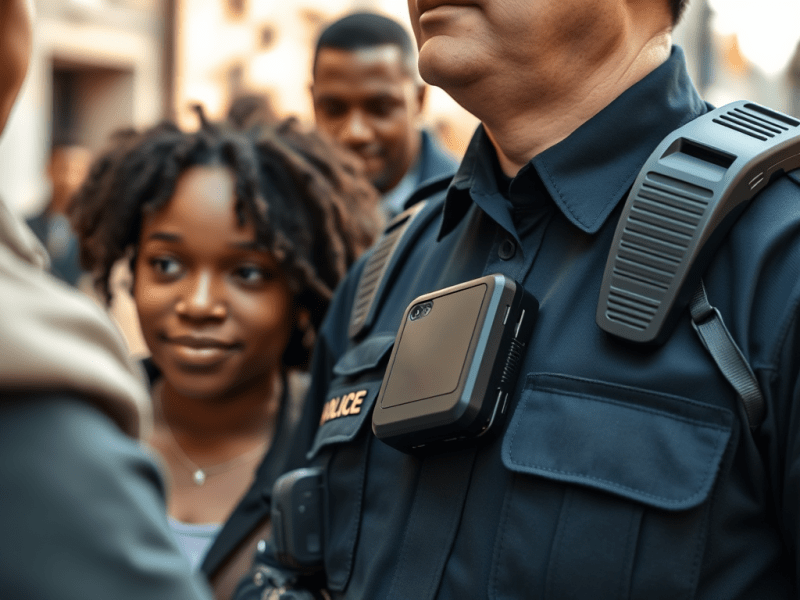
The Case for Transparency with Body-Worn Cameras
For more than five years, I have passionately championed the need for Body-Worn Cameras (BWCs) within the Niagara Regional Police Service (NRPS). This initiative became a cornerstone of my campaign when I ran for office in 2022.
 Sabrina Constance