I’m sharing this update because my human rights complaint has entered a critical—and daunting—new phase, and I need your support to continue.
After months of delay and failed attempts to resolve this matter, the Niagara Regional Police Service (NRPS), which is named in my complaint, has refused to acknowledge the harm that was done or to bring this process to a civil, timely, and just conclusion. Because of that refusal, my case is now moving forward to a full hearing before the Human Rights Tribunal.
This is a significant escalation.
A full tribunal hearing comes with serious legal, emotional, and financial demands. Human rights law is highly specialized, and there are very few lawyers who practice in this area. Retaining experienced legal counsel is not optional—it is essential. Without representation, the power imbalance between an individual and a police service becomes overwhelming. Hiring a lawyer is my only realistic path toward accountability.
To understand why this matters, it’s important to understand how this began.
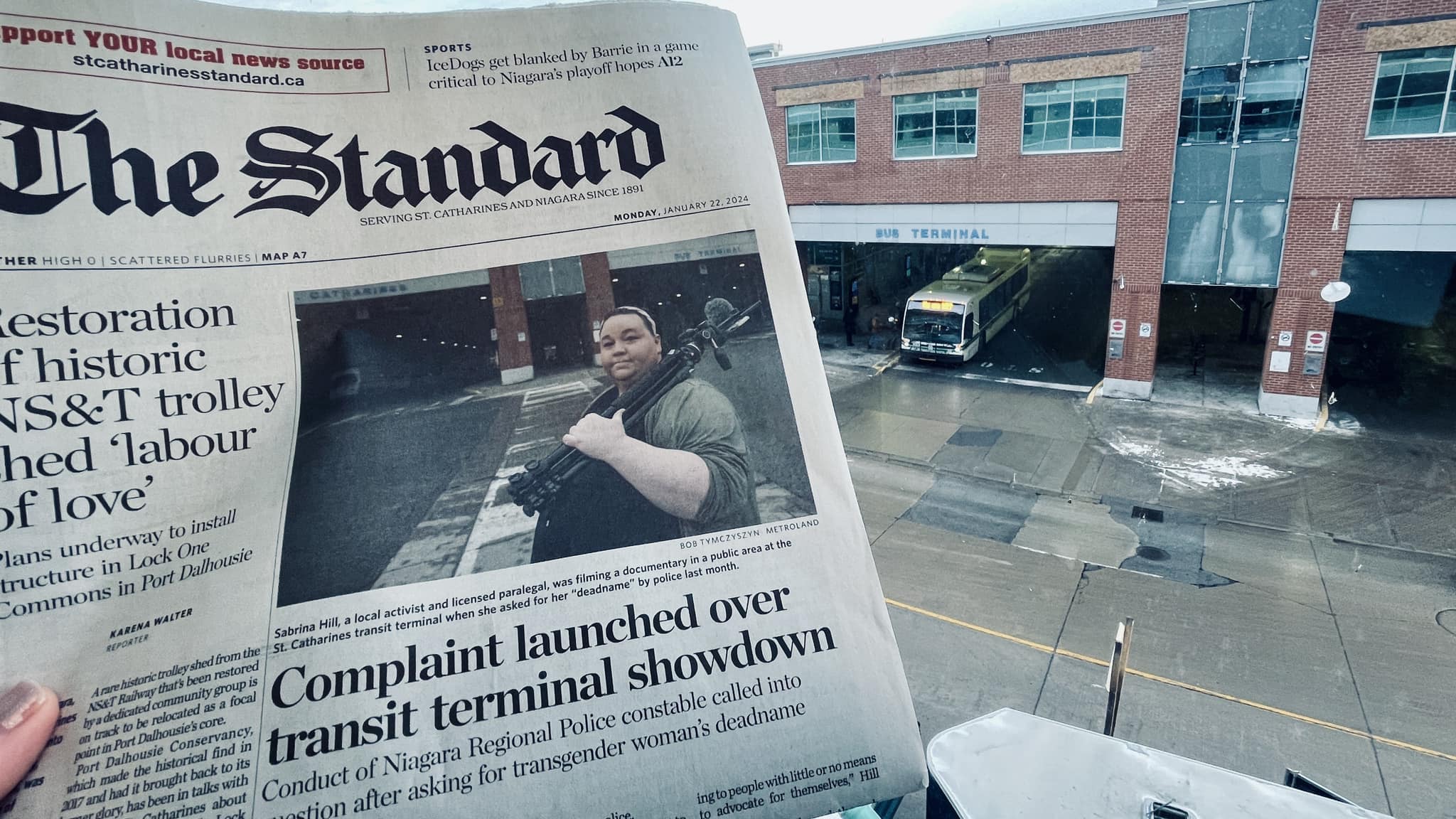
In December 2023, I found myself in an unexpected and deeply troubling situation. While filming in a public space, I was approached and detained by several Niagara Regional Police officers. I was doing nothing illegal. I was simply there with my camera, documenting unhoused people in our community—trying to tell a story that matters.
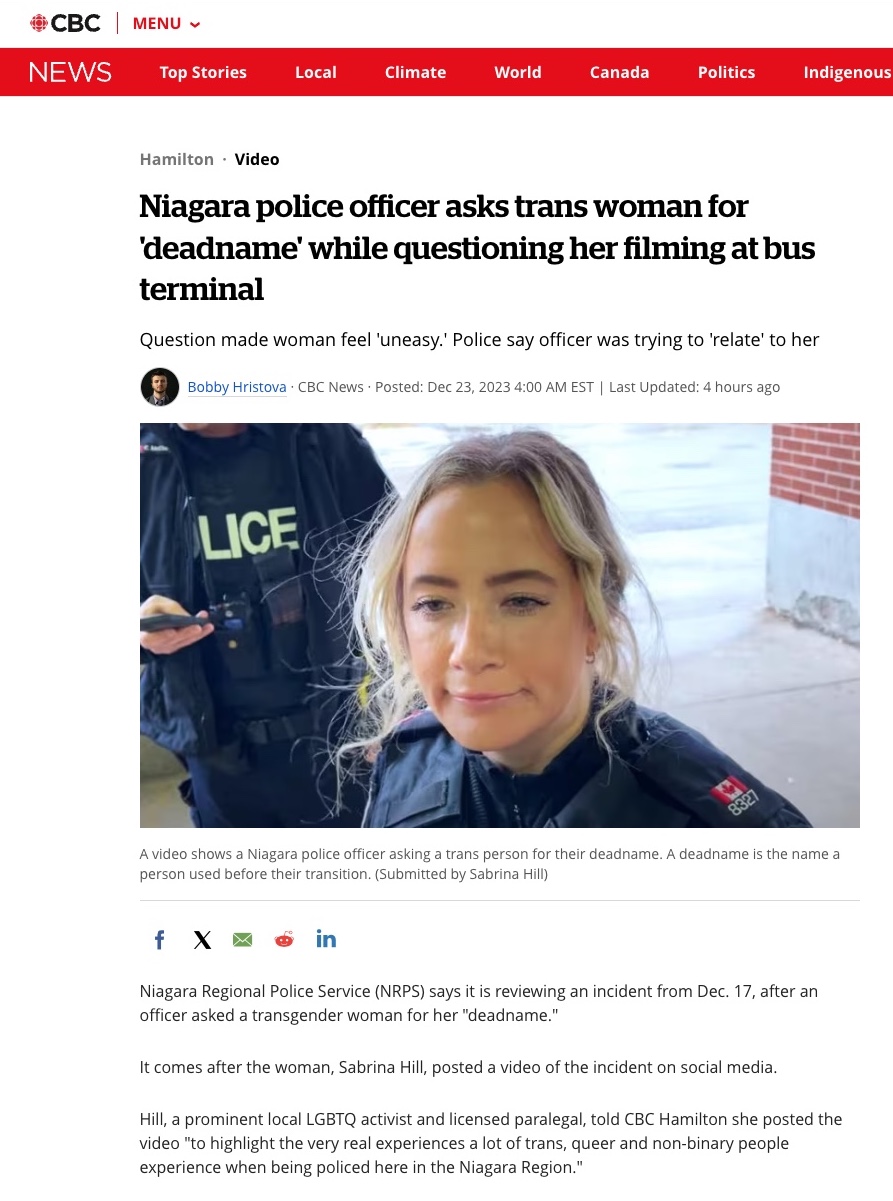
Instead of being treated with respect, I was surrounded by four officers and questioned without cause. Then came the moment that still stays with me: Constable Ashley Del Duca demanded that I give her my deadname—the name I legally changed years ago, the name that no longer belongs to me.
That demand was not about safety. It was not about procedure.
It was about power.
It was a public denial of my identity. An act of humiliation carried out in front of her colleagues and others nearby. A reminder that, in that moment, my dignity was disposable.
This was not an isolated incident.
I have had multiple encounters with transphobia from officers at NRPS 1-District (St. Catharines). In 2019, a sergeant misgendered me—twice—while holding my government-issued ID that clearly identifies me as female. Through FIPPA requests and documents disclosed to me since, I have learned that misgendering has occurred in official NRPS paperwork at least two other times.
This case exists because harm occurred.
It continues because harm was never acknowledged—and because community makes resistance possible.
Until now, I have carried this case largely on my own. I authored the original complaint. I survived the first major procedural hurdle. I researched and drafted a comprehensive response to the NRPS “defence”—a document prepared by a team of taxpayer-funded lawyers with decades of combined experience. I met the system where it stood, with everything I had.
But I cannot do this alone anymore.
The disparity between myself and the NRPS is colossal. The police service has institutional power, legal threats, and a financial war chest that is difficult to comprehend, let alone challenge. Just as on the day of the incident itself, they hold nearly all of the power.
They are counting on that imbalance to exhaust me.
They are hoping I become invisible, financially depleted, and forced to walk away.
They are relying on silence to protect persistent transphobia within their institution.
When cases like this quietly disappear, the message travels far beyond one person. It tells trans people and other marginalized communities that accountability is out of reach. That harm can occur without consequence. That speaking up will ultimately cost too much.
I am determined not to let that happen—but determination alone is not enough.
A lawyer for this kind of work is expected to cost, at minimum, between $3,000 and $5,000, and this hearing is anticipated to last two to three days, with substantial preparation still required despite the extensive work I have already done. This process has taken a profound toll on me, both personally and professionally. The stress has been immense. The financial burden continues to grow.
Still, I believe this fight matters—not just for my own dignity and rights, but for the principle that public institutions must be held to account, especially when those most affected lack power or visibility.
That’s why I’m asking for your help.
I am seeking support to donate to or amplify my fundraising campaign so I can retain experienced human rights counsel and carry this case through to the finish line.
Fundraiser: One Person vs. the Police — A Fight for Accountability
If you can donate, your contribution makes a direct, tangible difference. If you can’t, sharing this post or the fundraiser is a powerful act of solidarity. Your networks matter. Your voice helps ensure this case is not buried by silence, delay, or imbalance.
Thank you for taking the time to read this—and for standing with me. Despite the exhaustion, the pressure, and the ongoing battle, my commitment to justice, equity, and human dignity remains unchanged.
This fight continues—with gratitude and solidarity.

ALONE AGAINST THE SYSTEM: Fighting Police Misconduct in Ontario Means Surviving It
In Ontario, holding police accountable isn’t a matter of justice — it’s an act of endurance.

THEY DEMANDED MY DEADNAME: Why I’m Taking the Niagara Regional Police Service to the Human Rights Tribunal
While filming a documentary in public, I was detained and pressured by Niagara Police to disclose my deadname—a name that no longer belongs to me. It was degrading, unlawful, and discriminatory. I’m fighting back through the Human Rights Tribunal to demand justice and dignity for all trans people.
WHEN THE COPS FEAR YOUR CAMERA: What It’s Like to Be a Trans Journalist in Ontario
Since November 2024, several constables and a few sergeants from the Ontario Provincial Police have dedicated hundreds of hours and significant resources to investigating and harassing me.
 Sabrina Constance