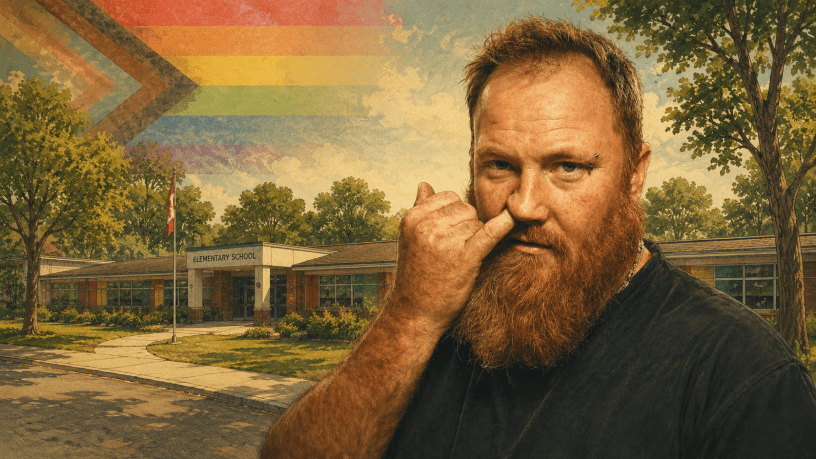
A Pride flag is a remarkably simple thing. A piece of fabric. A few colours. A symbol. Yet throughout history, symbols have always mattered far more than the materials from which they are made. A flag is never just cloth. A cross is never just wood. A poppy is never just paper. Their importance comes from what they represent.
That is why what allegedly occurred at a public elementary school in Thorold this week deserves far more attention than the relatively small amount of property damage involved.
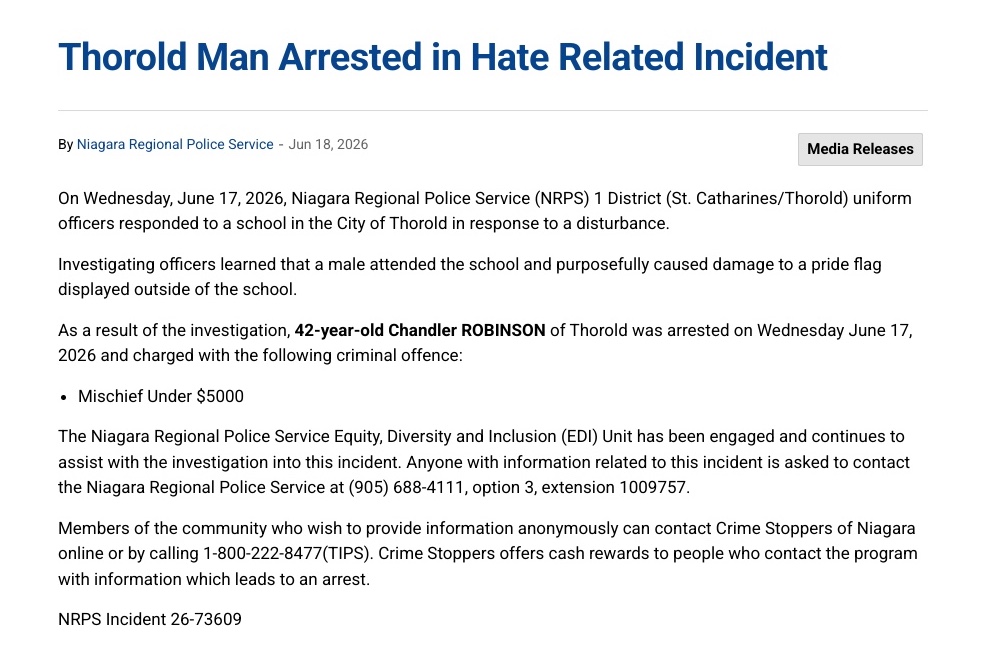
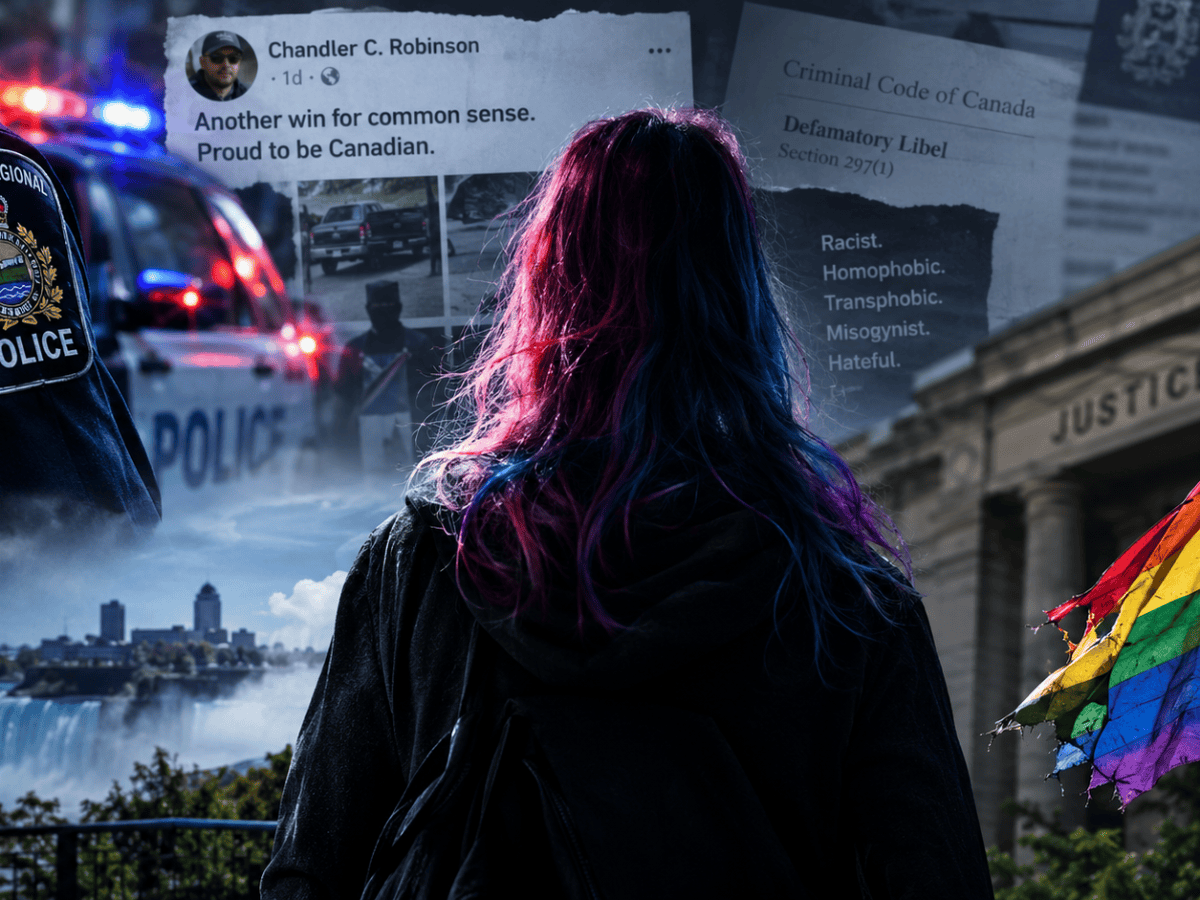
According to the Niagara Regional Police Service, officers responded to a local school after a man allegedly attended the property and ‘intentionally damaged a Pride flag displayed outside the building.‘ Police allege the flag was ripped down and the flagpole rendered unusable. As a result of their investigation, 42-year-old Chandler Robinson of Thorold was charged with Mischief Under $5,000. On its face, the allegation appears straightforward. A person allegedly damaged property belonging to another. If proven in court, that conduct would fall squarely within the Criminal Code offence of mischief. But reducing this incident to “property damage” misses the larger story. Because not all property is chosen at random.
THE LEGAL FRAMEWORK
Before examining motive, it is worth considering the underlying offence itself.
Under Canadian law, a conviction for mischief under $5,000 requires the Crown to prove several essential elements beyond a reasonable doubt. First, the property must belong to another person or organization, or be property in which another person has a lawful interest. In this case, the Pride flag and flagpole were displayed on the exterior of a public elementary school and were clearly not the personal property of the accused.
Second, the Crown must prove that the accused intentionally damaged the property, rendered it useless, ineffective, or inoperative, or otherwise interfered with another person’s lawful use and enjoyment of it. According to police, the accused allegedly tore down the Pride flag and damaged the flagpole. If those allegations are proven in court, the act would appear to satisfy this element of the offence. A flag that has been ripped down cannot serve its intended purpose, and a damaged flagpole can no longer properly display the symbol it was designed to hold.
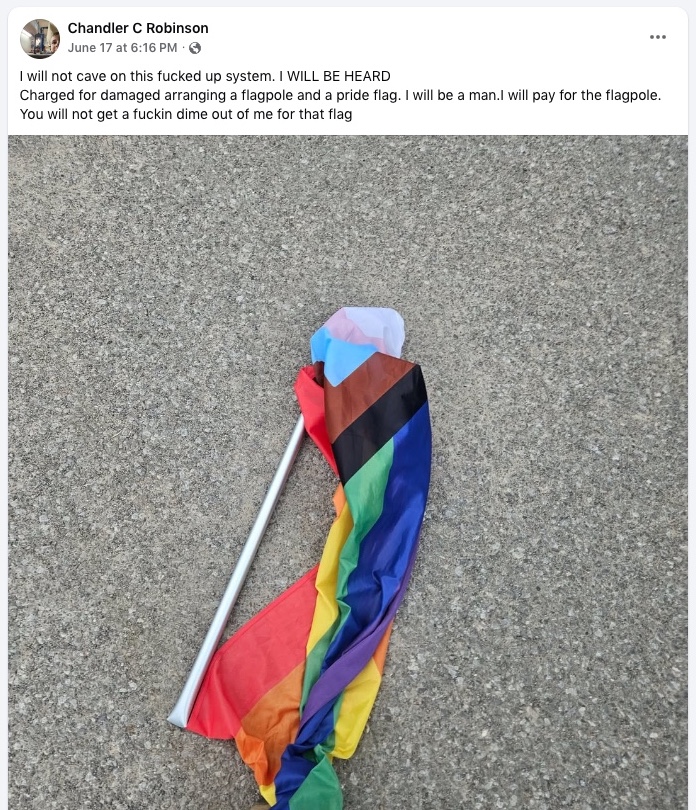
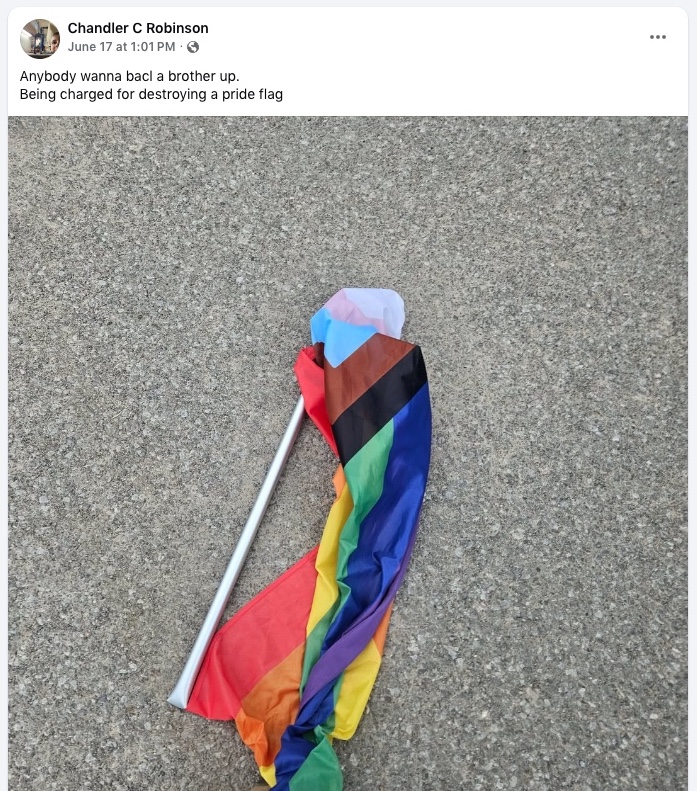
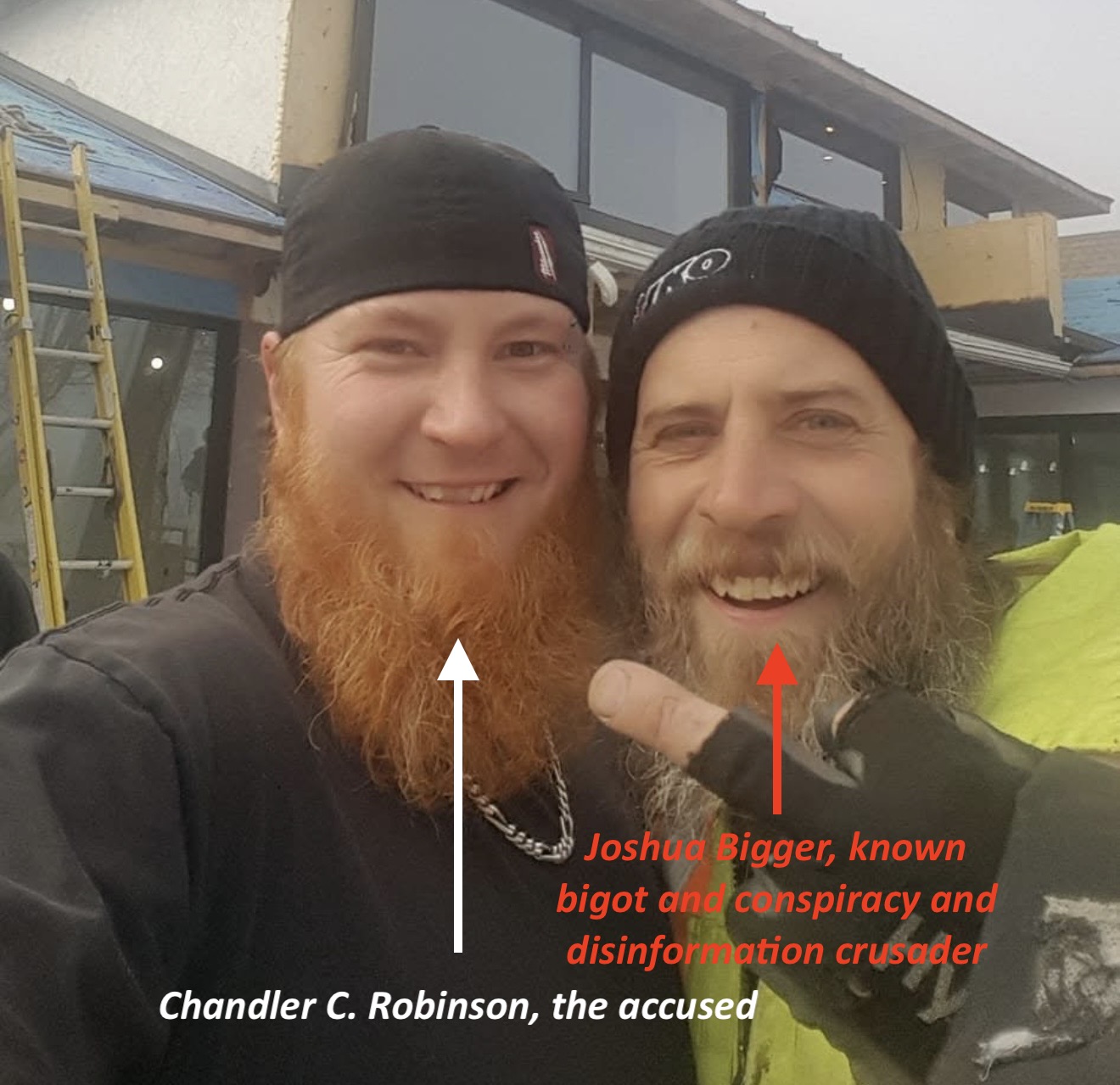
It is important to note that the accused has made several (public) posts asserting that he committed the offence. There is no doubt that it was him.
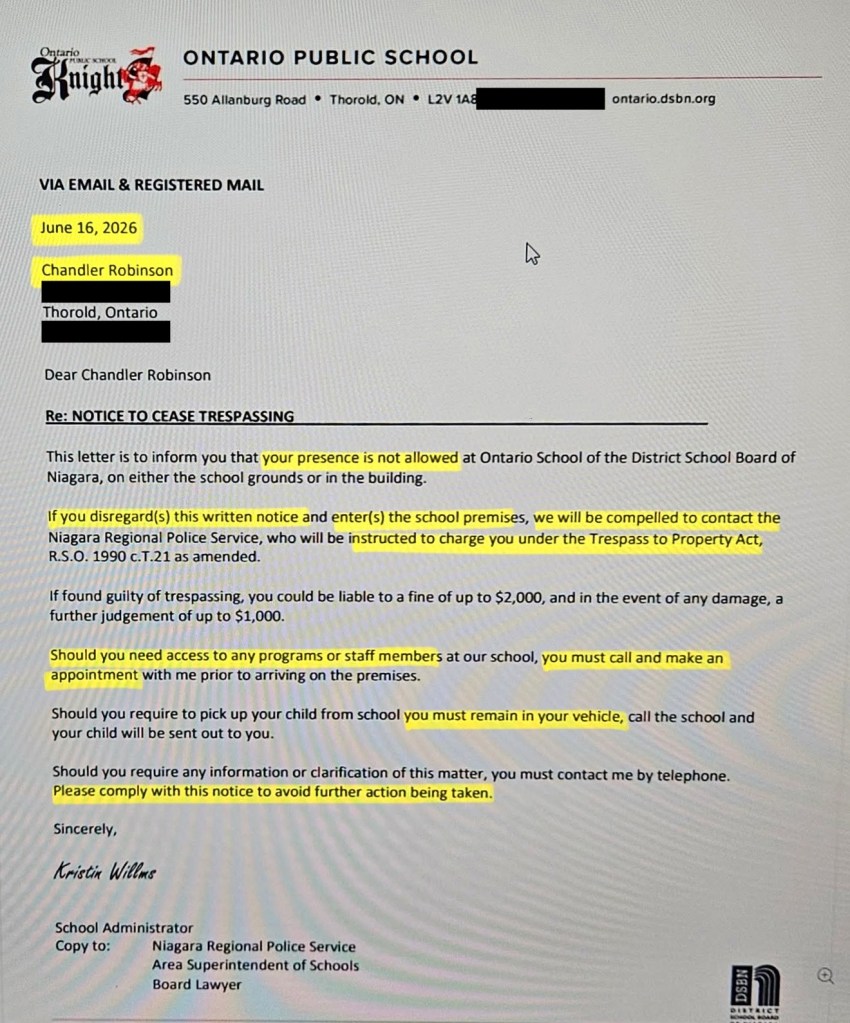
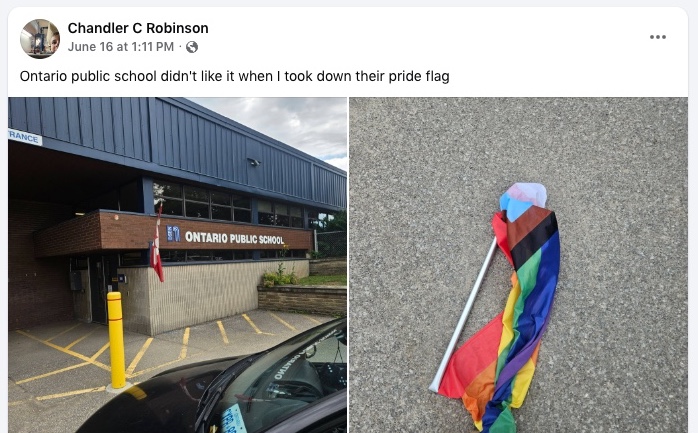
Third, the Crown must establish that the value of the damage falls below the $5,000 threshold that distinguishes the offence from the more serious form of mischief involving higher-value losses. There has been no public suggestion that the damage exceeded that amount, which is likely why police proceeded with a charge of Mischief Under $5,000.
Finally, the Crown must prove the required mental element, known as mens rea. In practical terms, this means proving that the accused intended to perform the act that caused the damage or was reckless as to the consequences. The Crown does not need to prove that the accused intended a specific dollar amount of damage. It is enough to prove that the act itself was deliberate. If a person intentionally removes a flag from a functioning flagpole and damages the equipment in the process, a court may infer that the resulting interference with the property was both foreseeable and intended.
Again, the accused posted several times indicating that is was the accused that did it, that he knew it wasn’t his flag, and that he explicitly target that flag for what it represents.
Viewed through that legal framework, the allegations reported by police appear to correspond closely with each of the essential elements of the offence. The more difficult and legally significant question is not whether the alleged conduct constitutes mischief. It is why the Pride flag was allegedly targeted in the first place.
MOTIVE AND CONTEXT
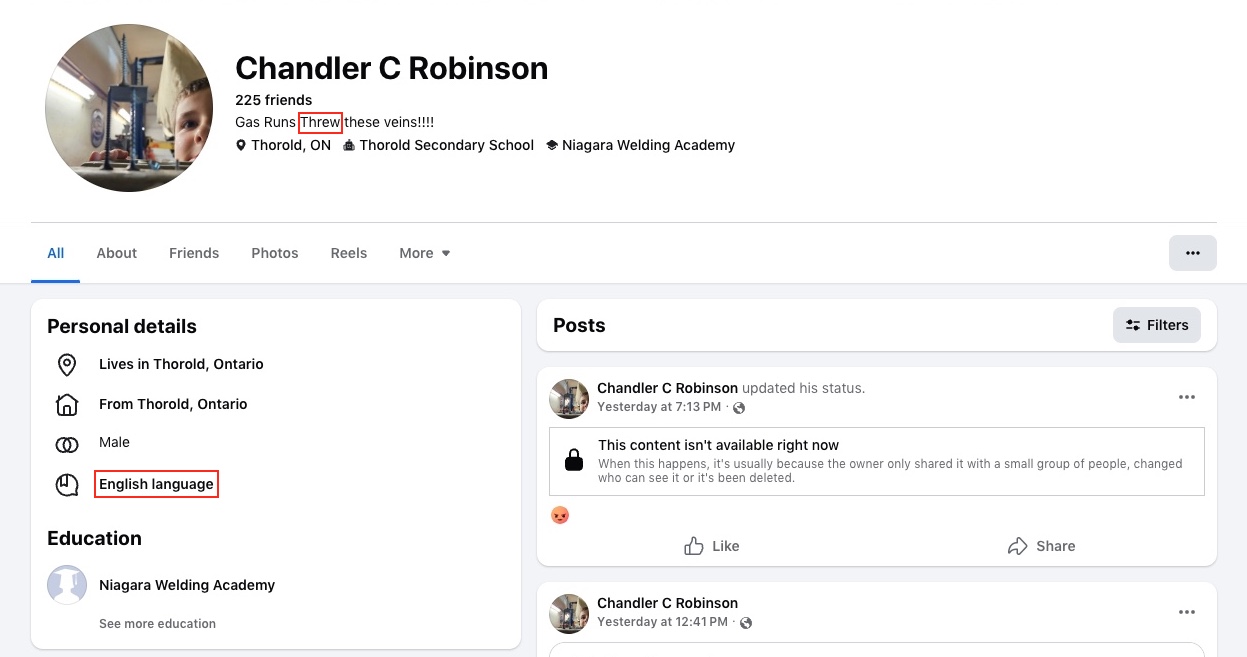
Forming intent often involves examining the character, as well as the public and private statements and conduct of the accused. In that context, it may be useful to examine the publicly available record and online activity of Chandler C. Robinson of Thorold, Ontario. This analysis is based on documented social media posts, public comments, and related materials, which will be shared below.
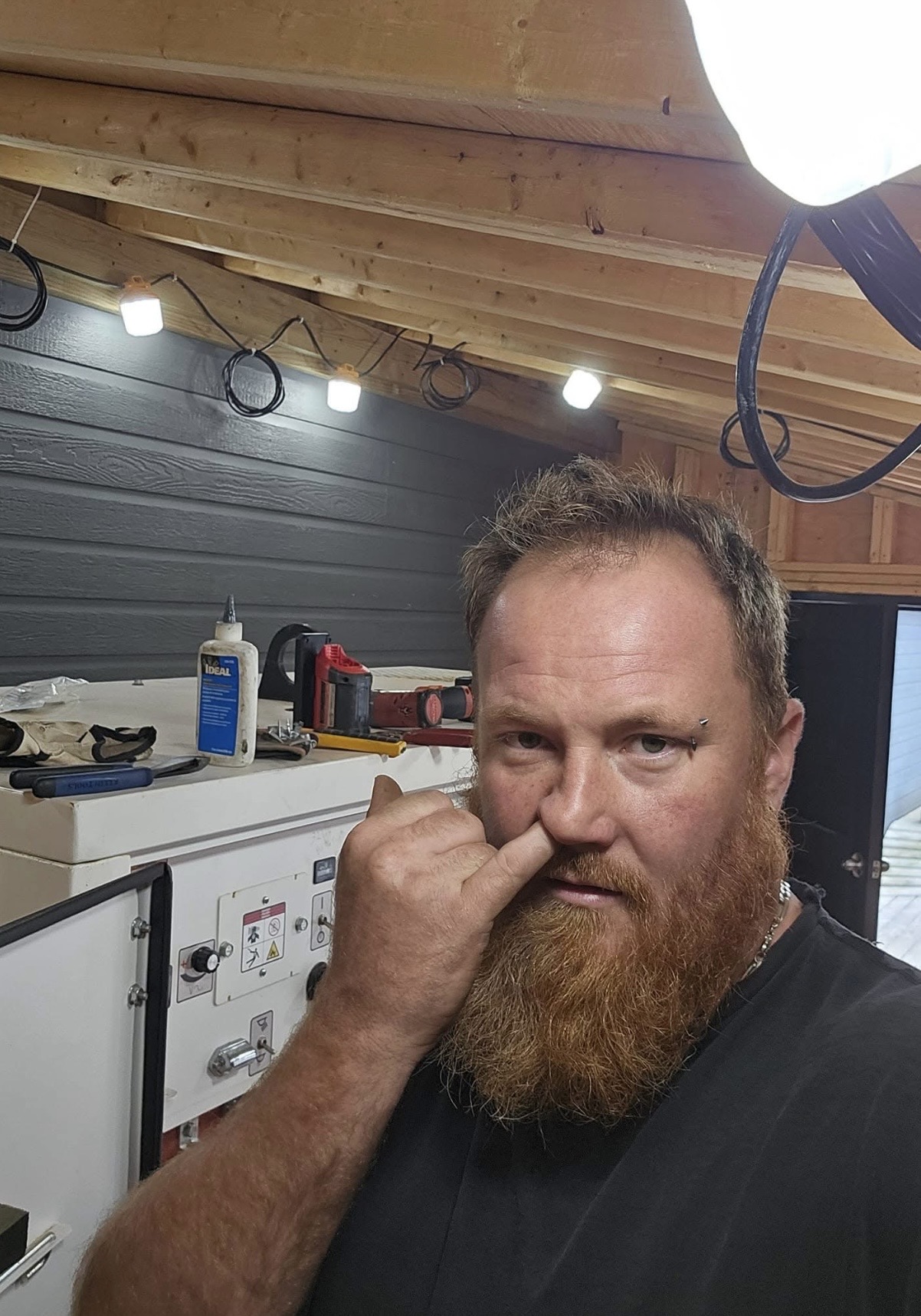
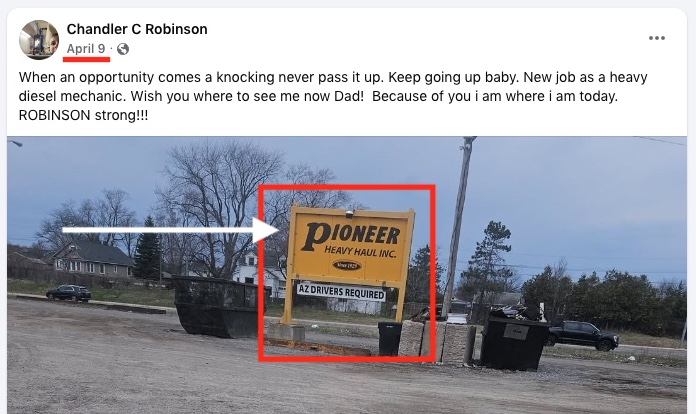
Mr. Robinson is a longstanding resident of Thorold and a father who, based on publicly referenced court matters and related discussions, appears to have been engaged in a prolonged and contentious legal dispute involving custody and decision-making arrangements. His public statements in both online spaces and court-adjacent contexts, as reflected in the record, suggest a consistent pattern of hostility toward authority and the justice system, potentially shaped by sustained legal conflict.
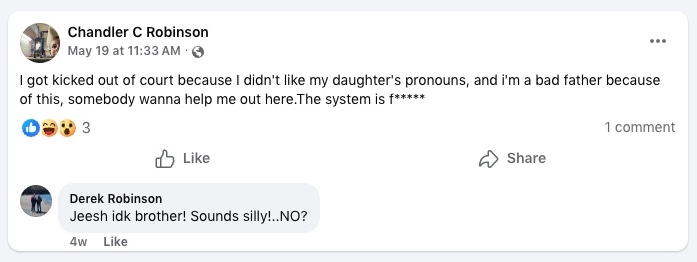
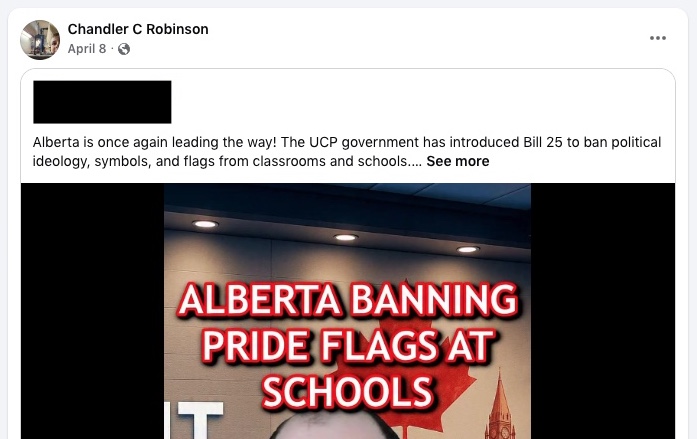
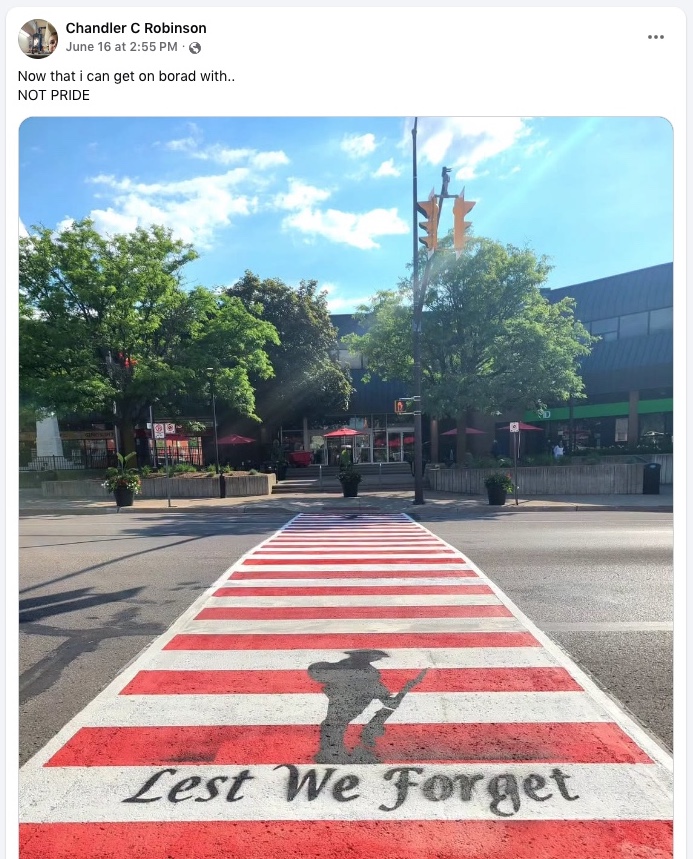
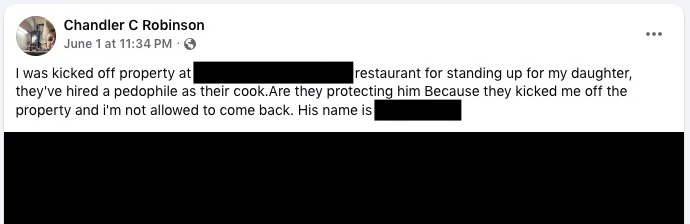
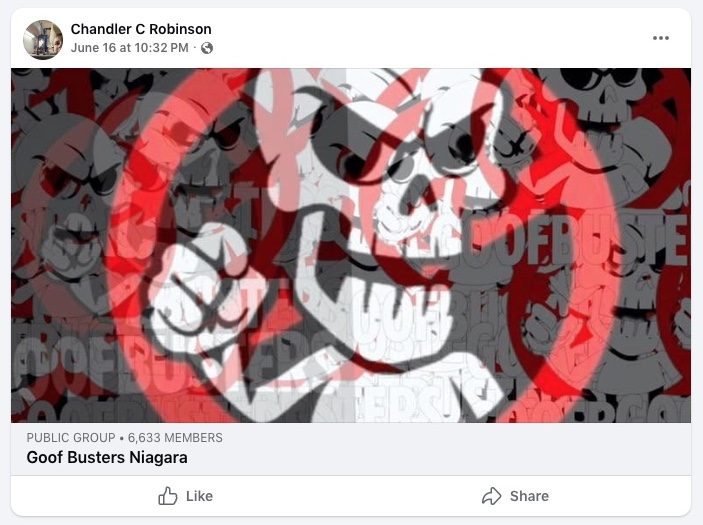
His online presence also appears relatively narrow in scope. A significant portion of his publicly visible activity centres on criticism of the 2SLGBTQQIA+ community, alongside recurring references to motor sports and recent employment in heavy haul trucking in Welland, Ontario. Taken together, this pattern reflects a limited but consistent set of expressed interests and grievances.
ANALYTICAL FRAMEWORK
In earlier writing, I have discussed broader academic and psychological frameworks used to interpret hostility toward 2SLGBTQQIA+ communities, including concepts such as internalized homophobia and internalized transphobia. These terms are used in psychology and queer studies to describe cases where individuals may externalize hostility toward identities or communities with which they may have unresolved internal conflict.
These are analytical frameworks, not diagnostic conclusions, and cannot be applied definitively to any individual without clinical evaluation or direct evidence.
I have also written about what some sociological literature describes as a “desire-to-cruelty” dynamic. This framework explores how individuals who experience internal conflict around “socially stigmatized desires” may redirect that tension into hostility toward those who openly embody the targeted identity. In this model, visibility itself can become a trigger, as openly queer and trans individuals “challenge narratives rooted in shame, repression, or denial.”

Underscoring the bigotry of many Christians and conservatives is their fear of what being trans represents. It represents an escape from the patriarchy. It represents an escape from a rigid set of rules that demand unquestioning acceptance. It means taking ownership of your own happiness. It robs bigots of any possible justification for their own misery because transitioning illuminates a path toward authenticity and fulfillment. Most importantly, it demonstrates that some people refuse to live in fear.
When they reject the rules that narrowly and incorrectly define gender, they discover a kind of existential happiness that their detractors can neither understand nor ever experience. Some people, possibly our accused, Chandler C. Robinson, consciously or unconsciously chose to deny (his) own identity and happiness and would rather see the world burn because his (potential) depression has turned outward into indisputable rage.
Authoritarian systems don’t simply target queer and trans people — they actively weaponize the previous defined “desire-to-cruelty pipeline” as a mechanism of control. Private shame is converted into public obedience, and internal repression is redirected into political loyalty. This is not incidental; it is structural. It is how systems that rely on conformity sustain themselves.
What follows is a condensed explanation of how this dynamic operates, and how it surfaces in modern political rhetoric.
THE DIGITAL ENVIRONMENT
In the current digital landscape, the conditions for this process have expanded dramatically. The dark web, the normalization and monetization of hate speech on mainstream social media platforms, and the transnational reach of ideologies rooted in hatred have collapsed what were once geographic limits on radicalization. These systems are no longer local — they are networked, algorithmic, and continuously reinforced.
Even in jurisdictions with strong democratic institutions and formal legal protections for 2SLGBTQQIA+ communities, visibility and protection do not eliminate vulnerability. In fact, low local visibility can sometimes intensify external influence, as online ecosystems become the primary site where identity narratives are formed, distorted, or weaponized.
Authoritarian actors abroad — including foreign political regimes, extremist movements, and ideologically motivated organizations — have learned to exploit this environment with increasing sophistication. They do not need physical presence to exert influence. Through digital platforms, they seed narratives, amplify grievance, and reinforce identity-based hostility across borders.
The result is a form of distributed radicalization: subtle in origin, cumulative in effect, and often invisible until it has already reshaped political discourse at the local level.
In assessing Mr. Robinson’s publicly documented statements and conduct, it can be argued that they reflect alignment with transphobic and anti-2SLGBTQQIA+ narratives present in certain online ecosystems.
HATE MOTIVATION AND THE LAW
Public schools contain no shortage of property. There are signs, fences, benches, windows, doors, landscaping, and countless other objects that could be vandalized by someone looking merely to damage something. Yet according to police, it was not a window that was smashed. It was not a fence that was cut. It was not a sign that was spray-painted. It was a Pride flag. That distinction matters.
The Criminal Code requires prosecutors to prove more than simply what happened. Courts routinely examine the surrounding circumstances to understand why something happened. Motive is rarely proven through a confession. More often, it is established through a collection of facts that point in the same direction. A person who destroys a random object may simply be a vandal. A person who destroys a symbol may be communicating something else entirely. This is where context becomes important.
Publicly available social media content associated with the accused reportedly contains a substantial amount of anti-2SLGBTQQIA+ commentary. Posts criticizing queer people. Content attacking transgender individuals. Material portraying members of the 2SLGBTQQIA+ community as ‘threats, dangers, or societal problems.’ A steady stream of content focused on a single identifiable group.
No single post proves criminal motivation. No single meme proves hatred. No single comment proves bias. But courts do not assess evidence in isolation. They assess evidence collectively. Lawyers and police officers often refer to this as examining the “totality of the circumstances.” If a person publicly consumes and shares anti-2SLGBTQQIA+ content and then allegedly targets one of the most recognizable symbols of the queer community, it is reasonable to ask whether those facts are connected. This is not merely an academic question. If prosecutors can establish that the alleged offence was motivated, in whole or in part, by bias, prejudice, or hatred directed at members of the gay, queer, or the trans community, that finding can have significant legal consequences.
WHY THE SYMBOLS MATTER
Canadian criminal law recognizes that offences motivated by hate inflict harm beyond the immediate victim. A broken window affects the owner of the window. A hate-motivated act sends a message to every member of the targeted community. For that reason, Parliament has directed sentencing judges to treat ‘hate motivation as an aggravating factor when determining an appropriate punishment.’
Section 718.2(a)(i) of the Criminal Code specifically requires courts to ‘consider evidence that an offence was motivated by bias, prejudice, or hatred based on characteristics such as race, religion, ethnic origin, sexual orientation, gender identity, or gender expression.’ Where such motivation is proven, judges are expected to impose a more severe sentence than they otherwise would have imposed for the same offence. In practical terms, this means that two acts of mischief causing identical amounts of damage may be treated very differently by the courts.
A person who damages property for reasons unrelated to a protected group may face one sentence. A person who targets the same property because of ‘hostility toward an identifiable community’ may face a harsher outcome. The distinction is important because the criminal law recognizes that ‘hate-motivated offences do more than damage property. They intimidate communities. They create fear. They communicate exclusion. They tell an entire group of people that they are being singled out because of who they are.’ That is why investigators often examine not only what was damaged, but also what the damaged property represented.
When the alleged target is one of the most widely recognized symbols of queer inclusion, the question of motive becomes impossible to ignore. There is also another legal question that may arise from these facts. Most Canadians are familiar with the concept of a ‘hate-motivated offence’ leading to a harsher sentence. Fewer are aware that the Criminal Code also contains specialized hate-mischief provisions under section 430(4.1), which apply to certain types of property when the offence is motivated by bias, prejudice, or hatred toward an identifiable group.
THE BROADER SOCIAL CONTEXT
Over the years, Parliament has expanded these provisions beyond traditional places of worship to include a range of community and educational properties associated with protected groups. Whether those provisions could apply in this case is ultimately a matter for police and Crown prosecutors to assess based on the specific facts and the current wording of the legislation. What makes this incident legally interesting is that the alleged target was not merely school property. It was a Pride flag displayed by a public elementary school as a symbol of inclusion for 2SLGBTQQIA+ students, families, and staff. A prosecutor could potentially argue that the flag was ‘an object associated with an educational institution and that it was allegedly targeted because of the community it represented.’
Whether the evidence ultimately supports such a conclusion remains to be seen. However, the existence of these specialized hate-mischief provisions underscores an important principle already recognized throughout Canadian criminal law: “when property is targeted because of what it symbolizes, the law may treat the offence differently than an ordinary act of vandalism.” That reality becomes even more troubling when the location is considered.
This was not a political protest outside Parliament. This was not a confrontation between adults at a rally. According to police, and the accused’s own social media posts (he loves to tell on himself), the incident occurred at an elementary school. An elementary school is not merely a building. It is a place where children learn what kind of society they belong to. Every sign, every policy, every symbol displayed by a school communicates something about who is welcome and who is valued. For 2SLGBTQQIA+ students, Pride symbols communicate belonging.
For students with 2SLGBTQQIA+ parents, they communicate acceptance. For students questioning their identity, they communicate safety. The purpose of displaying a Pride flag at a school is not “political indoctrination,” despite what some critics claim. Its purpose is to reassure vulnerable children that they are entitled to the same dignity, respect, and protection as every other student walking through those doors. That is what makes the alleged destruction of the flag significant. The flag itself can be replaced. The message sent by its destruction is more difficult to repair.
Imagine being a queer student arriving at school the next morning. Imagine being a transgender child already struggling to navigate a world that frequently questions your existence. Imagine seeing that a symbol placed there to tell you that you belong had been torn down and discarded. Whether intended or not, the message received by many children would be unmistakable. Someone wanted that symbol gone. Someone wanted to make a statement. The question becomes what statement was being made. This is where a broader conversation becomes unavoidable.
Over the past several years, anti-2SLGBTQQIA+ rhetoric has become increasingly common in both traditional and social media. Children have been portrayed as being “groomed.” Teachers have been accused of indoctrination. Pride events have been characterized as threats. Transgender people have been depicted as dangers to women and children. Entire communities have been transformed into political scapegoats. Most people who consume that content never commit crimes. Most people who share that content never engage in vandalism. But history repeatedly demonstrates that sustained campaigns of fear, suspicion, and dehumanization can create an environment in which hostility toward targeted groups becomes normalized. This is particularly true in Russia where the government has led a campaign against the gay community and has offered limited legal protections for roving gangs that assault suspected queer individuals. That is one reason why scholars frequently discuss the concept of stochastic terrorism: the idea that influential voices may repeatedly demonize a group without explicitly calling for violence, yet eventually inspire individuals who decide to act on those messages themselves.
Whether that concept ultimately applies here is a matter of interpretation. What cannot be disputed is that someone allegedly chose to target a symbol representing one of the very communities that has been subjected to an escalating wave of public hostility. That fact alone deserves serious reflection.
CONCLUSION
Ultimately, guilt or innocence will be determined in a courtroom by a trier of fact, not in the court of public opinion. Every accused person is entitled to the presumption of innocence, and every allegation must be proven beyond a reasonable doubt. But those legal protections do not prevent the public from examining the broader implications of what allegedly occurred. One question is whether this incident was simply an “act of vandalism.” Another is whether it was something more. When a person allegedly walks onto school property and tears down a Pride flag, Canadians should not be asking only what was damaged. They should also be asking what was being targeted. Because the answer to that question may tell us far more about this incident than the damaged flag ever could.
POLICING THE CRITIC: A Story About NRPS Priorities
You can try to bury a story. You can try to intimidate the person telling it. You can try to make the criticism disappear. But sometimes, in doing so, you only give the story a larger audience.

On The Myth of Canadian Exceptionalism
This is not an argument that Canada is Mississippi in 1964—but no society arrives at that point by accident. The same dynamics are visible here at home. They surface in the normalization of hateful rhetoric online and in public spaces across Canada, including here in Niagara. Those advancing this rhetoric often insist they are merely…

On My Fight with the NRPS
Until now, I have carried this case largely on my own. I authored the original complaint. I survived the first major procedural hurdle. I researched and drafted a comprehensive response to the NRPS “defence”—a document prepared by a team of taxpayer-funded lawyers with decades of combined experience. I met the system where it stood, with…

On Not Disappearing
I am not good at making lifelong friends. My record is uneven, marked by distance and missed chances. Going stealth would have only deepened that pattern. More importantly, it would have meant abandoning the mercy, empathy, and action shown by the people who stood beside me. I needed their proximity—not just their support, but their…

JUSTICE ENDS WHERE POLICING BEGINS: The Shameful History of Policing The Gay and Trans Community in Canada
Policing reform is routinely framed as a matter of training, oversight, or inclusive language. None of this resolves the central contradiction exposed by decades of violence against trans people: policing is a system built on discretion, not equality. It decides who belongs, who is suspect, and whose suffering is credible.
- POLICING THE CRITIC: A Story About NRPS Priorities
- WHEN A PRIDE FLAG BECOMES A TARGET: The Crown V Chandler C. Robinson
- SECRECY, SURVEILLANCE, AND THE PUBLIC’S RIGHT TO KNOW: Inside the NRPS’s Secret $534,000 Technology Purchase
- On the Failure of Escape
- The Belief Machine: PART 3-On The Hypocrisy of Belief
 Sabrina Constance