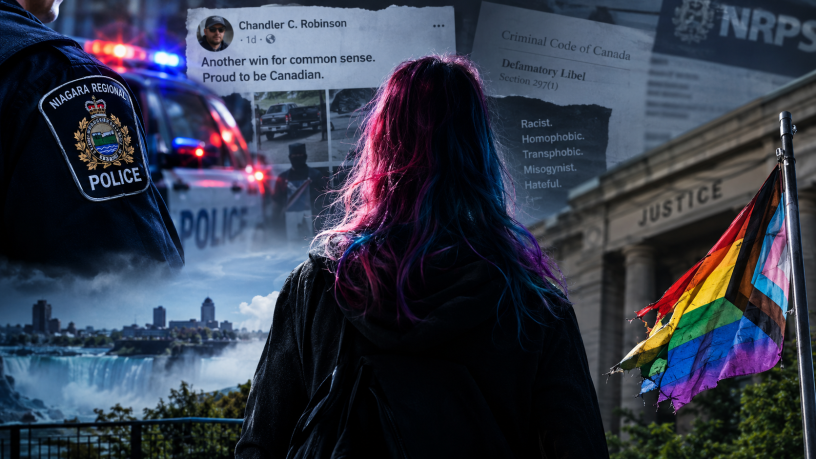
In law, there is a Latin maxim: de minimis non curat lex. The law does not concern itself with trifles. The principle is simple. Courts have limited time and resources, and the justice system is not meant to be consumed by petty claims, insignificant technical violations, or minor harms that do not warrant the machinery of the state being brought to bear. It is a principle about proportionality. It is also a principle about priorities.
And as I would soon discover, priorities matter.
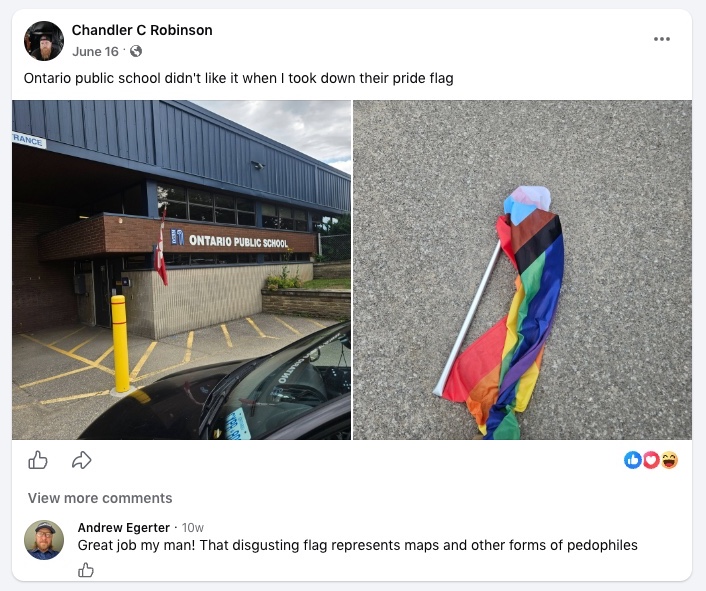
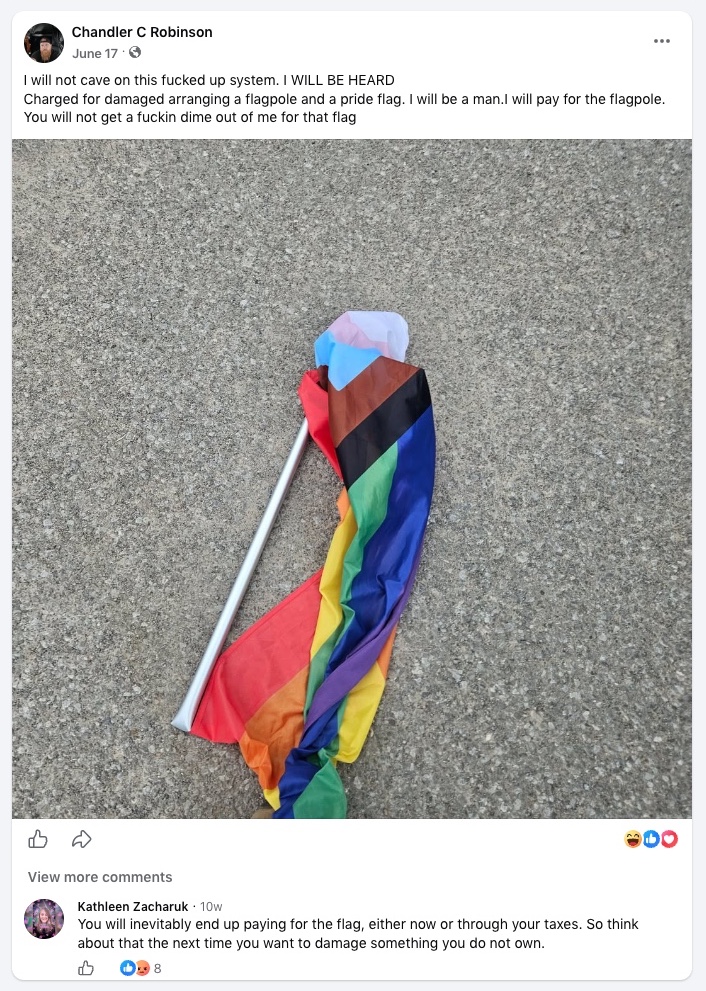
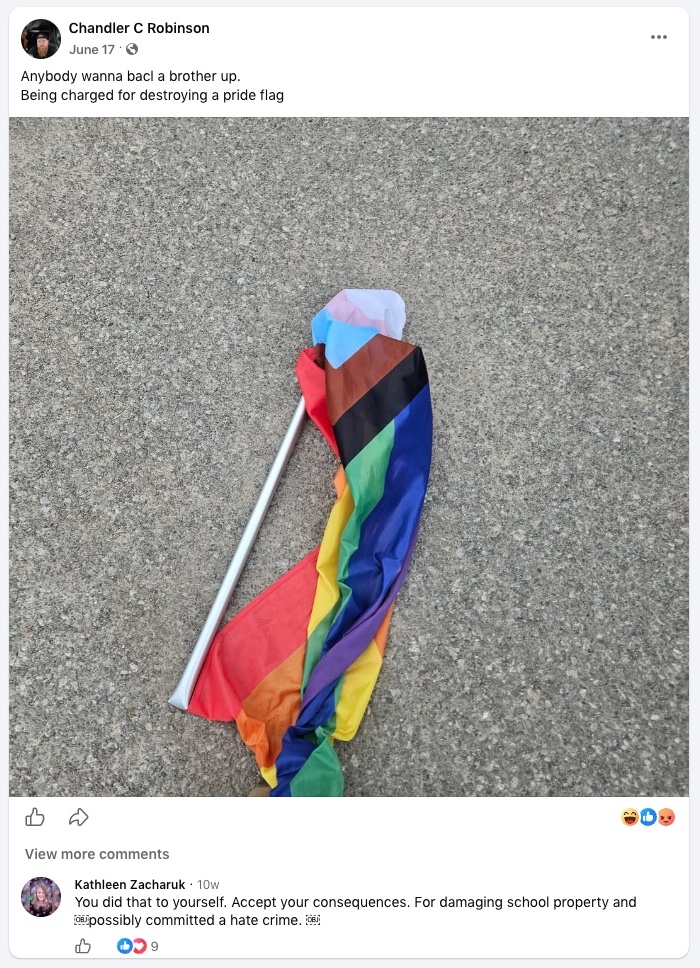
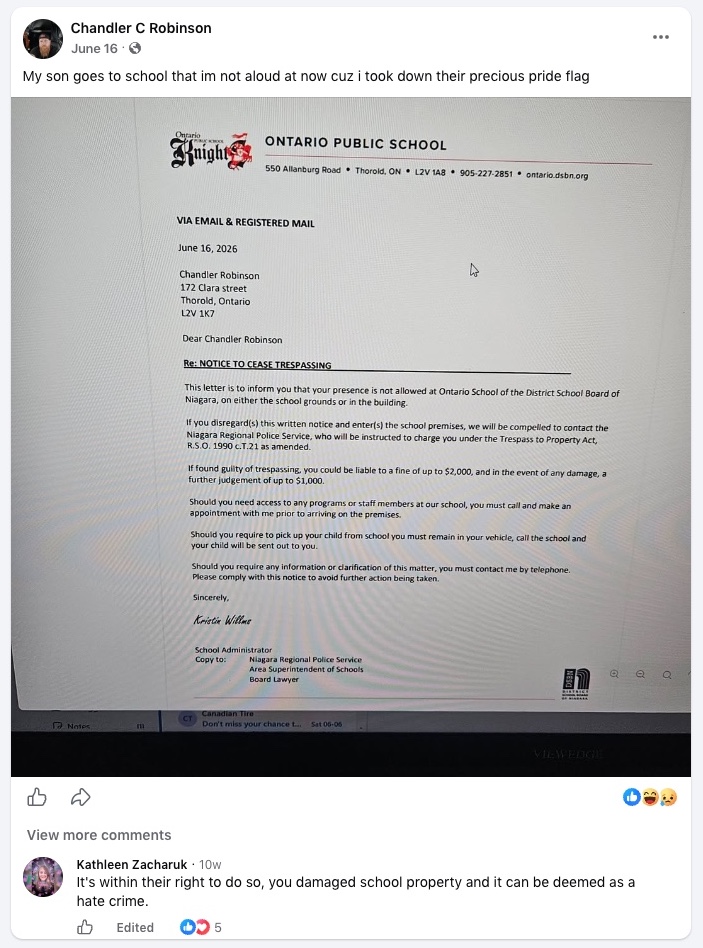
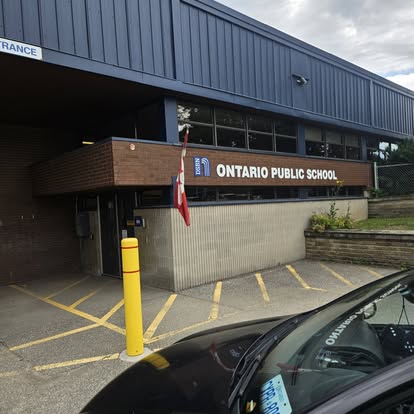
On June 18th, 2026, the Niagara Regional Police Service announced that officers had responded to a local school after a man allegedly attended the property and intentionally damaged a Pride flag displayed outside the building. According to police, the flag was ripped down and the flagpole rendered unusable.
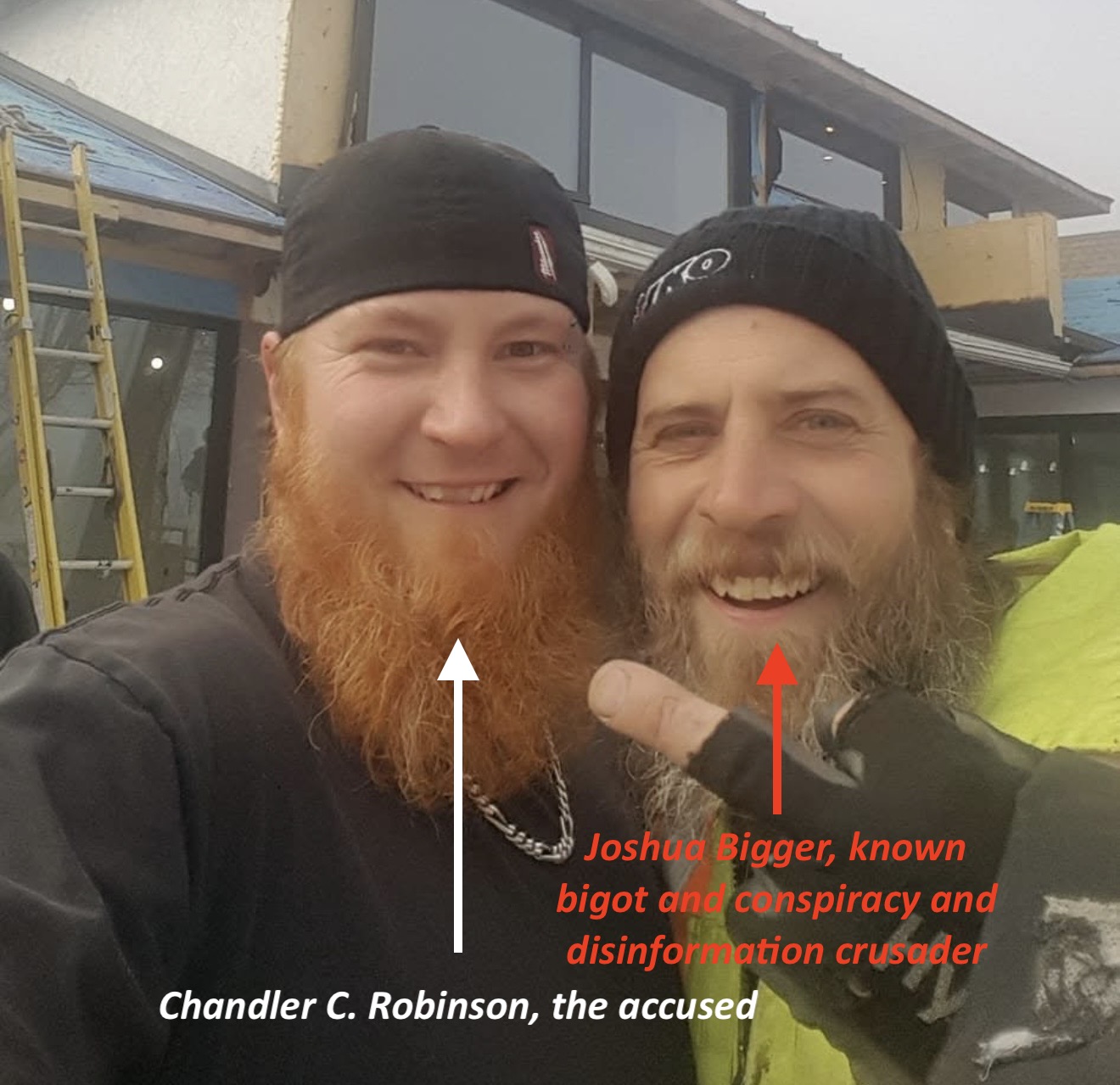
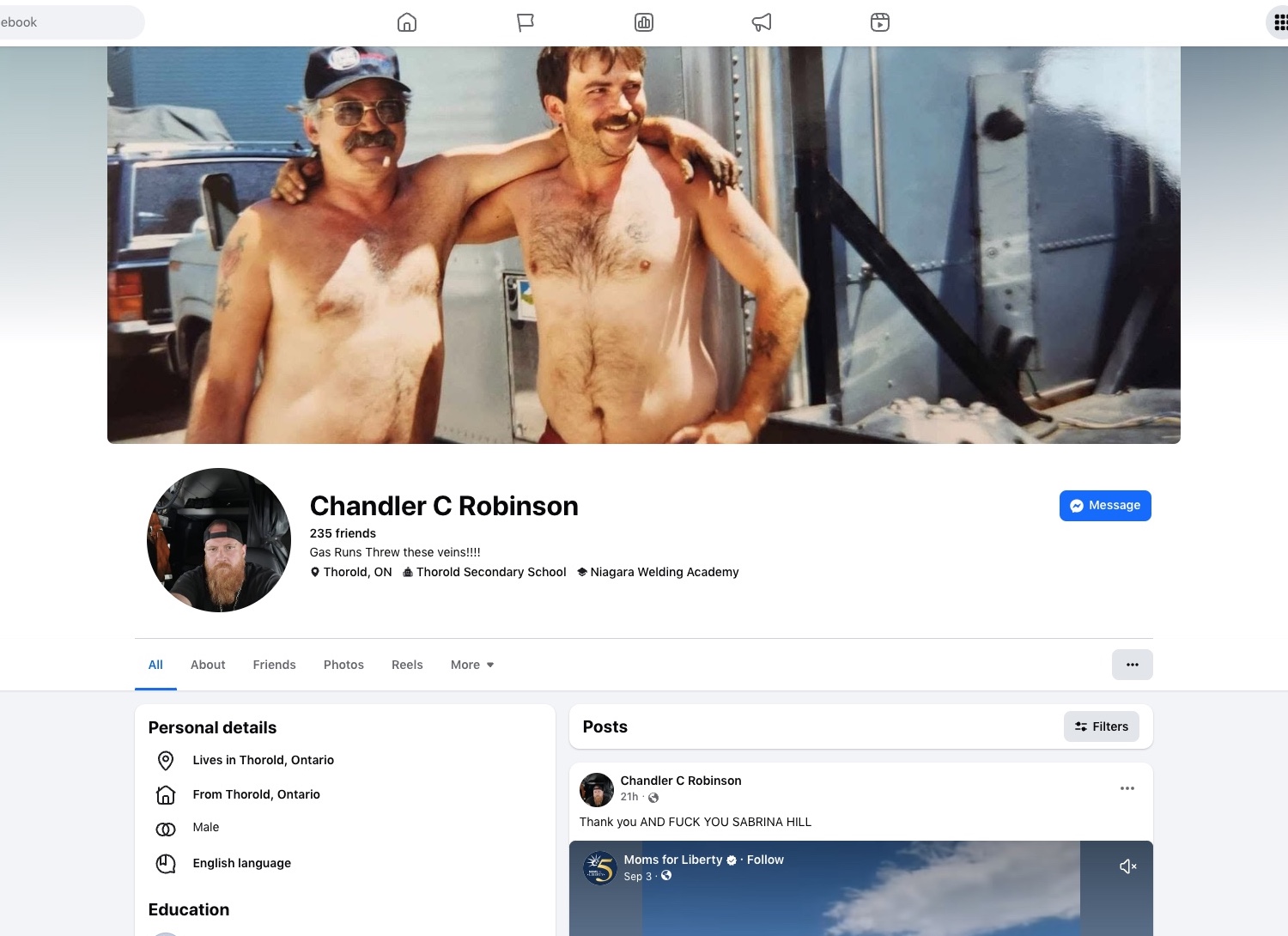
The investigation resulted in a charge of Mischief Under $5,000 against 42-year-old Chandler C. Robinson of Thorold. The police announcement was subsequently reported by local and national media.
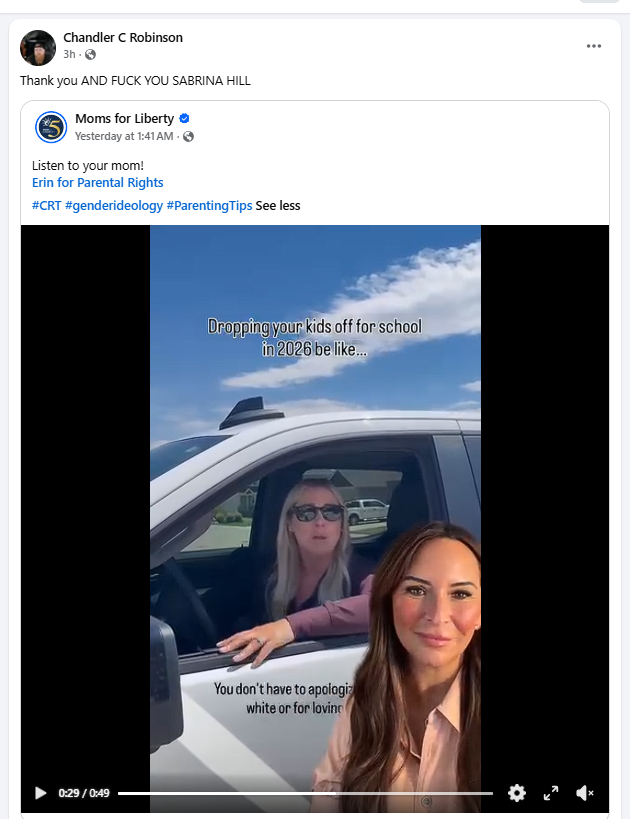
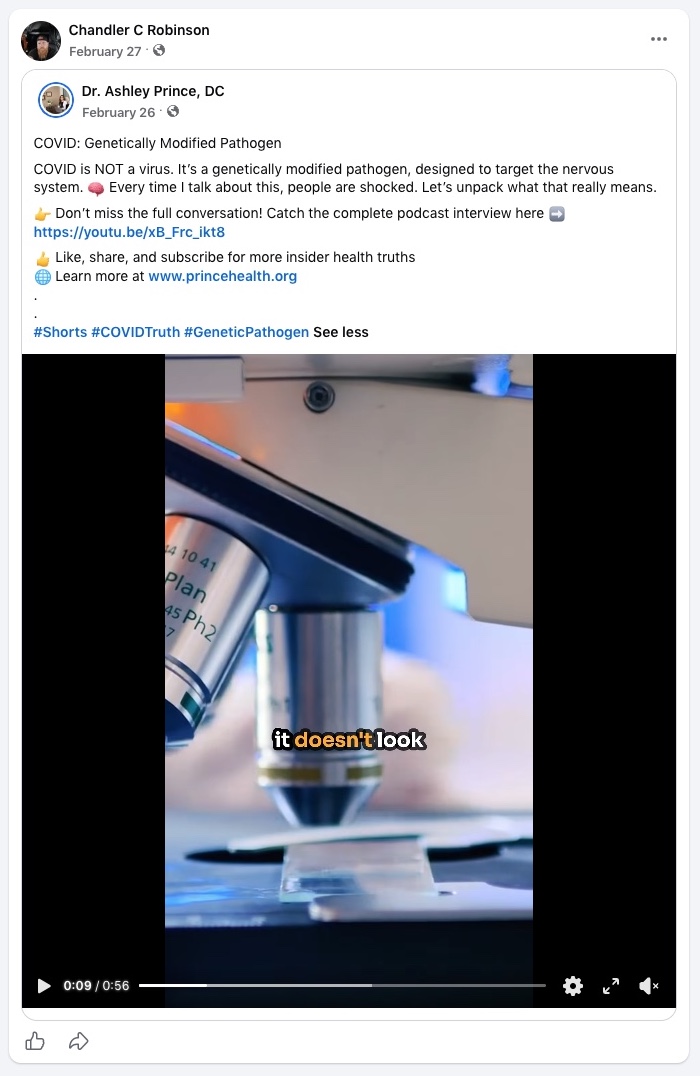
What happened next was, in many respects, predictable. Robinson’s own public social media activity provided a substantial amount of material surrounding the incident. There were posts, photographs, and even video in which Robinson appeared to boast about what had happened. The story, however, was not particularly complicated. A Pride flag had allegedly been vandalized. A man had been charged. The courts would determine what happened next. My initial involvement was limited. I wrote one article explaining what the Crown would need to establish to successfully prosecute a charge of Mischief Under $5,000 and examining the possible motives behind Robinson’s actions. Then I began looking more closely. What I found suggested that the Pride flag incident could not easily be separated from a much broader pattern of disturbing rhetoric directed towards marginalized communities.
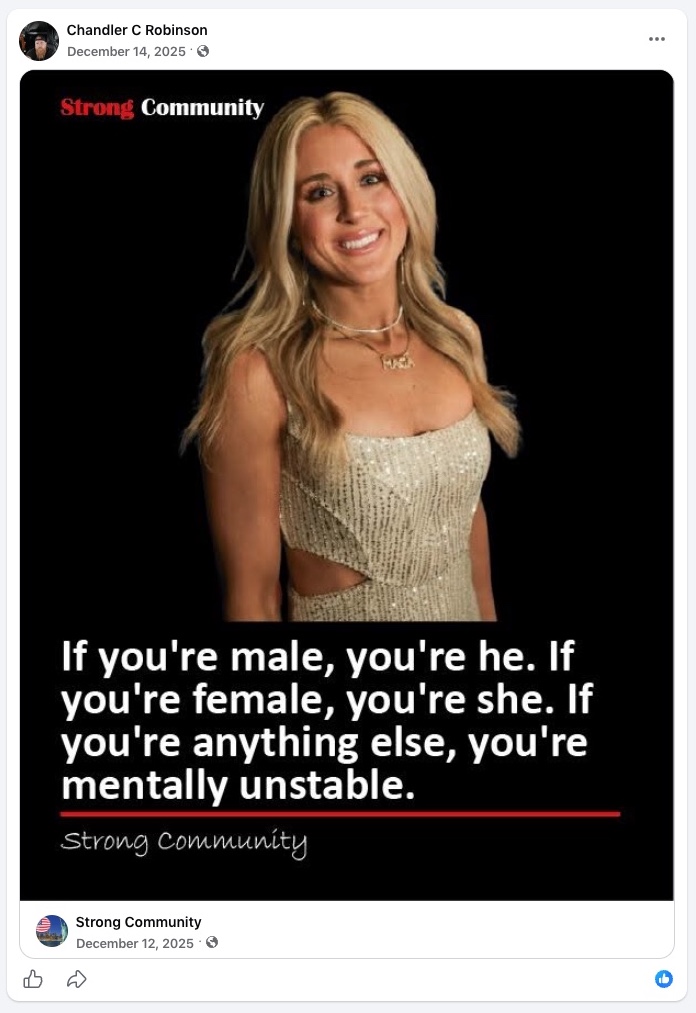
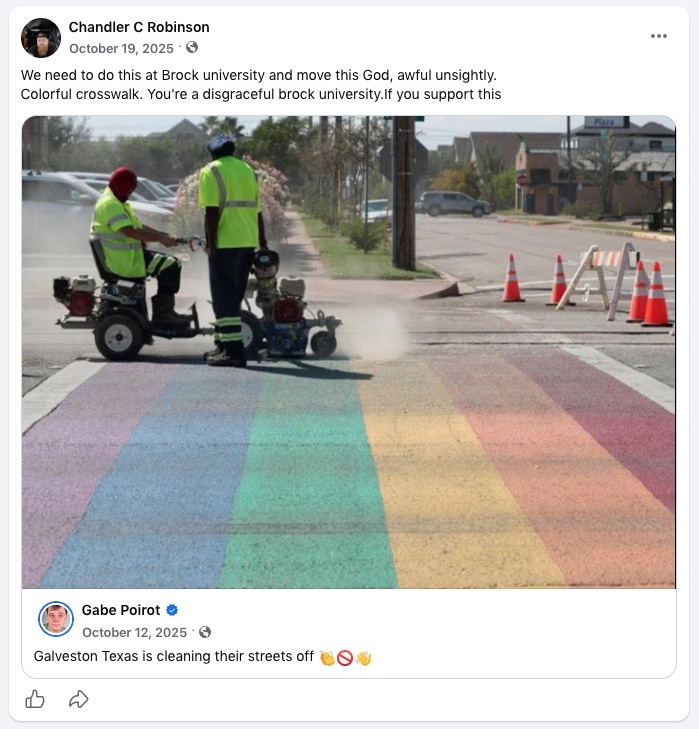
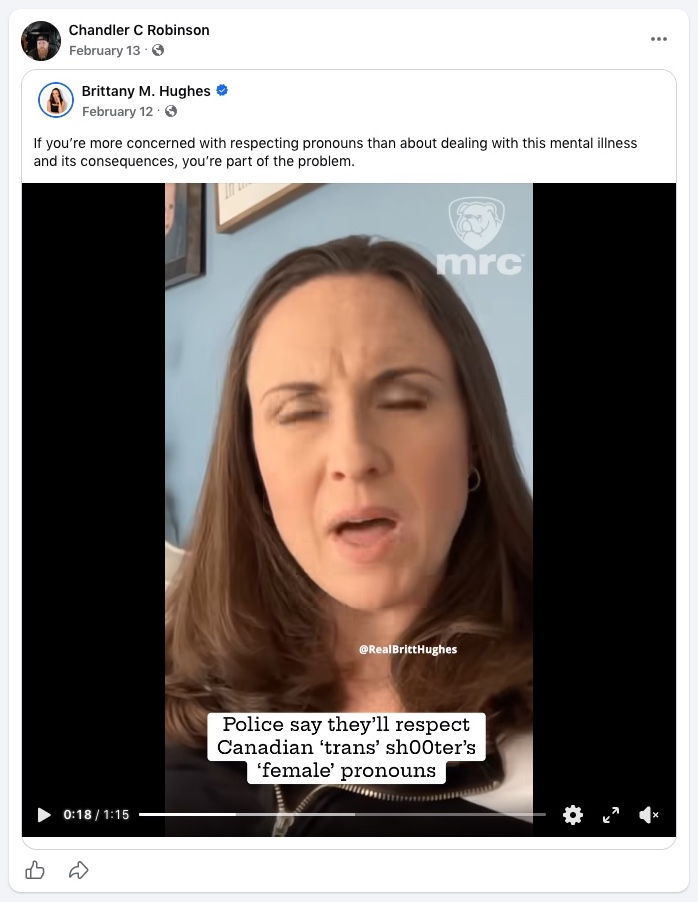
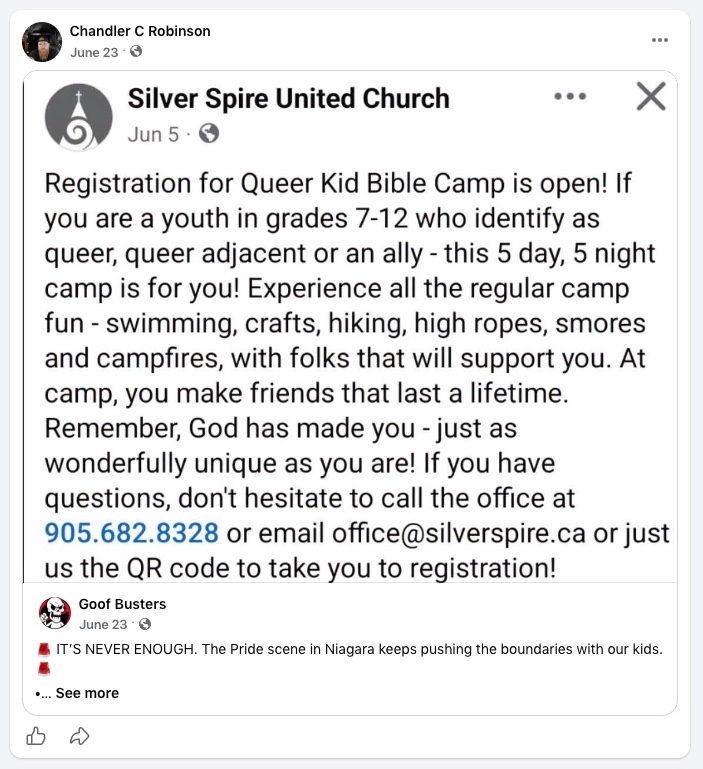
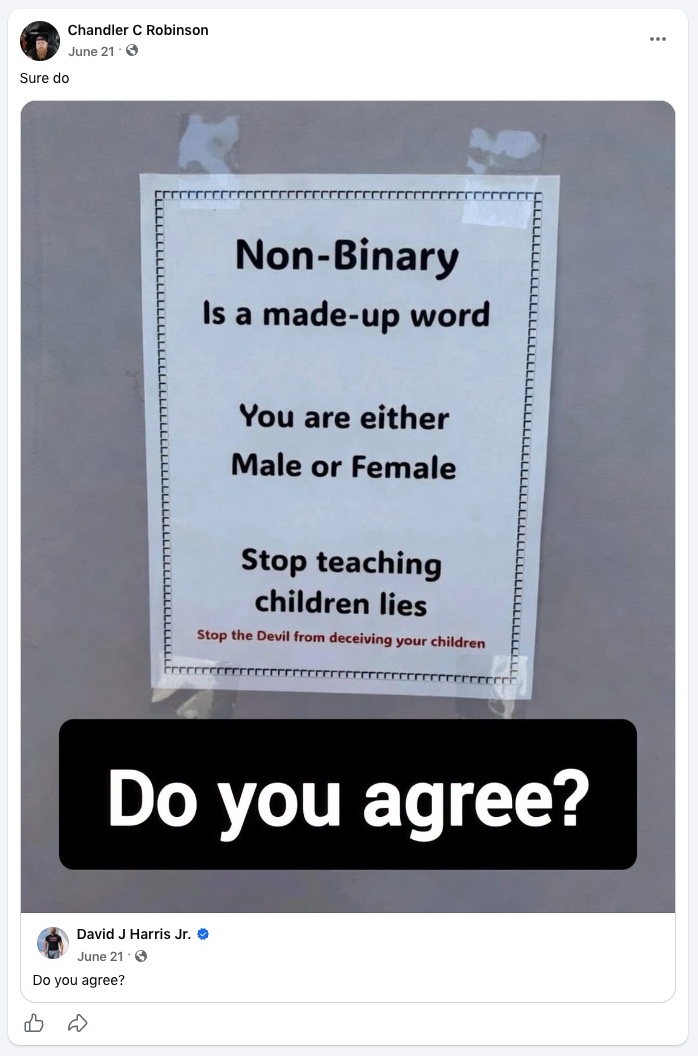
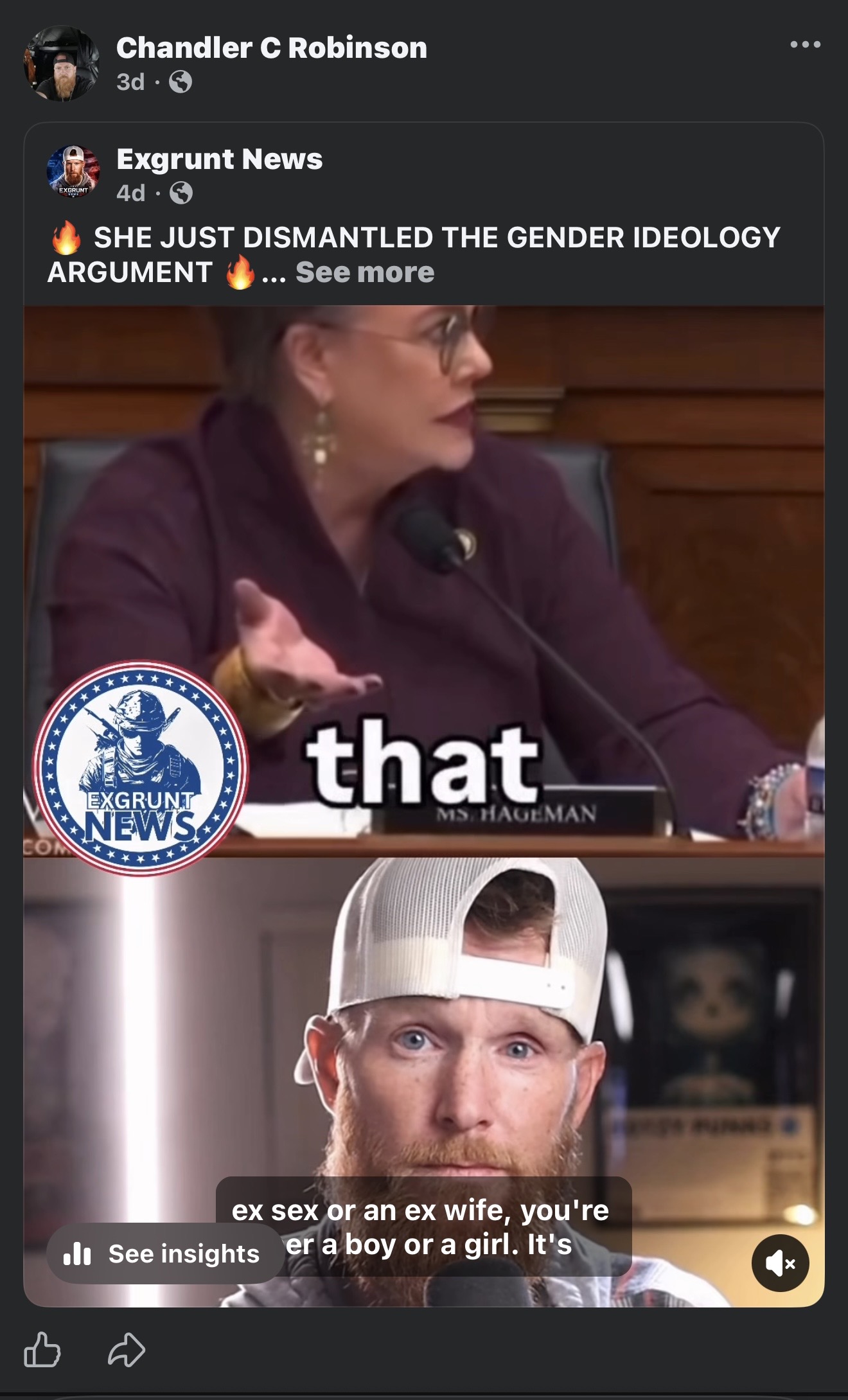
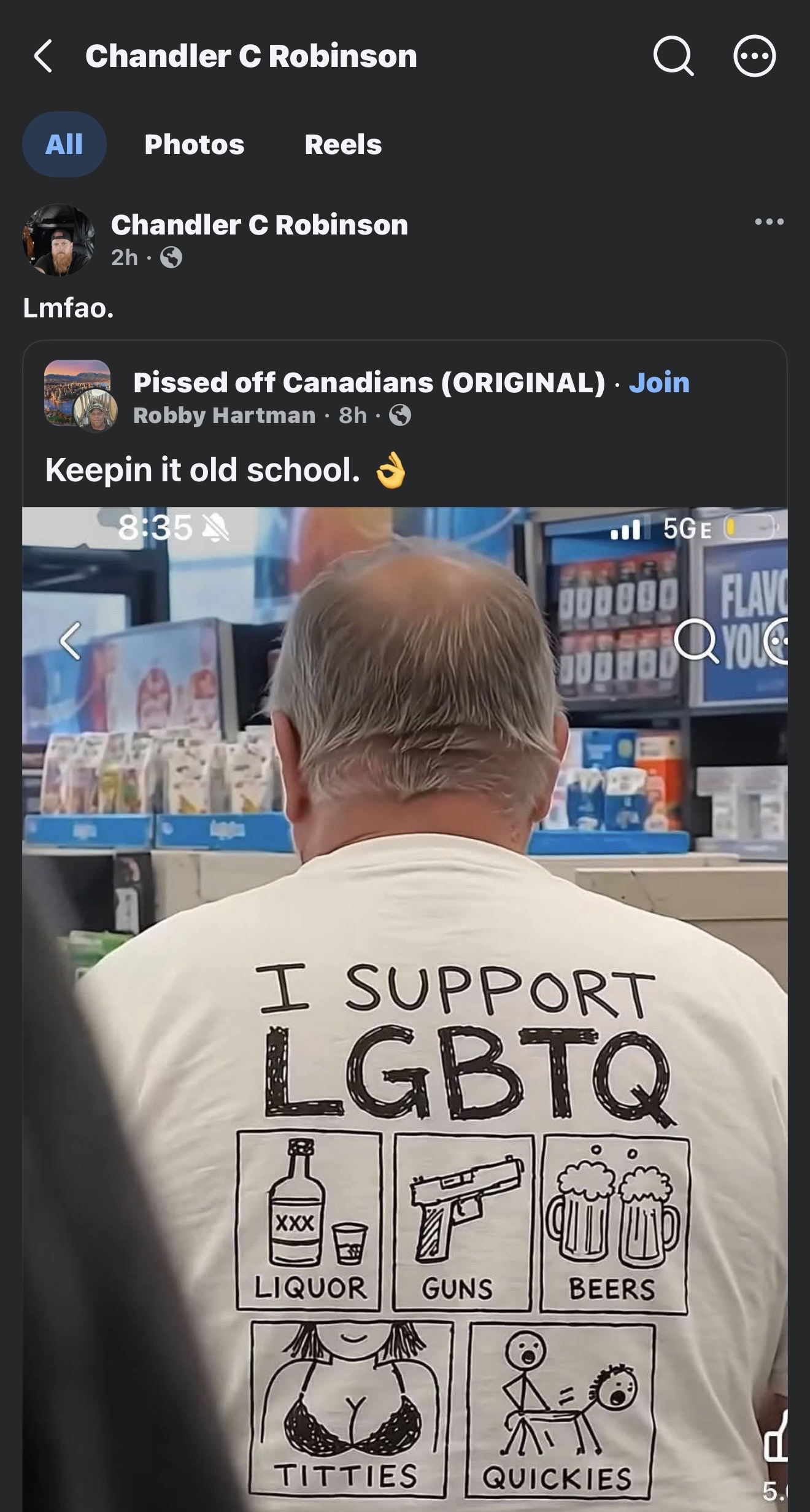
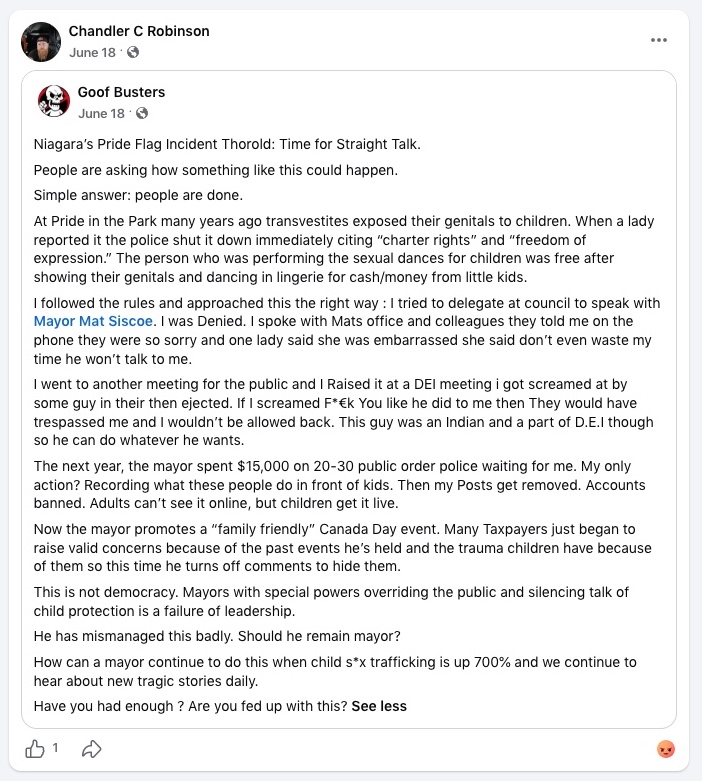
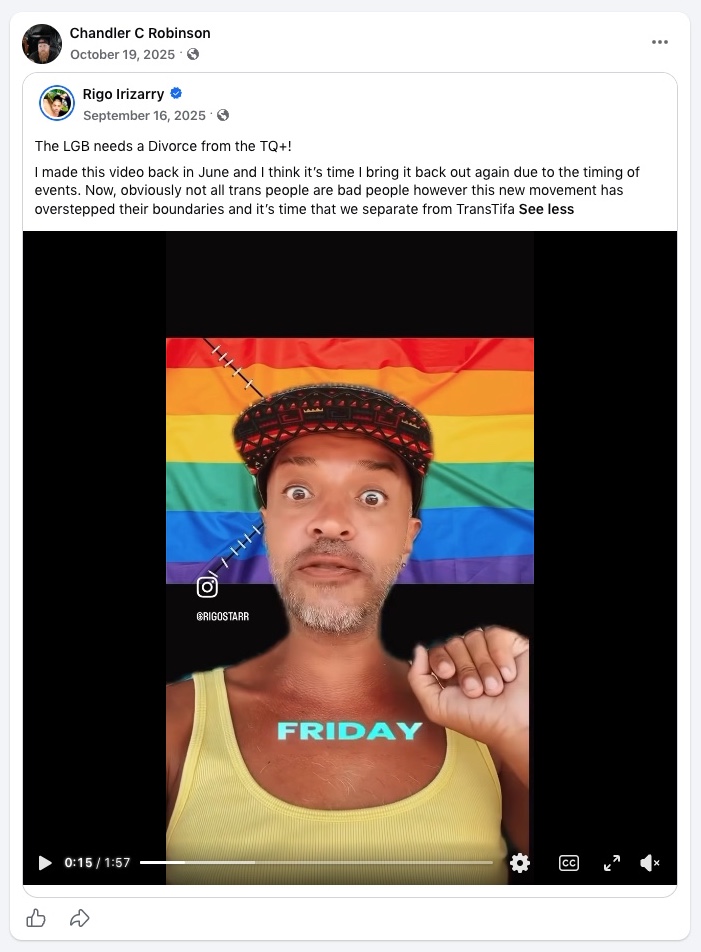
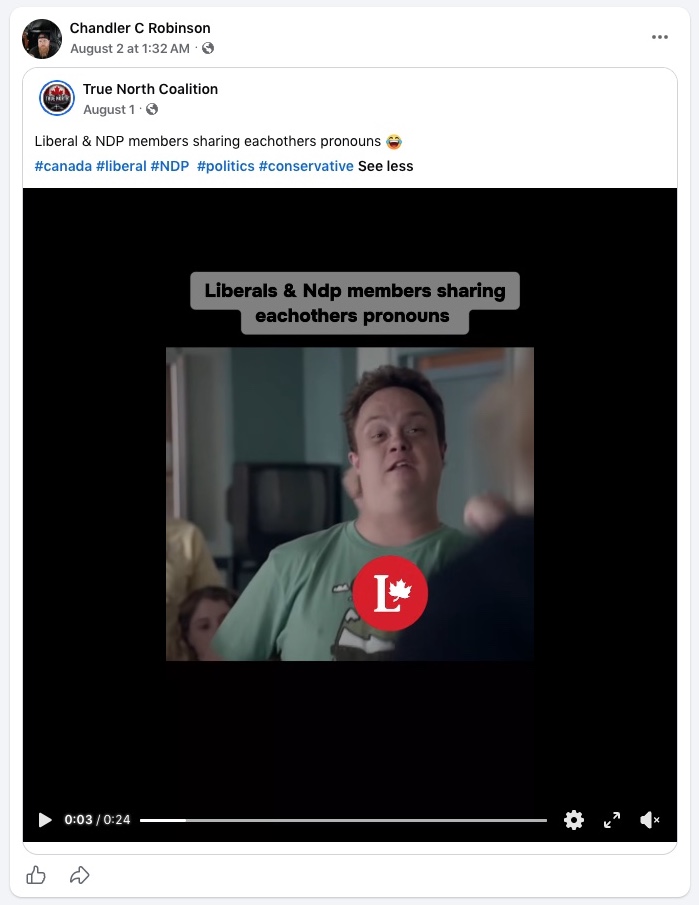
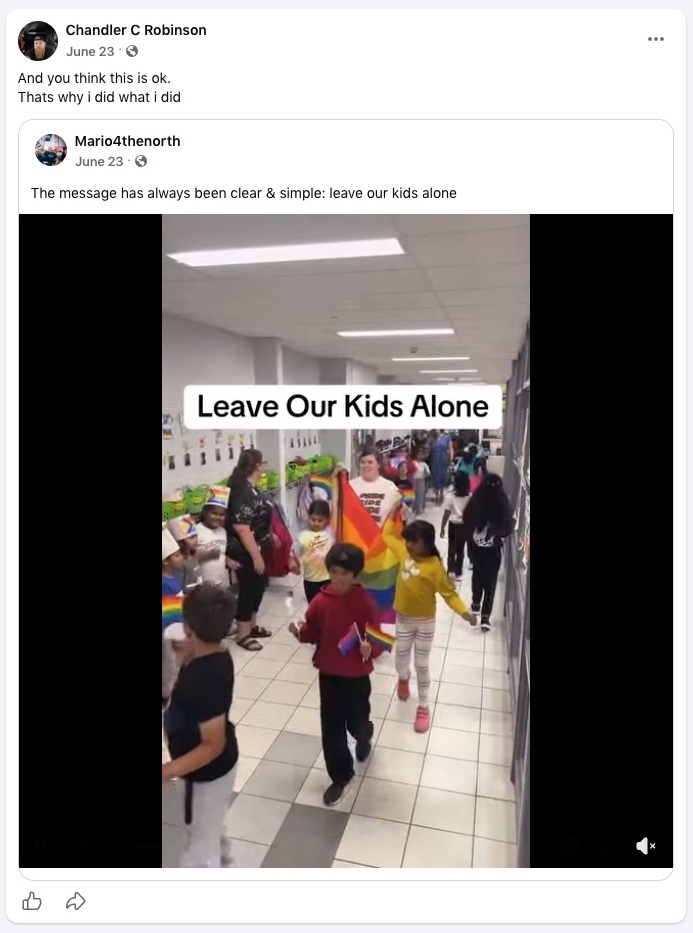
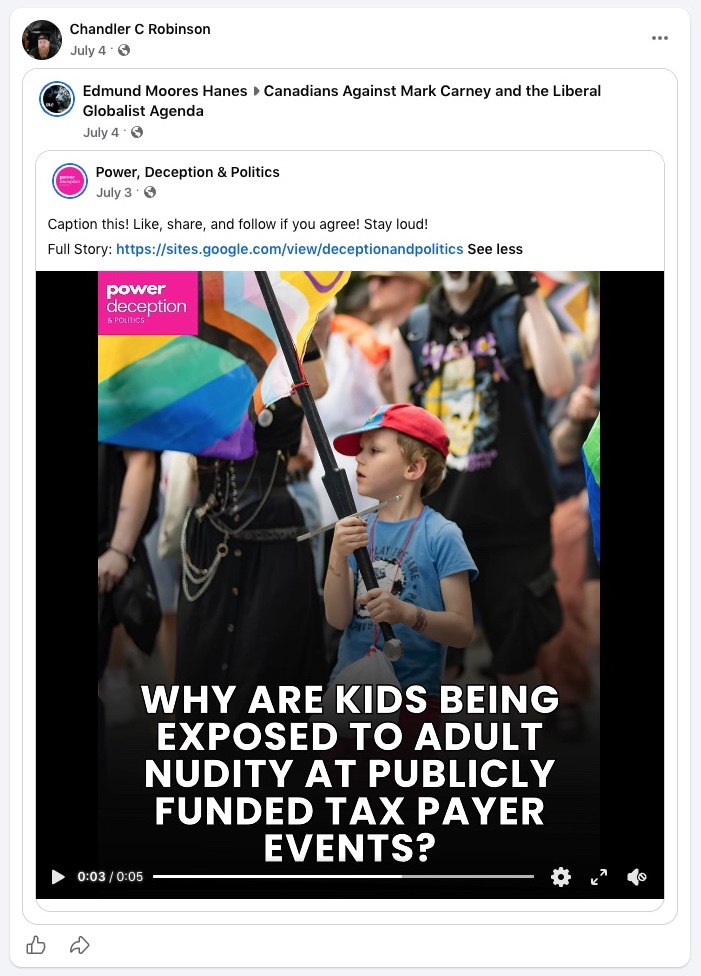
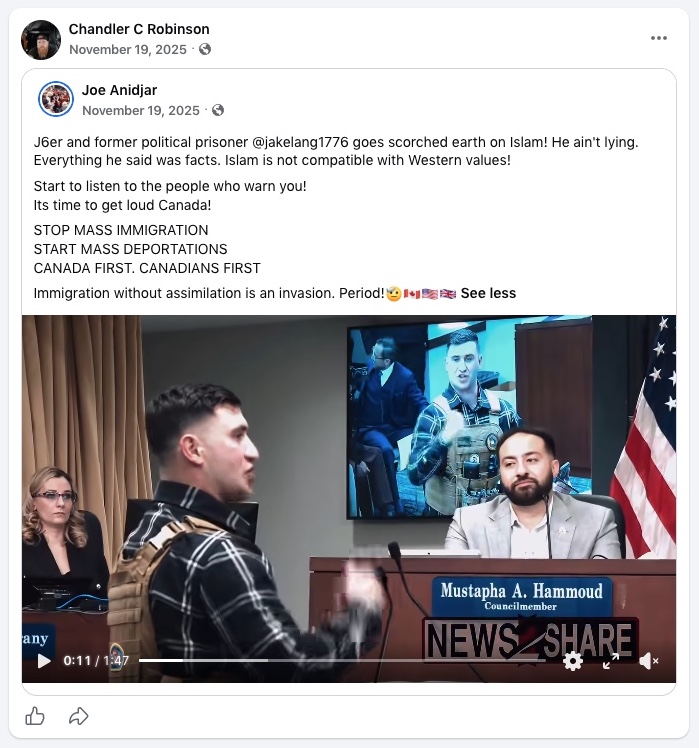
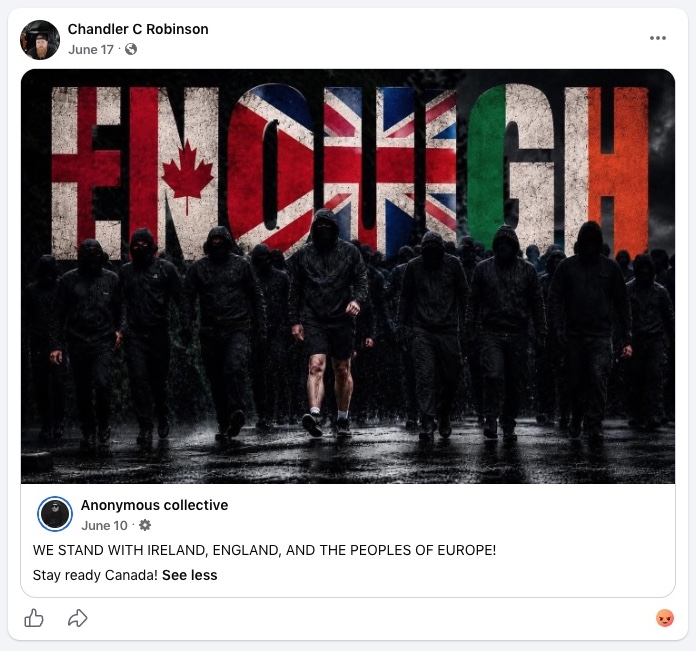
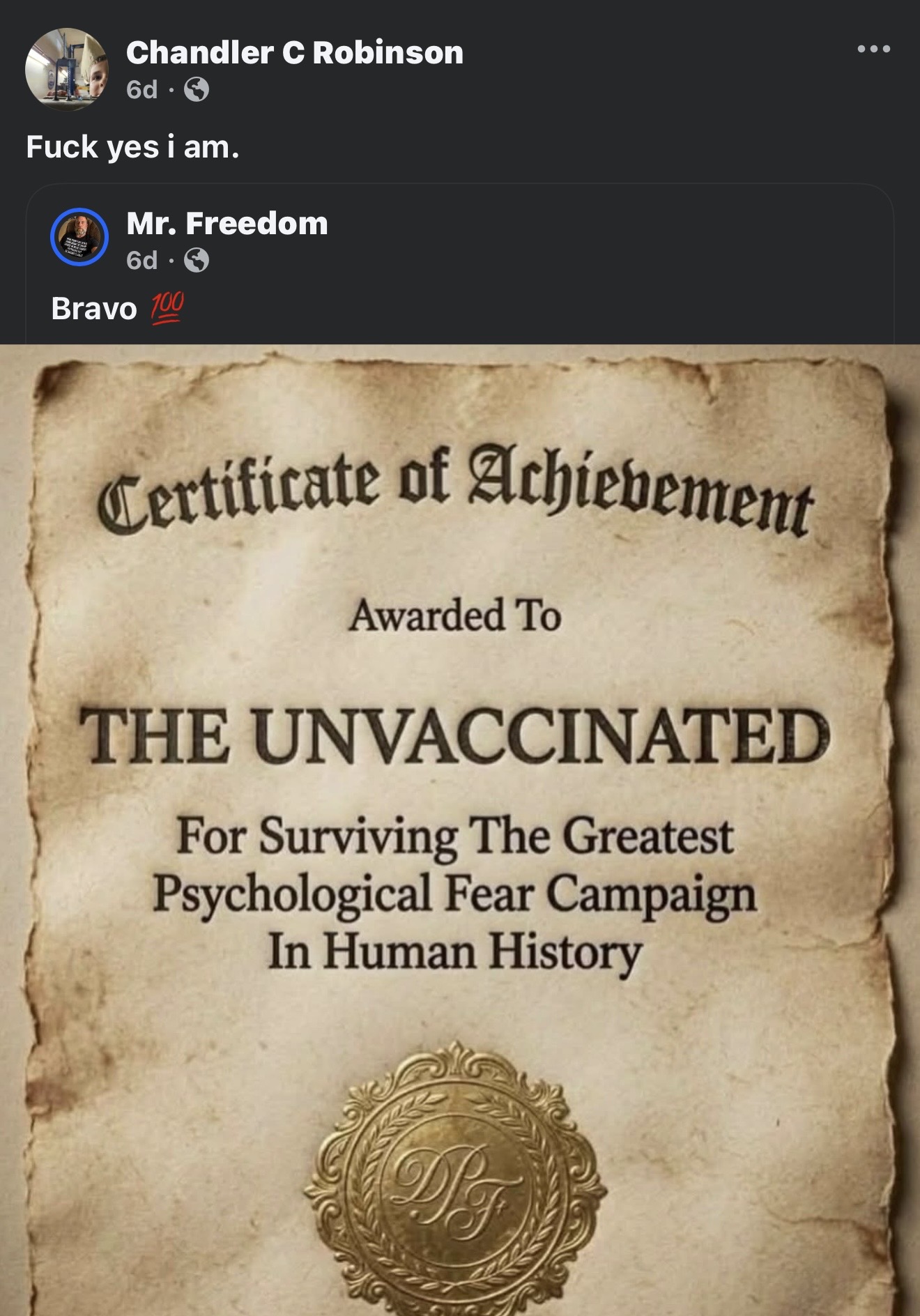
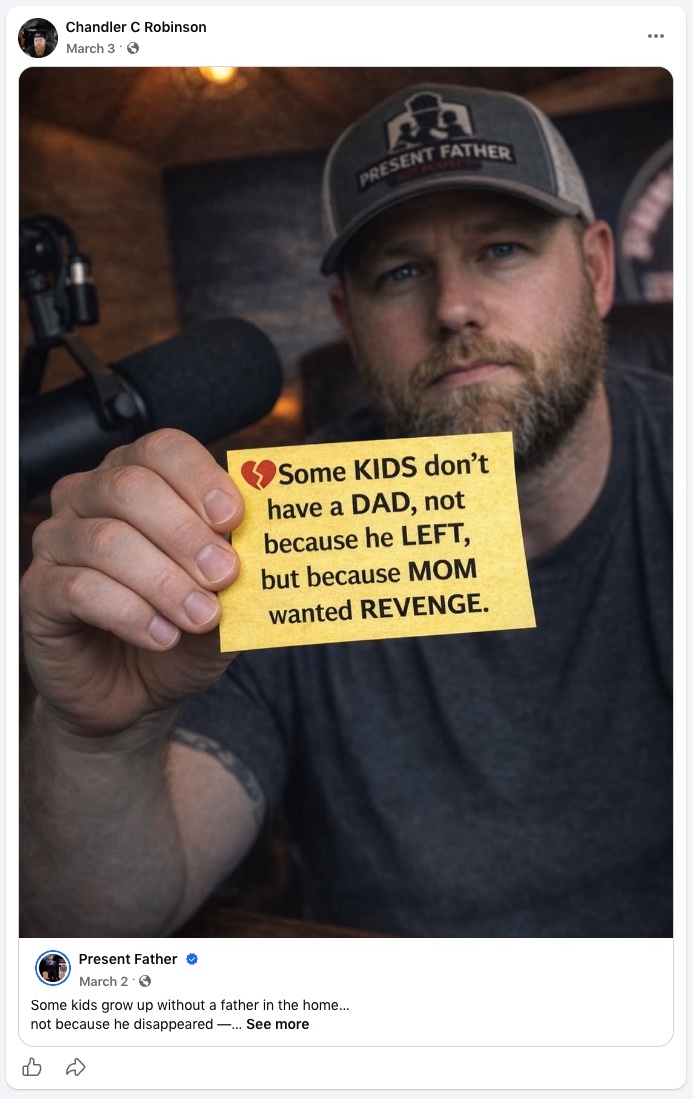
Robinson’s own social media posts became an important part of that examination. The hostility I encountered was not limited to the gay, queer, or trans community. There were posts directed at women, racialized communities, immigrants and, in particular, people from India and Southeast Asia. The rhetoric appeared persistent. It appeared deliberate. And it appeared to extend well beyond the incident that had initially brought Robinson to public attention.
Several people familiar with Robinson subsequently contacted me and described conduct and rhetoric they had personally witnessed.
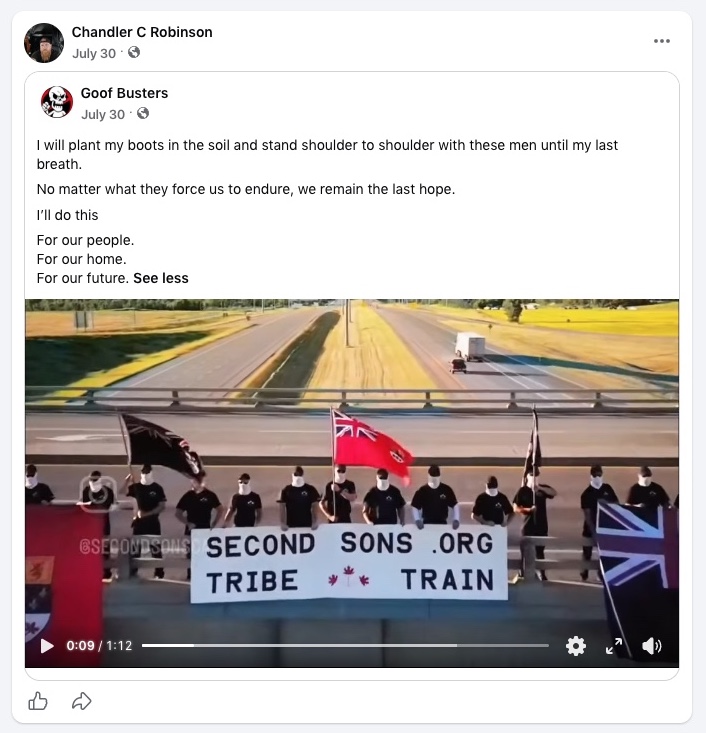
During the same period, Robinson shared and platformed material associated with the Second Sons organization, a far-right organization operating in Canada. Journalists and watchdog organizations have reported on the organization’s white supremacist, anti-Semitic and neo-Nazi ideology, as well as its advocacy for “remigration,” a concept involving the removal of non-white immigrants from Canada. All of this became part of my reporting. But it is important to understand the scale of that reporting. I was not writing about Robinson every day. I was not publishing an endless stream of stories about him. In the approximately eleven weeks since I first learned about him, I had written about Robinson only a handful of times. Most of what I published consisted of information gathered together in social media posts or legal analysis published on my website. I also attended his court appearances.

He has had two to date. A third is scheduled for September 23, when he is expected to appear before a judge for a judicial pre-trial while representing himself. Then, on August 31, something changed.
I contacted the Niagara Regional Police Service. I spoke with a civilian employee of the Equity, Diversity, and Inclusion Unit about my concerns regarding the handling of the Robinson investigation. I believed the police had not adequately investigated the circumstances surrounding the Pride flag incident or properly considered whether hate-related sentencing considerations should be communicated to the Crown. The EDI Unit asked me to put my concerns in writing. I did. A few moments later, I sent the email.
At 11:37 that morning, approximately forty minutes later, my phone rang. It was a voicemail from Constable Grant Yanthe, badge 9856. He told me he was at my home. At my front door. He wanted to speak with me. He told me I needed to contact him as soon as possible. He left an incident number. He did not explain why he was there.
For several hours, I had no idea what was happening. I did not know whether something had happened to my home. I did not know whether something had happened to a member of my family. I did not know whether I had somehow done something wrong. I was simply left with the knowledge that a police officer was standing at my front door and wanted to speak with me.
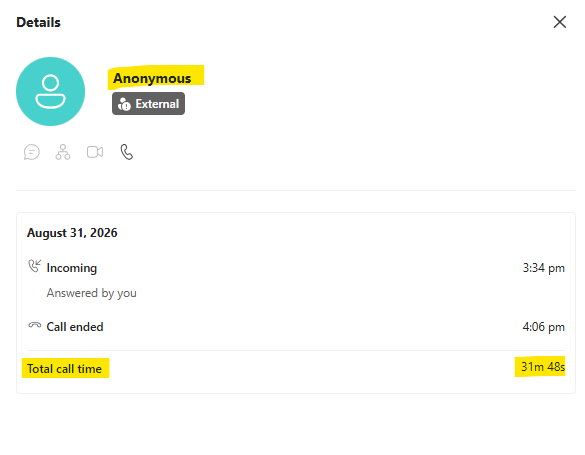
Eventually, after several attempts to reach him, Yanthe called. The conversation lasted nearly 32 minutes. During that conversation, I learned that I was being “investigated” by the Niagara Regional Police Service for “Defamatory Libel.”
There was an immediate problem. Yanthe referenced s.301 of the Criminal Code. The offence of defamatory libel is actually contained in s.297(1). But the section number was not the most concerning part of the conversation.
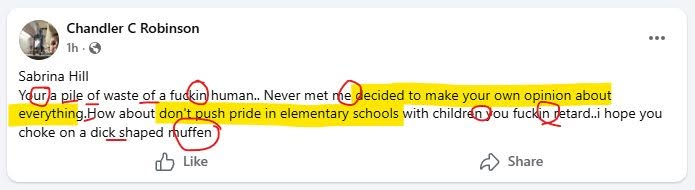
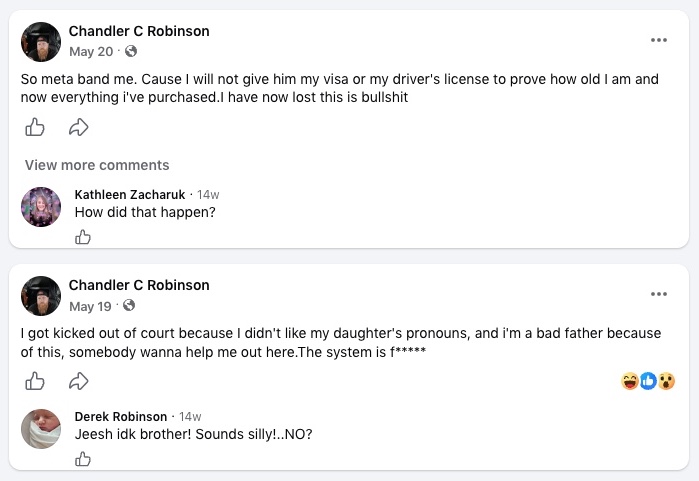
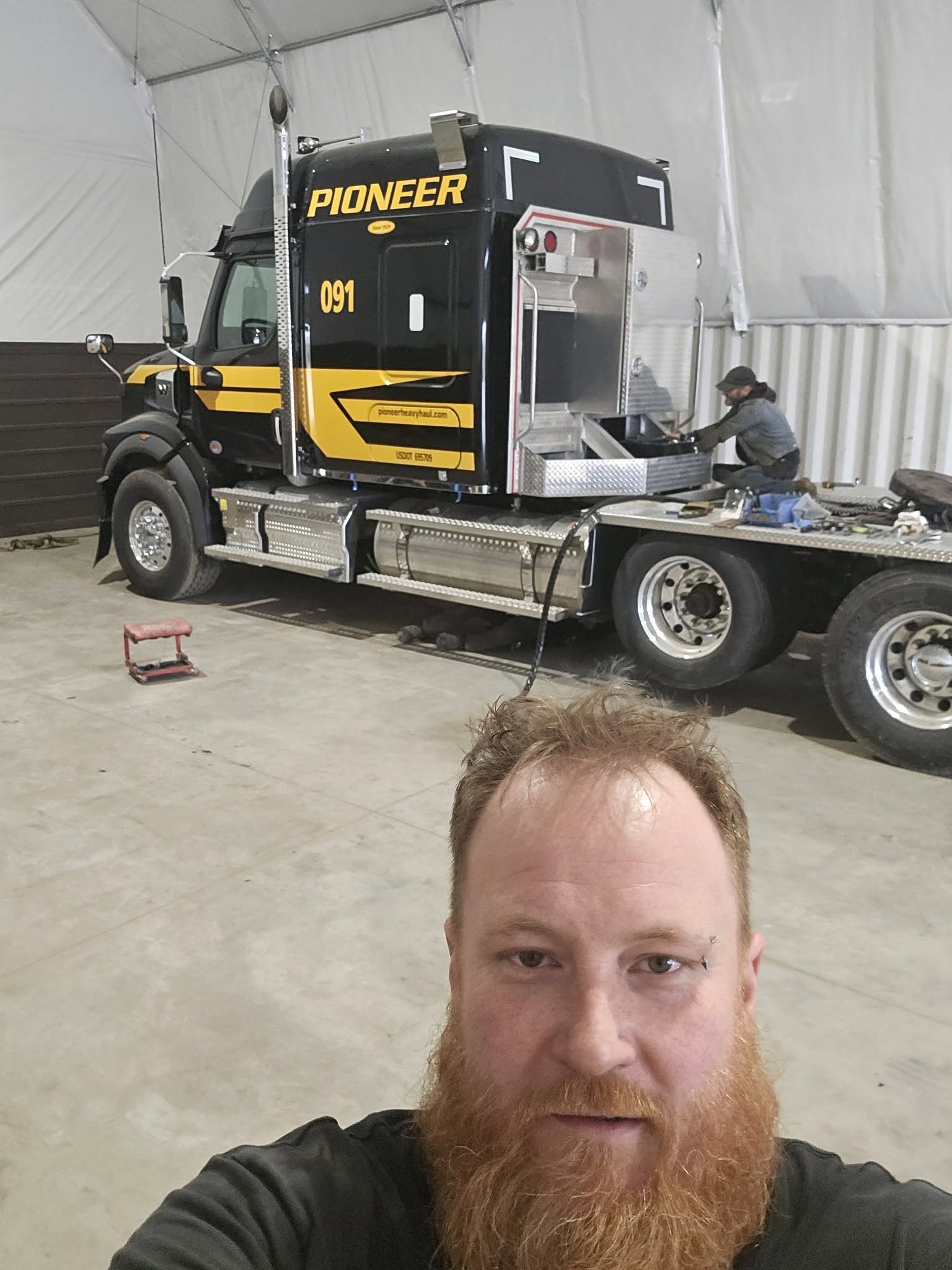
A complaint had been made by Chandler C. Robinson. According to Yanthe, Robinson had complained about a social media post in which I allegedly described him as a “shitty mechanic” driving a “busted up POS VW.” Yanthe also suggested that descriptions of Robinson as “racist, hateful towards the 2SLGBTQQIA+ community, abusive and a neglectful father could constitute libel.” So I began asking questions.
Had Yanthe considered s.2(b) of the Canadian Charter of Rights and Freedoms? Did he understand the legal definition of defamatory libel? Had anyone conducted even a preliminary examination of Robinson’s own public social media activity? Had anyone reviewed the material I had relied upon when making those statements?
The answer to the last question was particularly revealing. No. Yanthe told me ‘[he] had not reviewed Robinson’s posts.‘ He indicated that ‘[he] did not need to.‘ That was when I raised what I believed was the obvious question: Why were police resources being devoted to investigating me over a complaint arising from my public criticism of Robinson when the underlying material had apparently not even been examined?
I described it as a “manifest waste of police resources.” Yanthe disagreed. He told me this was a “police matter.“
So I told him about my own experiences with the Niagara Regional Police Service. Since 2020, I had made at least four reports involving serious threats or harassment: one death threat, one incident in which a known criminal threatened to assault me if he encountered me in the community, and two instances of ongoing virtual and real-world harassment. In none of those cases did I receive meaningful support or follow-up from police. To Yanthe’s credit, he appeared genuinely troubled to hear that. But the conversation ended without anything more than platitudes. And that contrast has stayed with me. Because this is no longer simply about Chandler C. Robinson.
It is about what happens when a person who publicly criticizes police becomes the subject of police attention.
It is about what happens when someone who raises concerns about the treatment of a marginalized community suddenly finds themselves being investigated.
And it is about what police choose to prioritize when their resources are limited.
I have spent years hearing from members of Niagara’s gay, queer, and trans communities who describe experiences in which they felt ignored, dismissed, or treated as though they were the problem rather than the person seeking help. I have experienced that frustration myself. So when police contacted me following my criticism of the handling of a matter involving an individual whose violent rhetoric I had been documenting, I was left with a deeply uncomfortable question: Was I being investigated because I had committed a crime? Or because I had become an inconvenient critic?
I believed my conduct was lawful. I had not threatened Robinson. I had not published private information about him. I was reporting on publicly available information and expressing opinions based on material that Robinson himself had placed into the public domain.
Truth, of course, is an absolute defence to libel.
But the larger issue is not simply whether a particular statement is defamatory, it is whether police powers should ever become a tool for intimidating, discouraging, or silencing legitimate public criticism. That question became even more difficult to ignore several days later.
On Saturday, I received another call. This time, it was Constable Chamberlain of the Niagara Regional Police Service. She called while I was wrapping up an on-camera interview for my Broken River documentary. There had been another complaint. Again, the complaint involved Robinson. Again, there had been no new posts about him. Yet Chamberlain asked me to “remove all of my posts about Robinson.” She acknowledged that the NRPS could not compel me to do so. So I asked the obvious questions. Which posts? What specifically was unlawful? What had I said that constituted an offence? And, once again, had anyone actually reviewed Robinson’s own public statements? Had anyone examined the material that formed the basis for my reporting? Had anyone looked at the posts Robinson had directed at me?
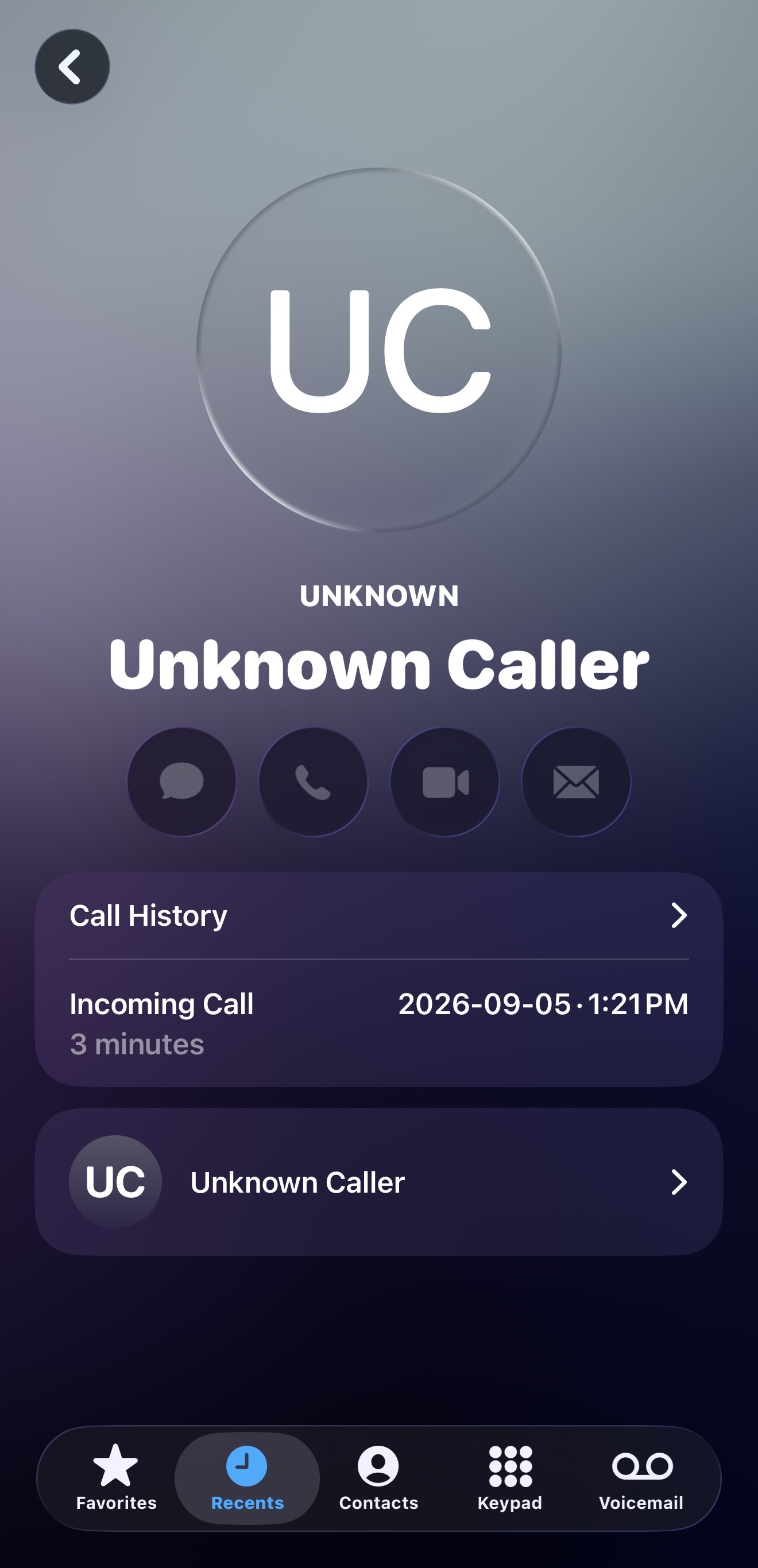
The answer was no.
Chamberlain acknowledged that “[she] had not reviewed my posts,” and “had not reviewed Robinson’s own social media activity.” That distinction matters. Because at that point, this was no longer simply a disagreement between two people on social media. It was a question of institutional attention. Police were contacting me about what I had written. But apparently had not taken the same preliminary step of examining what the person making the complaints had written himself. And that is where I began to see something much larger than an individual complaint.
This was about priorities.
It was about whether police resources were being used to protect people from harassment and threats, or to investigate the people who publicly criticize those responsible for that rhetoric. It was about whether an outspoken transgender woman could document hateful conduct without becoming the subject of police attention herself. And it was about whether the machinery of the state was being used proportionately. Because while this was happening to me, I was also hearing about people waiting for police to respond to serious crimes.
After I shared this experience with a close friend, she told me that shortly before Robinson filed his second complaint against me, a close acquaintance of hers had been the victim of a serious crime and police had not yet responded to the initial report. I cannot independently speak to the circumstances of that particular complaint. But I can speak to what happened to me.
The NRPS intentionally chose to ignore a report of a serious and urgent call for service to instead police me and content that they admittedly hadn’t read.
These are the priorities of the NRPS.
I know that a police officer came to my home. I know that I was contacted by telephone. I know that I was told I was being investigated for defamatory libel. I know that another officer subsequently contacted me about another complaint and asked me to remove my reporting. And I know that, by their own admission, the officers I spoke with had not conducted even a preliminary review of the material I had relied upon or the material published by the person making the complaints.
That is the part that concerns me most. Not because I believe I am above scrutiny. Quite the opposite. Journalists should be scrutinized. Public officials should be scrutinized. Police services should be scrutinized. And anyone who publishes allegations about another person should be prepared to defend them. But scrutiny has to run in both directions. The police should not become the instrument through which criticism is discouraged. And public resources should not be treated as an unlimited weapon in a dispute between private individuals.
There is an additional irony here. If the objective of Robinson’s complaints was to make me stop talking about him, they appear to have accomplished the opposite. There is a name for this.
The Streisand Effect. It describes the phenomenon in which an attempt to suppress information inadvertently generates even more public attention. The attempt to make something disappear becomes the reason more people see it. That is exactly what has happened here.
I did not begin this investigation intending to spend weeks examining Chandler C. Robinson. I certainly did not begin it intending to write about the Niagara Regional Police Service. My original story was about a Pride flag. Then it became a story about the man accused of destroying it. Then it became a story about the rhetoric surrounding that incident. And now it has become a story about what happened when I began asking questions about how police handled it.
Every complaint has created another question. Every phone call has created another layer of scrutiny. Every attempt to shut down the conversation has expanded it.
And the resources devoted to investigating me have, ironically, created an entirely new subject for investigation.
That is the Streisand Effect.
You can try to bury a story. You can try to intimidate the person telling it. You can try to make the criticism disappear. But sometimes, in doing so, you only give the story a larger audience. That is why I am writing this. Not because I want attention. Not because I believe every criticism of police is automatically justified. And certainly not because I believe I should be immune from the law. I am writing because I genuinely believe the conduct I have experienced raises questions that deserve public scrutiny. Questions about proportionality. Questions about police priorities. Questions about the use of public resources. Questions about the treatment of marginalized communities. And questions about what happens when the people entrusted with protecting the public instead turn their attention toward the person asking uncomfortable questions.
De minimis non curat lex.
The law does not concern itself with trifles. But perhaps the public should concern itself with something else: Why was this worth the police’s time? Why did my criticism warrant a police investigation when the material at the centre of that criticism apparently had not even been reviewed? And what does it say about our priorities when police can find the time to investigate the critic, while people in the community are still waiting for help? Those are not petty questions. They are not insignificant.
And they are certainly not going away. Because sometimes the attempt to silence a story becomes the story itself.


ALONE AGAINST THE SYSTEM: Fighting Police Misconduct in Ontario Means Surviving It
In Ontario, holding police accountable isn’t a matter of justice — it’s an act of endurance.


DENIED AND SILENCED: Niagara Police Board Blocks Delegate Request from Trans Advocate Seeking Justice
Sabrina Hill’s delegate request to the Niagara Regional Police Services Board was denied, highlighting systemic transphobia within the police service. She argues this act suppresses dissent, undermines democratic principles, and fails marginalized communities. Hill emphasizes the need for genuine accountability and action from public institutions to address injustices faced by the 2SLGBTQQIA+ community.
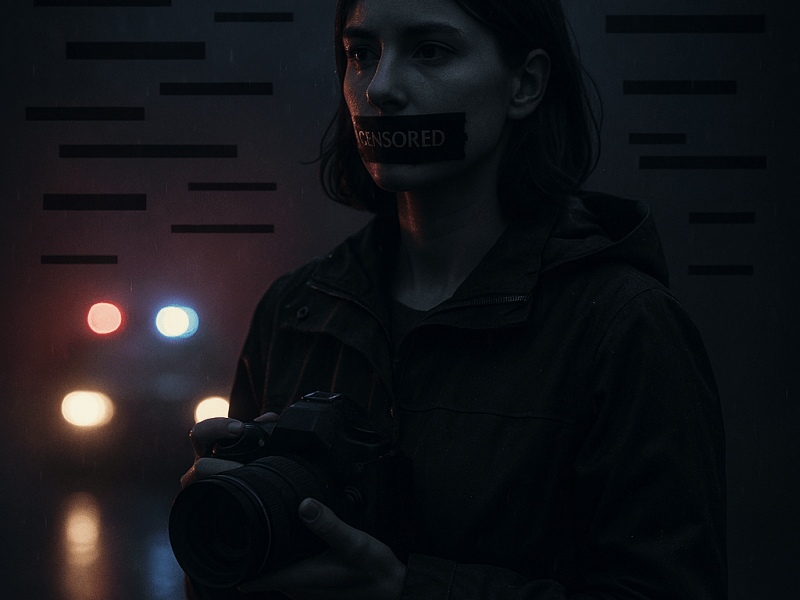
WHEN THE COPS FEAR YOUR CAMERA: What It’s Like to Be a Trans Journalist in Ontario
Since November 2024, several constables and a few sergeants from the Ontario Provincial Police have dedicated hundreds of hours and significant resources to investigating and harassing me.
The Struggles of Trans Individuals with Law Enforcement
In April 2019, Edmonton police mishandled a safety check for Marni Panas, a transgender woman. This incident highlighted systemic discrimination and neglect of transgender individuals by law enforcement, perpetuating fear and isolation within the community.

THE IMPACT OF POLICE EGO ON ARRESTS: A Detailed Review
The concept of “contempt of cop” refers to perceived disrespect toward police, leading to potential harassment or unjust charges. Despite often being dismissed, such accusations financially and emotionally burden victims, highlighting systemic issues in law enforcement accountability in the U.S. and Canada.
- MAT SISCOE AND THE POLITICS OF THE GM SITE: How St. Catharines Keeps Setting the Table for BayShore
- POLICING THE CRITIC: A Story About NRPS Priorities
- WHEN A PRIDE FLAG BECOMES A TARGET: The Crown V Chandler C. Robinson
- SECRECY, SURVEILLANCE, AND THE PUBLIC’S RIGHT TO KNOW: Inside the NRPS’s Secret $534,000 Technology Purchase
- On the Failure of Escape

